Korean Nationals Arrested and Detained in Georgia, US: "Extremely Shocking"
Chartered Flight Departs Tomorrow
"Finalizing Administrative Procedures... Visa System Reform to Be Pursued Again"
Follow-up on $35 Billion US Investment Fund Stalled Due
Kim Yongbeom, Chief of Policy at the Presidential Office, commented on the mass arrest and detention of Korean nationals at the Hyundai Motor Group-LG Energy Solution joint battery plant construction site in Georgia, United States, saying, "It was extremely shocking," and added, "We have conveyed the outrage felt by our people directly to the United States." Regarding follow-up procedures for the Korea-U.S. tariff negotiations, he stated that the process remains at the stage of requesting U.S. cooperation due to concerns about shocks to the foreign exchange market.
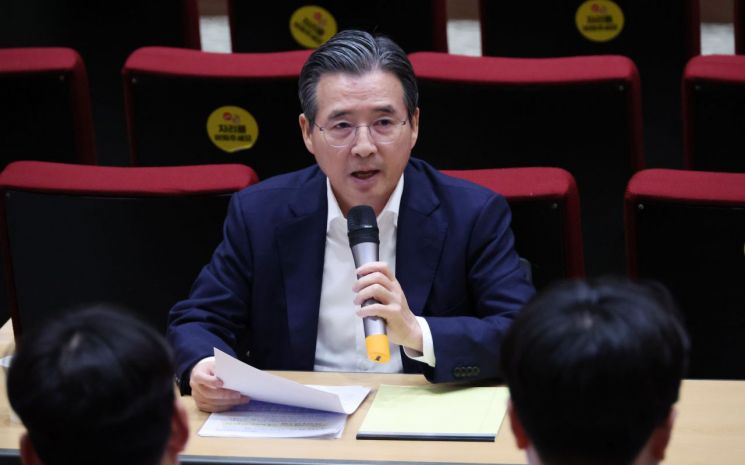
At a discussion hosted by the Korea Broadcasting Journalists Club on this day, Kim said, "The government is making every effort to complete the final administrative procedures so that every single one of the detained Koreans can return home voluntarily, not through deportation."
He also stated that the Korean government had lodged the strongest possible protest with the U.S. side. Kim explained, "We expressed our concerns and regrets in the strongest diplomatic terms," and added, "The Minister of Trade, Industry and Energy issued a strong protest, not in diplomatic language." He further elaborated, "We are responding with all available resources in this way, and fortunately, the White House fully understands our position and is finalizing the administrative procedures."
Approximately 300 Korean workers detained locally will soon return home on a chartered flight. Kim stated, "The chartered flight will depart tomorrow," and explained that negotiations are underway regarding procedures because the location where the Koreans are detained is far from the Atlanta plant and requires bus transportation.
Regarding the improvement of the visa system mentioned by Kang Hoonshik, Chief Presidential Secretary, Kim emphasized that although anti-immigrant sentiment is growing in the United States, this incident must serve as an opportunity to achieve institutional reform.
Kim said, "The government and businesses have made every effort to promote legislation for more than 10 years, but the number of lawmakers introducing bills in the U.S. Congress is gradually decreasing," adding, "This indicates that anti-immigrant sentiment is intensifying."
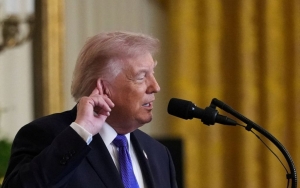
Nevertheless, Kim stated, "Fortunately, judging from what President Trump said yesterday, he understands this situation very thoroughly and accurately," and added, "We must turn this crisis into an opportunity to improve the system. If necessary, the Presidential Office and the White House should form a working group to find short-term solutions and also pursue legislative changes in the long term."
Regarding the follow-up procedures for the creation of a 350 billion dollar Korea-U.S. investment fund related to the tariff negotiations, Kim said that discussions have not progressed beyond the stage of requesting the United States to provide solutions on how to mitigate the impact on Korea's foreign exchange market. He explained, "We are emphasizing to the U.S. side that the issue of how to raise and manage 350 billion dollars in the foreign exchange market is of paramount importance," and added, "Since it is difficult for Korea to raise more than 20 to 30 billion dollars per year, we are asking the United States to help find solutions to the fundamental shock this could cause to the foreign exchange market."
Kim continued, "Negotiations are at an impasse because of this issue," and added, "If such an agreement is not reached, it will be difficult to properly start the 'MASGA Project.' We also have certain points to assert, so we are negotiating comprehensively." In response to criticism that tariff reductions on automobile items have not been implemented, he said, "The 350 billion dollar investment fund could have a huge impact on the entire economy, so it is not possible to rush into an agreement just to narrow the tariff gap in the automobile industry in the short term." Addressing concerns that such massive investment in the United States could hollow out domestic manufacturing, he responded, "Partner companies will remain in Korea, and research and development centers will also stay, so it is difficult to see it that way."
Regarding the criteria for the major shareholder capital gains tax, Kim said, "When the President had lunch with the opposition leader, he stated positively that the government is reviewing its final position," and added, "The final decision will likely be made in the near future." He also acknowledged that the government is aware of the significant impact on the capital market.
On real estate policy, he explained that there is unlikely to be a need to reconsider the tax system for the time being. Regarding fiscal policy, he stated that while national debt will increase, fiscal policy must play a greater role. Kim said, "We do not believe it is time to consider measures such as comprehensive real estate tax integration or capital gains tax reductions," and added, "There are also new supply measures. If speculative activities are effectively monitored, there will be no need to reconsider the tax system for the time being." He continued, "We must pay attention to the rapid increase in national debt and manage it with consideration for the impact on the government bond market," but also noted, "In times of crisis, fiscal policy must play its role. We will manage fiscal policy with caution."
© The Asia Business Daily(www.asiae.co.kr). All rights reserved.