Introduction of Working Hours Savings Account for Non-Regular Youth Workers
One-Time Lifetime Use... No Overlapping with Unemployment Benefits
Kim Dongyeon, Governor of Gyeonggi Province and a preliminary presidential candidate for the Democratic Party of Korea, announced on April 22 that he would introduce a "Non-Regular Youth Workers' Working Hours Savings Account" and promote a six-month paid sabbatical for non-regular workers.
On the afternoon of the same day, at his Yeouido campaign office, Governor Kim unveiled these pledges for non-regular workers. He pledged, "We will guarantee a six-month paid leave to young people whose total period (or hours) of non-regular employment?including contract, temporary, and part-time (including part-time jobs)?reaches seven years (84 months) in total."
Specifically, for young people aged 19 to 34, a registration system will be established at the Employment Welfare Center, requiring direct registration upon being employed as a non-regular worker. After registering during youth, individuals will be eligible to use this benefit once in their lifetime if they accumulate seven years of non-regular employment before the age of 65. The salary during the leave will be based on the average monthly wage of non-regular workers, paid for six months. Based on last year's average monthly wage for non-regular workers of 2,048,000 won, the total amount would be 12,288,000 won.
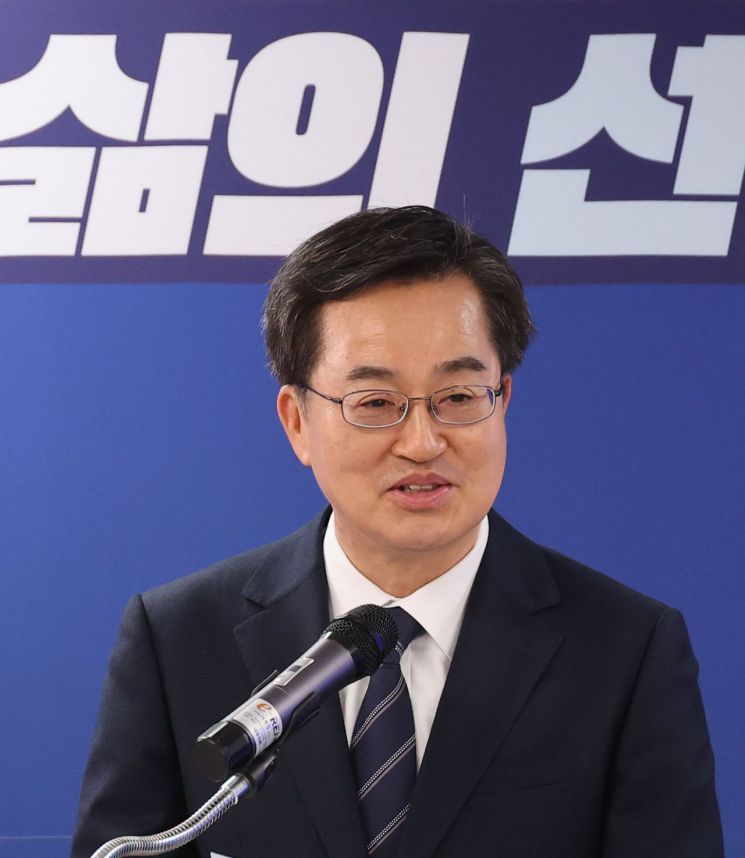
Regarding the background for this pledge, Governor Kim explained, "As of August 2024, 43.1% of wage workers in their 20s are non-regular workers, the highest since statistics began in 2003." He further diagnosed, "Once someone enters non-regular employment, 80 to 90 percent remain in non-regular positions throughout their lives." He emphasized, "It is necessary to guarantee opportunities for self-career development and recharging for young non-regular workers."
For funding, a three-party contribution system will be introduced. First, it will include the unpaid severance pay equivalent that would otherwise be paid by employers (a newly established contribution), a risk-avoidance sharing fee to be paid by regular workers (a new fee), and government subsidies for human resource investment as part of measures to address 'labor scarcity' (covering more than 50%). In addition, it will be stipulated that double payment with unemployment benefits from employment insurance will not be allowed.
© The Asia Business Daily(www.asiae.co.kr). All rights reserved.