Study Finds Link Between Sodium Intake and Risk of Obesity
Analysis of Over 5,000 Adults Reveals Higher Sodium Intake Raises Both General and Abdominal Obesity Risk
A study has found that people who consume a lot of salt (sodium) through food have a 3 to 6 times higher risk of general obesity and abdominal obesity compared to those who consume less.

On the 27th, the European Association for the Study of Obesity (EASO) reported that Dr. Annika Santalati and her research team at the Finnish Institute for Health and Welfare (FIHW) in Helsinki analyzed the sodium intake from diets and urinary sodium levels of over 5,000 men and women, discovering this correlation between sodium and general and abdominal obesity.
In this study, the researchers used data from the 'National FinHealth 2017 Study' targeting Finnish adults, analyzing the sodium intake through diet, urinary sodium concentration, and the relationship with general and abdominal obesity among 2,222 men and 2,792 women. Participants were divided into four groups each for men and women, from the top 25% to the bottom 25% based on sodium intake and urinary sodium concentration. The association between sodium and obesity was examined using statistical models adjusted for variables such as age and lifestyle habits.
Abdominal obesity, in particular, is a condition where fat accumulates in the abdomen and internal organs, resulting in a waist circumference larger than normal, which is considered a risk factor for cardiovascular diseases. Recent studies have shown that the risk of obesity-related cancers is more closely linked to waist circumference.
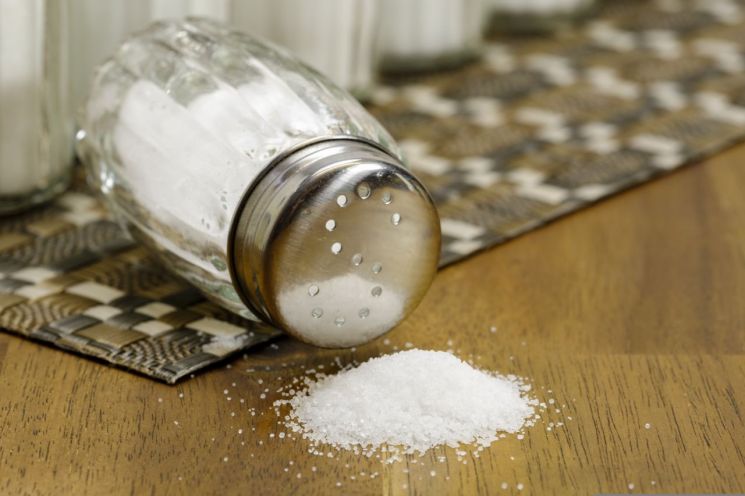
As a result, the group with sodium intake (median) below the WHO recommended amount (less than 5g per day) was only the bottom 25% group of women, and when men and women were combined, the sodium intake of the top 25% group was 2.3 times higher than that of the bottom 25% group.
Additionally, people with high sodium intake or high urinary sodium concentration had a greater likelihood of developing general and abdominal obesity. For women, those in the top 25% of sodium intake had a 4.3 times higher risk of general obesity and a 3.4 times higher risk of abdominal obesity compared to the bottom 25%. Also, women in the top 25% of urinary sodium concentration had a 4.8 times higher risk of obesity than those in the bottom 25%. For men, the top 25% group in urinary sodium concentration had a 6 times higher risk of general obesity and a 4.7 times higher risk of abdominal obesity compared to the bottom 25%. However, while the pattern of increased obesity risk by sodium intake was similar to that of women, the differences between groups were not statistically significant.
The researchers emphasized, "Contrary to common perception, high sodium intake comes not from unhealthy foods (such as junk food) but from everyday foods (processed meats, cheese, etc.). Reducing sodium intake cannot be solved by individual efforts alone; population-level changes through cooperation with the food industry are necessary."
This research will be presented at the EASO European Congress on Obesity (ECO 2025) to be held in Malaga, Spain, from May 11 to 14.
Meanwhile, in May last year, the Ministry of Food and Drug Safety disclosed the results of an investigation into average sodium and sugar intake based on the National Health Impact Survey conducted from 2018 to 2022. The average daily sodium intake of Koreans was 3,074 mg, which is 1.5 times the WHO recommended level of 2,000 mg. The government recommended checking the nutritional information on food labels to reduce sodium and sugar intake. According to a 2022 survey by the Ministry, consumers who checked nutritional labels consumed 187 mg less sodium and 3.3 g less sugar per day.
© The Asia Business Daily(www.asiae.co.kr). All rights reserved.