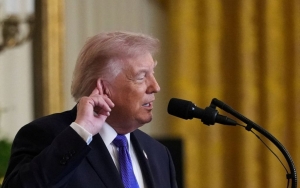
With the impeachment motion against President Yoon Suk-yeol passed on the 14th, Prime Minister Han Duck-soo assumed the role of acting president. Accordingly, the presidential veto right on the amendment to the Grain Management Act, which mandates the government to compulsorily purchase surplus rice, can now be exercised by the acting president.
According to the Ministry of Agriculture, Food and Rural Affairs, the amendments to four laws?the Grain Management Act, the Agricultural Security Act, the Agricultural and Fishery Disaster Countermeasures Act, and the Agricultural and Fishery Disaster Insurance Act?passed by the National Assembly plenary session on the 28th of last month, were sent to the government on the afternoon of the 6th.
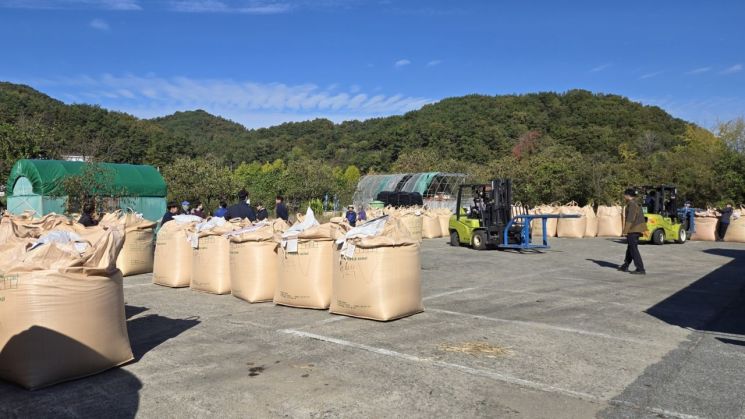
Previously, Minister Song Mi-ryeong of the Ministry of Agriculture, Food and Rural Affairs expressed a position recommending the exercise of the veto right. Immediately after the National Assembly plenary session passage, Minister Song stated, "For all four amended laws, the government has clearly opposed them while specifically explaining the problems and alternatives," and added, "As the minister in charge of enforcing the four laws including the Grain Management Act, I will recommend a request for reconsideration of the four legislative amendments pursuant to Article 53, Paragraph 2 of the Constitution of the Republic of Korea."
The government has pointed out that the relevant bills are institutionally difficult to implement and, even if implemented, would conflict with other laws and existing systems, violate international trade norms, exacerbate supply and demand instability, and impose enormous fiscal burdens, making them merely temporary stopgap measures that do not contribute to the development of agriculture and rural areas. Minister Song expressed concern, saying, "The amendment to the Grain Management Act not only mandates the government to compulsorily purchase surplus rice, as was handled in the 21st National Assembly, but also adds a ‘Grain Price Stabilization System’ under which the government pays the difference if the market price of grain falls below the average price. Such amendments will rather entrench rice overproduction and deepen the decline in rice prices."
The exercise of the veto right is possible within 15 days from the day the bill is sent to the government. This means the veto must be exercised by the 21st. To exercise the veto, the government must submit the agenda for the request for reconsideration of the four contentious bills at the Cabinet meeting on the 17th for deliberation.
However, there is significant political burden for the acting president to exercise the veto right. A Ministry of Agriculture, Food and Rural Affairs official said, "Prime Minister Han has consistently opposed the amendment to the Grain Management Act, stating it violates market principles," but added, "However, as acting president, it is inevitably burdensome to exercise the veto right on the Grain Management Act pushed by the opposition party."
© The Asia Business Daily(www.asiae.co.kr). All rights reserved.