Domestic Finished Car Demand Declines in August Following July
Five Finished Car Makers Including Hyundai Motor See Domestic Sales Drop
Stagnation Continues After Individual Consumption Tax Reduction Ends
Popular Domestic Hybrid Models Delivered Within a Month
Last month, domestic car sales in South Korea decreased compared to the previous July. Earlier in July, the consumption of finished cars declined as the individual consumption tax reduction measure ended, and new car demand seems to have remained sluggish in August as well.
According to the combined August domestic sales performance announced on the 1st by five domestic finished car manufacturers, 106,482 vehicles were sold domestically over the past month. Compared to the sales volume in July, which was 114,818 units, this represents a 7.3% decrease, or 8,336 fewer units. By company, all five?Hyundai Motor Company, Kia, Korea GM, KG Mobility, and Renault Korea?saw declines compared to the previous month. Imported cars are excluded from these figures.
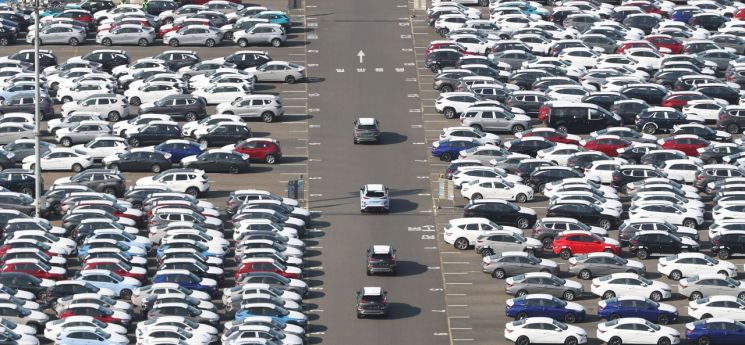
In particular, Kia, Korea GM, and Renault experienced double-digit percentage drops in sales volume. Hyundai Motor Company saw a slight increase in passenger car sales, but overall performance declined due to a more than 30% drop in sales of small commercial vehicles (Porter). The Hyundai Porter is a model that consistently ranks high in sales among the company’s entire lineup, and the decrease in sales appears to be due to the discontinuation of diesel models.
Kia saw a decrease in sales of many leisure vehicles such as the dedicated electric vehicles EV9 and EV6, as well as the Sportage and Mohave. Similarly, sales of small commercial vehicles also dropped significantly. Korea GM’s sales declined compared to the previous month as sales of its main models, the Trax crossover and Trailblazer, decreased. Earlier in July, passenger car sales had already dropped by about 12% compared to June.
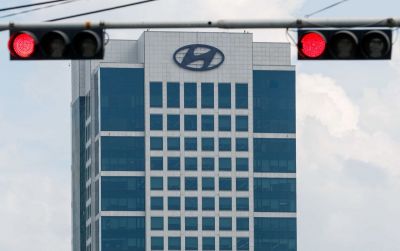 On the 21st, the red light is on at the traffic signal in front of the Hyundai-Kia Motors headquarters in Seocho-gu, Seoul. Photo by Jinhyung Kang aymsdream@
The industry views the decline in new car demand as a result of the restoration of the individual consumption tax on passenger cars. With clear signs of a prolonged economic downturn and significant interest rate burdens, the increased tax burden has led to reduced consumption. There also appears to be a base effect as more people purchased vehicles in June ahead of the end of the individual consumption tax reduction measure.
Until just last year, popular models required waiting several months after ordering, but recently, the waiting demand for new cars has rapidly decreased. The Kia K5 Hybrid, which took about two and a half months for delivery until last month, can now be delivered in about one and a half months. The Hyundai Grandeur Hybrid also required a two-month wait last month but can now be received within one month.
© The Asia Business Daily(www.asiae.co.kr). All rights reserved.