The government is set to actively expand the human resource base, including the training of 110,000 core talents, to foster the biohealth industry as the "second semiconductor." To this end, it will introduce 'Meister Universities' to cultivate practical talents, expand contract departments for small and medium-sized enterprises, and establish industry-academia convergence zones linked with industrial complexes.
On the 6th, the Ministry of Health and Welfare announced the 'Biohealth Talent Development Plan' at the National Policy-Related Ministers' Meeting. This plan is a follow-up measure to the biohealth new market creation strategy announced in February, aiming to cultivate specialized talents and secure a global technological "super-gap" in biohealth.
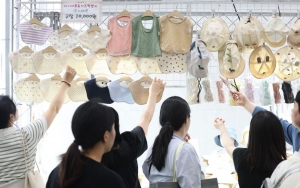
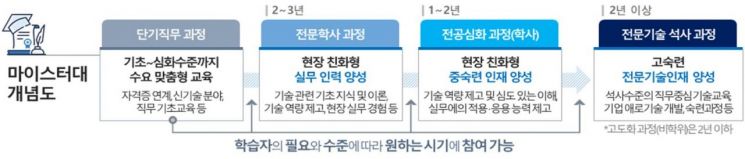 'Meister University' to Train Practical Talent in Biohealth [Provided by the Ministry of Health and Welfare]
First, school education based on industrial sites will be provided. This year, two schools with six departments will introduce biohealth Meister Universities, and practical education will be expanded through connections with specialized high schools, Meister high schools, and public and private training facilities. Convergent education, such as innovative convergence universities responding to the development of convergent technologies like digital therapeutics (DTx), which saw its first establishment this year, will also be offered. The innovative convergence universities will focus on jointly utilizing advanced educational resources scattered across multiple universities and establishing a cooperative system involving industries, research institutes, and academic societies to cultivate core talents.
In addition, industry-academia linkage will be further strengthened by establishing industry-academia convergence zones that create contract departments for biohealth SMEs and biohealth departments within industrial complexes. The number of contract departments will increase from five last year to eight this year. The industry-academia convergence zones will begin with the 'Chungbuk Zone' in Osong Industrial Complex, Cheongju City, Chungbuk Province, hosting Chungbuk National University, Cheongju University, and Chungbuk Provincial University to train pharmaceutical specialists. Next year, the 'Gangwon Zone' will be established in Munmak Industrial Complex, Wonju City, Gangwon Province, hosting Gangneung-Wonju National University to cultivate medical device specialists.
Efforts will also be made to train production and regulatory science experts who can be immediately utilized in the biohealth field. To this end, each ministry will establish large-scale production process training facilities from 2025 to 2026. The 'K-NIBRT,' a GMP (Good Manufacturing Practice) level bioprocess facility, will be built to train 2,000 people annually, and the 'K-BIO Training Center' (tentative name) will cultivate about 1,200 biopharmaceutical production personnel annually.
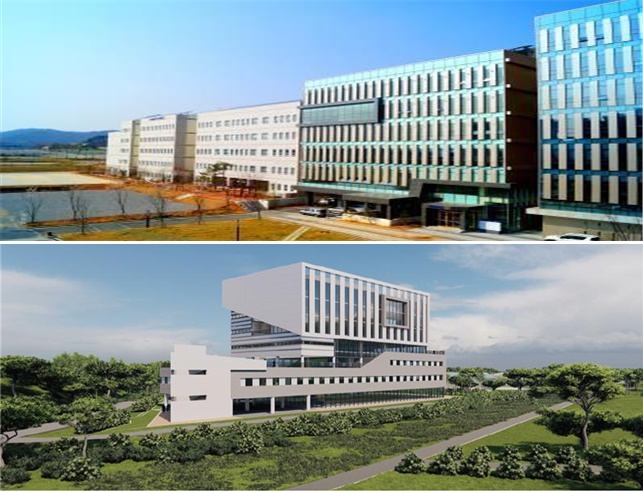 The government will establish the Gangwon district next year following this year's Chungbuk district (above) as a core industry-academia convergence zone for nurturing talent in biohealth.
 [Photo by Ministry of Health and Welfare]
The cultivation of physician-scientists and core researchers at the master's and doctoral levels, essential for securing a technological super-gap in biohealth, will also be expanded. A career- and stage-based training system for physician-scientists will provide research opportunities and support aligned with undergraduate, master's, doctoral, and post-graduate stages. Furthermore, advanced and convergent specialized education such as medical artificial intelligence and specialized graduate schools for pharmaceuticals and medical devices will be promoted.
In the mid-to-long term, the plan is to nurture regional talents and build a support foundation for talent development, including employment and startup linkage and governance formation. Universities and regions will cooperate to utilize resources such as local companies and research institutes, and connect talented individuals to employment and startups through hosting pharmaceutical and bio expos and establishing startup support centers within advanced medical complex zones. A 'Biohealth Talent Development Council (tentative name)' will be formed, and a mid-to-long-term support foundation including policy research will be established.
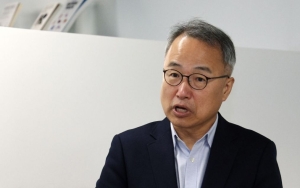
Minister of Health and Welfare Cho Kyu-hong stated, "Biohealth is a promising new industry with a global market size even larger than semiconductors, playing a pivotal role in public health and national security. As it is a dynamic industry with continuous technological innovation, we will continue to promote talent development policies that reflect these changes through communication with industrial sites and the education sector."
© The Asia Business Daily(www.asiae.co.kr). All rights reserved.