[Asia Economy (Suwon) = Reporter Lee Young-gyu] Gyeonggi Province has uncovered a large number of agricultural material distribution and sales businesses that committed illegal acts such as storing herbicides past their 18-month efficacy guarantee period or selling pesticides without registering as pesticide sales businesses.
The Gyeonggi Province Special Judicial Police Unit announced on the 30th that from the 28th of last month to the 13th of this month, they conducted intensive crackdowns on 360 locations including agricultural material stores, horticultural material stores, and flower shops in 31 cities and counties within the province, and identified 50 businesses violating the 'Pesticide Control Act' and the 'Fertilizer Control Act.'
Among the major cases uncovered, pesticide store 'A' located in Gimpo City was caught storing 73 bags of inappropriate pesticides, including herbicides past their 18-month efficacy guarantee period and insecticides past their 6-month period, on display shelves and in warehouses until early May.
Horticultural material store 'B' in Gwacheon City was caught displaying and selling three types of pesticides including insecticides and fungicides without registering as a pesticide sales business. Pesticide store 'C' in Icheon City was caught operating a pesticide storage warehouse at a location different from its originally registered address without filing a change registration.
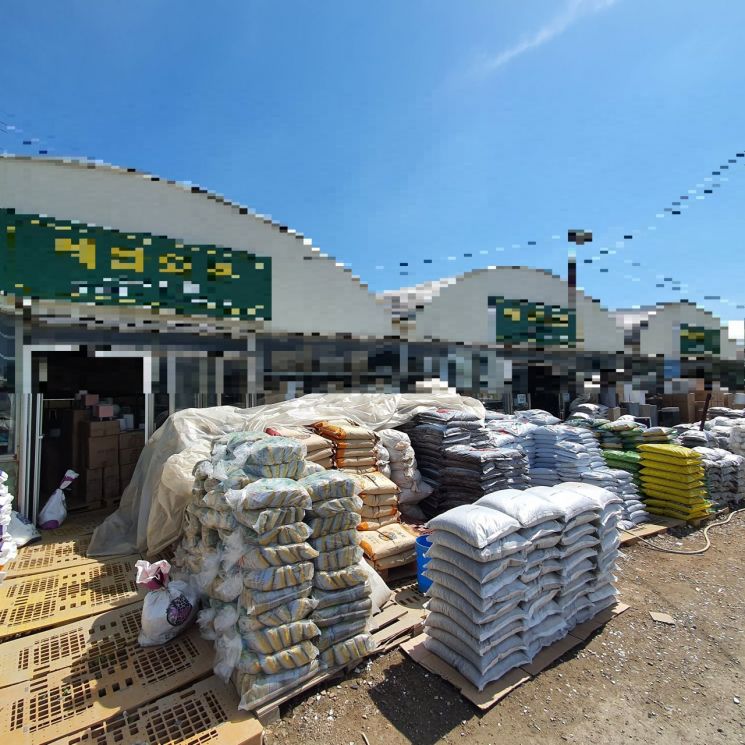
Pesticide sales businesses are required to store pesticides in warehouses equipped with ventilation, shading facilities, and locks, and mark them as 'Pesticide Warehouse.' However, agricultural material store 'D' in Yangju City was found to be storing pesticides under an outdoor tent.
Succulent plant store 'E' in Bucheon City was caught selling repackaged fertilizers lacking essential information such as production date and manufacturer details.
Under the current Pesticide Control Act, unregistered pesticide sales and storage of pesticides past their efficacy guarantee period are punishable by imprisonment of up to three years or fines up to 30 million KRW; failure to register changes is punishable by imprisonment of up to one year or fines up to 10 million KRW; and violations of pesticide handling restrictions are subject to fines up to 3 million KRW. Additionally, the Fertilizer Control Act stipulates imprisonment of up to two years or fines up to 20 million KRW for selling fertilizers without guarantee markings.
Kim Min-kyung, head of the Provincial Civil Affairs Special Judicial Police Unit, emphasized, "The distribution of fraudulent and substandard agricultural materials not only causes significant damage to crops but also disrupts fair agricultural material distribution order. It must be eradicated." She added, "We will continue to strengthen investigations into illegal distribution activities of agricultural materials to prevent damage to farmers and general consumers."
© The Asia Business Daily(www.asiae.co.kr). All rights reserved.