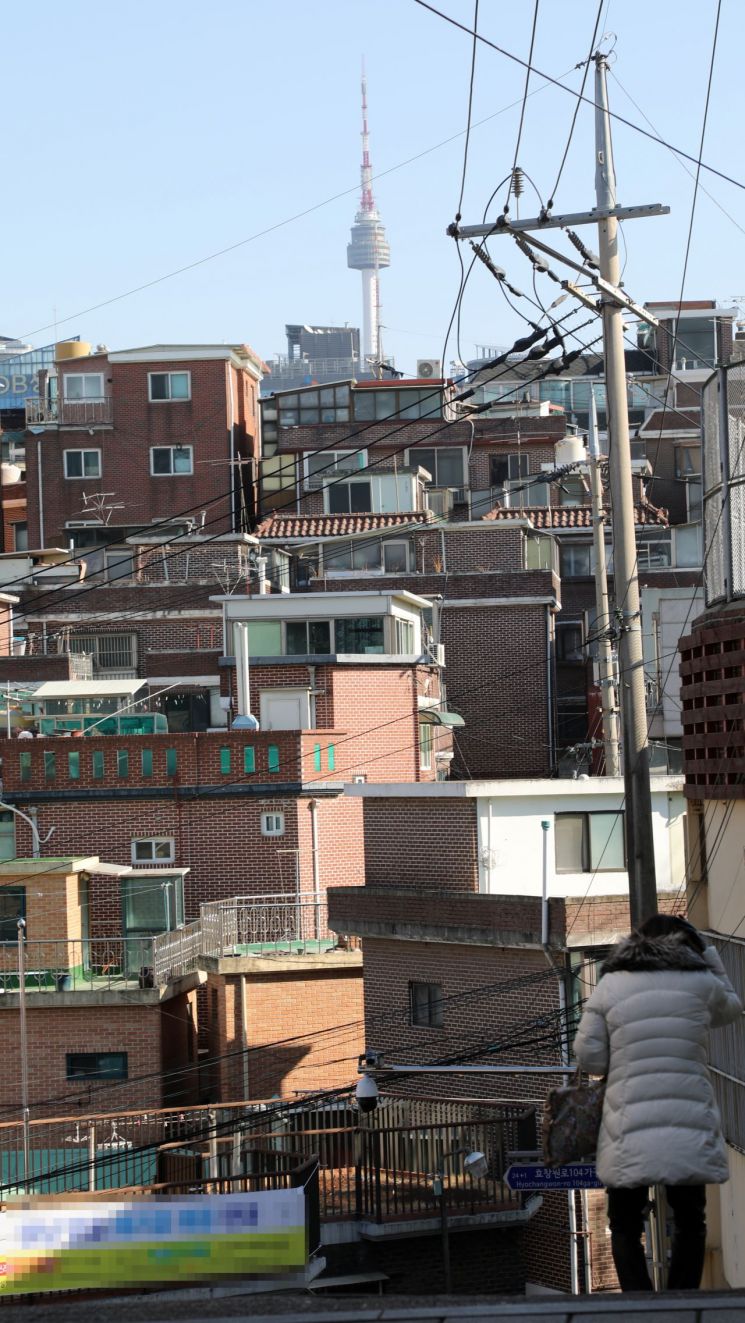
[Asia Economy Reporter Ryu Tae-min] Despite the recent slowdown in the housing market, the value of detached houses in Seoul is soaring. As the available supply has sharply decreased compared to before, increasing their scarcity value, investment demand has surged amid rising expectations for redevelopment projects. Additionally, the possibility of converting these properties into commercial facilities or self-developing them into villas is also one of the factors driving their popularity.
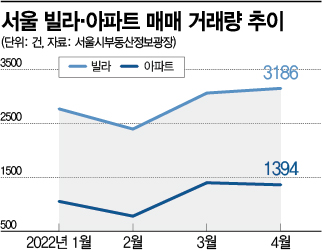
According to the nationwide housing price trends announced by the Korea Real Estate Board on the 18th, detached houses in Seoul recorded a 0.36% increase last month. The price of detached houses in Seoul has risen a total of 1.15% from the beginning of this year through last month, showing a steep upward trend. This contrasts with the 0.16% decline in apartment prices in Seoul during the same period.
The average sale price of detached houses in Seoul first exceeded 1 billion KRW in January last year. Since then, it has steadily increased, reaching a record high of 1.08738 billion KRW last month. On the other hand, the average sale price of apartments in Seoul peaked at 1.15172 billion KRW in January and slightly decreased to 1.15041 billion KRW last month.
High Scarcity and Redevelopment Expectations with Versatile Use Including Commercial Facility Conversion
This price trend is due to the high scarcity of detached houses in Seoul. Unlike the past when apartments were rare and detached houses were common, recently, the number of apartments in Seoul has increased while the supply of prime detached houses has decreased, making them highly valuable. Especially in Seoul, where development land is severely limited, there is a significant increase in development investment demand to purchase old detached houses, demolish them, and build villas on the site.
The growing expectation for eased redevelopment regulations has also played a role. Since the inauguration of Mayor Oh Se-hoon, policies easing redevelopment regulations have been introduced one after another, raising hopes for redevelopment in aging residential areas. In fact, Seoul introduced the Rapid Integrated Planning Private Redevelopment project last year to expedite private-led development projects. By the end of last year, 21 private redevelopment candidate sites were selected, and a total of 33 sites are currently pursuing rapid integrated planning redevelopment. Since detached houses are solely owned by one owner, sales are easier without conflicts arising from stakeholders.
Even if redevelopment projects do not proceed, the ability to change the use of detached houses to commercial spaces such as shops is considered an advantage. If a detached house is located in a quasi-residential area, it is possible to build a commercial-residential building with the first floor as commercial space and the second and third floors as residential areas. Recently, as taxes on multi-homeowners have increased, cases of converting detached houses into neighborhood living facilities have also risen. Unlike multi-family or row houses, which require unanimous consent from all owners, detached or multi-unit houses can be developed as a whole.
Song Seung-hyun, CEO of Urban and Economy, said, "Detached houses have many advantages in development and use changes, making them popular among investors. However, since they have lower liquidity and less consistent price fluctuations compared to apartments, it is necessary to be cautious not to purchase at excessively high prices."
© The Asia Business Daily(www.asiae.co.kr). All rights reserved.