[Asia Economy Reporter Ji Yeon-jin] The liquidity crisis of Evergrande Group, China’s second-largest real estate company, is likely to act as a "tail risk" in the fourth quarter of this year. Tail risk refers to the risk of a rare, one-off event that has an extremely low probability of occurring but can have a tremendous impact on asset values once it happens. Although the Evergrande issue is unlikely to escalate into a global financial crisis like the Lehman Brothers collapse in the U.S., the bankruptcy risk remains unresolved, making it a potential variable for the stock market.
According to the financial investment industry on the 25th, Evergrande agreed on the 23rd to postpone interest payments on yuan-denominated bonds worth 232 million yuan with creditors, but it still has to pay interest amounting to 669.9 million dollars (790 billion won) by the end of the year.
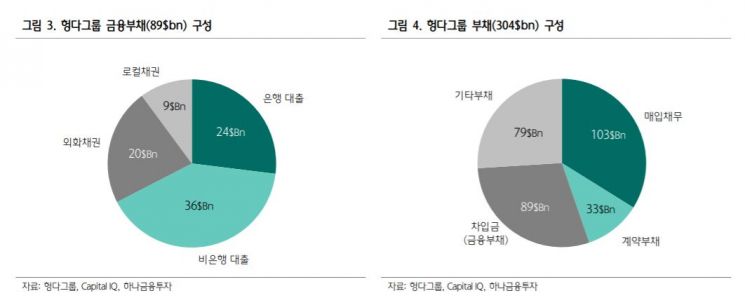
However, Evergrande’s ability to pay interest has weakened due to decreased earnings, with the interest coverage ratio falling to about 0.25 times in the first half of the year. Its cash holdings also dropped by 45% compared to the end of the previous year, significantly worsening liquidity. Evergrande is attempting to secure cash by selling stakes in subsidiaries, but given the declining trust in Evergrande, it is expected to be difficult to find buyers.
Since the end of last year, Chinese policy authorities have tightened loans to real estate developers to control the overheated real estate market. In this process, it is analyzed that Evergrande, which has a fragile structure, is experiencing a liquidity crisis. Kim Sang-man, a researcher at Hana Financial Investment, explained, "Due to Evergrande’s scale, one should not expect the ‘too big to fail’ logic to apply," adding, "Operating liabilities are a bigger problem than financial debt, and this issue is difficult to resolve without the drastic measure of dismantling." Researcher Kim advised, "While the impact on global financial markets will be limited, negative effects on the Asian regional and Korean credit market prices are inevitable," and recommended "a conservative approach to the year-end market."
Moon Nam-jung, a researcher at Daishin Securities, also said, "The risk of Evergrande’s default could expand again," adding, "The Chinese government is likely to limit countermeasures to defending the overall financial system risk affected by individual corporate risks, so the stock market’s difficult period will continue until the end of September, and the market should still be viewed with suspicion."
© The Asia Business Daily(www.asiae.co.kr). All rights reserved.