Ministry of Employment Announces Supervision Results of Hyundai Construction Headquarters and Nationwide Sites
Applied to Enforcement Decree Supervision of Serious Accidents Punishment Act
"Management, Organization, and Budget All Fail... 301 Administrative and Judicial Actions"

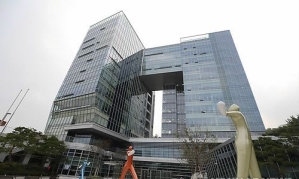
[Sejong=Asia Economy Reporter Moon Chaeseok] Taeyoung Construction held a Safety Management Declaration Ceremony on a Sunday after being inspected by the Ministry of Employment and Labor in April. This was due to the Ministry's strong recommendation to correct the lack of a sincere industrial safety and health system in the existing management plan. This time, the focus shifted to Hyundai Construction. The Ministry strongly recommended that the company overhaul its safety and health management system, deeming its management, organization, and budget all 'unsatisfactory,' and took administrative and judicial actions on 301 violations of the Industrial Safety and Health Act.
The Ministry of Employment and Labor announced on the 2nd the results of the inspection of Hyundai Construction, where three industrial accident deaths occurred this year alone. The inspection was conducted from June 14, focusing on the headquarters' safety and health management system and legal violations at the headquarters and nationwide sites. Since 2011, 51 workers have died while working at this company. This safety and health management system diagnosis was based on the draft enforcement decree of the Serious Accident Punishment Act, which was announced for legislative notice last month.
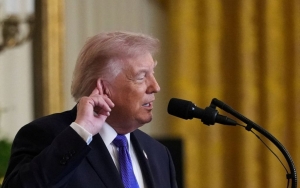
Kwon Gisub, Director of the Industrial Safety and Health Headquarters, urged, "Hyundai Construction must drastically renew its safety and health management system and actively prepare for future risks."
"Overhaul the headquarters' management policies entirely"
The core demand from the government was for the company to completely revise its management policies. Although each business division shares goals according to the representative policy, there are no concrete execution strategies or performance measurement indicators, so they must be newly created. The Ministry warned, "It is necessary to continuously promote and disseminate the representative's policies and goals so that all members of Hyundai Construction can accurately recognize them, and to establish specific execution plans such as evaluating implementation status through performance measurement."
The on-site risk assessments during weekly safety inspection meetings were found to be inadequate and were ordered to be improved. Since some hazardous processes were omitted or the same risks were repeatedly assessed, the Ministry emphasized that inspections should be conducted at the division level. They also stated that the headquarters must create a system to ensure all risk factors identified on-site are improved.
With 500 practitioners... "Increase regular safety managers"
They also ordered an increase in the number of regular safety and health managers among the approximately 500 personnel, citing weak responsibility during task execution. According to the Ministry, about 39% of Hyundai Construction's safety and health managers are regular employees. Notably, all health managers are non-regular employees.
Despite increases in contract amounts and project sites, the addition of construction managers has been sluggish, which the Ministry identified as a problem. The Ministry emphasized, "Measures to strengthen the responsibility and expertise of safety and health personnel, such as promoting regular employment conversion, are necessary," and "It is also necessary to appropriately allocate management personnel at each construction stage according to the rapidly increasing contract amounts and number of sites."
"Redirect labor cost budget to safety education"
Since most of the budget flows into salaries for safety and health managers, the Ministry also instructed to redirect funds toward supporting subcontractors and safety education. Although the company recently invested 11.9 billion KRW in the latest budget, exceeding the average of 6.7 billion KRW over the past three years, the government appears to be intervening in budget usage details. The government is forcing the execution budget to be shifted to education budgets, but it is uncertain whether this will reduce industrial accident deaths.
The Ministry stated, "It is necessary to expand the investment budget for safety facilities and additionally allocate safety education budgets so that on-site workers and subcontractors can directly feel the effects."
Additionally, the Ministry ordered ▲listening to on-site workers' opinions and preparing and implementing improvement plans ▲establishing and verifying subcontractor (supplier) selection criteria ▲strengthening safety and health education.
"301 cases of Industrial Safety and Health Act violations found... administrative and judicial actions taken"
The Ministry revealed that violations of the Industrial Safety and Health Act were found at the headquarters and 45 sites, including 68 nationwide sites inspected. The headquarters was fined 391.4 million KRW and received two corrective orders, while nationwide sites were subject to 25 judicial actions, fines totaling 176.21 million KRW, and 75 corrective orders.
Common issues included inadequate management systems such as not hiring safety and health managers and neglecting safety education. Specifically, deficiencies in risk management such as failure to implement fall and overturn prevention measures (12 sites), improper use of safety management expenses (6 sites), and poor health examinations (16 sites) were detected.
According to the Ministry, Hyundai Construction plans to establish improvement plans based on the inspection results. Local offices and the Korea Occupational Safety and Health Agency will regularly monitor the implementation after the plans are established.
Pilot case before the Serious Accident Punishment Act enforcement... "Substantial measures needed to avoid punishment"
The government emphasized that substantial and effective measures are necessary to prepare for the Serious Accident Punishment Act and prevent serious accidents. Director Kwon stated, "The diagnosis of Hyundai Construction's safety and health management system was not an investigation of violations under the Serious Accident Punishment Act," but stressed, "It is difficult to avoid serious accidents and the Serious Accident Punishment Act with a document-centered safety and health management system."
He added, "To avoid accidents and penalties, business owners and management must prioritize worker safety in management, establish risk factor analysis and improvement procedures guaranteeing on-site worker participation, ensure substantial safety investments and dedicated personnel's safety and health activity time, and focus on measures to raise subcontractors' safety management levels."
© The Asia Business Daily(www.asiae.co.kr). All rights reserved.