"Quarantine Gaps" Lead to Consecutive COVID-19 Cases in Athlete Village... Japanese Public Also Criticizes
Experts: "Athlete Health Must Be the Top Priority"
[Asia Economy Reporter Kim Seohyun] Today (the 23rd) at 8 PM, the Tokyo Olympics, which have faced numerous controversies such as inadequate athlete villages, forced use of Fukushima food supplies, and the absence of major world leaders, will officially open. As the first Olympics in the COVID-19 era, 1,100 athletes from 206 teams, including 205 countries and a refugee team, will participate. The intense competition is scheduled to last for 17 days until August 8.
The main concern is the risk of COVID-19 infections. On the 14th, the Tokyo Olympic and Paralympic Organizing Committee announced that three members of the South African football team?two players and one video analyst?who had arrived in Japan and stayed at the athlete village tested positive for COVID-19. Relatedly, Kazuhiko Tateda, president of the Japanese Society for Infectious Diseases, stated, "The current confirmed cases are just the tip of the iceberg." This has raised fears that the Tokyo Olympics itself could trigger a mass infection.
With the global spread of COVID-19 variants such as Delta, concerns are growing that the congregation of athletes for the Olympic events might further accelerate the spread of the virus. On the 16th, a Ugandan athlete who was staying at a training camp disappeared after refusing to undergo antigen and antibody (PCR) tests.
Yoo Seung-min, Olympic table tennis gold medalist and International Olympic Committee (IOC) athlete representative, also tested positive for COVID-19 shortly after arriving in Tokyo. Yoo had tested negative twice before departure and had received two doses of the vaccine, which sparked even greater controversy.
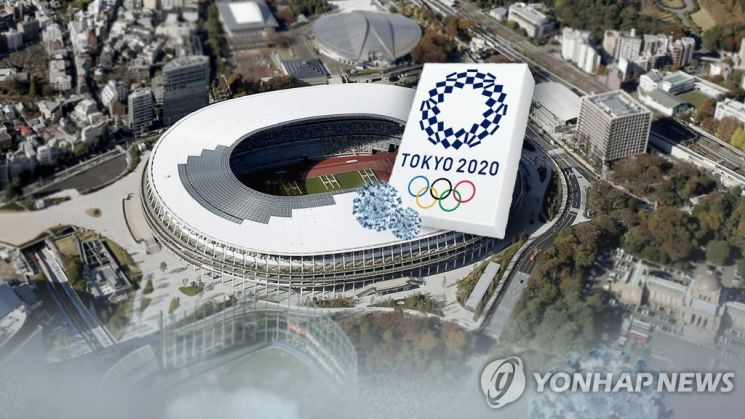
Earlier, the Japanese government announced that it would prevent the spread of infections originating from the Olympics by implementing so-called "bubble quarantine," which isolates Olympic athletes and officials from outside contact upon entry. However, small teams often disembark from planes alongside regular passengers, and their routes during immigration procedures overlap with those of the general public, raising doubts about the effectiveness of this measure.
Japanese media have also expressed concerns about this situation. On the 16th, the Tokyo Shimbun reported that experts predict the daily average of new COVID-19 cases in Tokyo could reach around 2,400 by approximately September 11, shortly after the Olympics conclude.
Nobuhiko Okabe, head of the expert committee on infectious disease countermeasures at the Kawasaki City Institute for Public Health, which is responsible for infection control at the Tokyo Olympic and Paralympic Organizing Committee, emphasized, "If COVID-19 infections spread and a fourth wave hits, and if Tokyo faces a situation like Osaka where patients cannot be hospitalized due to lack of beds, we must consider suspending the games."
Given these circumstances, critical voices are emerging among the Japanese public as well. According to a telephone survey conducted by Mainichi Shimbun on the 17th with 1,087 voters nationwide, 48% responded that they "do not feel like enjoying" the Tokyo Olympics, and 17% said they "never had expectations" for the event. Additionally, a poll conducted by Jiji Press from the 9th to the 12th with 2,000 voters nationwide showed that Prime Minister Suga's approval rating dropped to the 20% range following the Olympic controversies.
Experts emphasize that the health management of our athletes during the Tokyo Olympics should be the top priority. Professor Kang Seong-hoon of the Department of Sports Science at Kangwon National University stated, "The most important thing is to ensure that the blood and sweat athletes have shed in preparation for the competition do not go to waste," adding, "So far, it has been as if Japan has been left to take the risk alone, so the IOC should present more detailed measures to ensure athletes can safely participate in the games."
© The Asia Business Daily(www.asiae.co.kr). All rights reserved.