Sharing Risks Between Store Owners and Headquarters Through Sales-Linked Model
Coexistence Strategy for Outstanding Franchisees
Average Monthly Profit Up 630,000 Won at 19 Converted Stores
Emart24 announced on March 4 that the "Coexistence Declaration" it unveiled last year is actually leading to improved profits for store owners.
Of the 1.6 million won monthly fixed fee for individually leased stores, the company granted franchisees who have faithfully fulfilled their franchise agreements the option to switch to a royalty-type (gross profit sharing) contract even during their contract period. According to the company's analysis of monthly profits at the 19 stores that completed the transition, average profit per store increased by 633,000 won compared to before the switch. Some stores saw profit improvements of up to 1.39 million won.
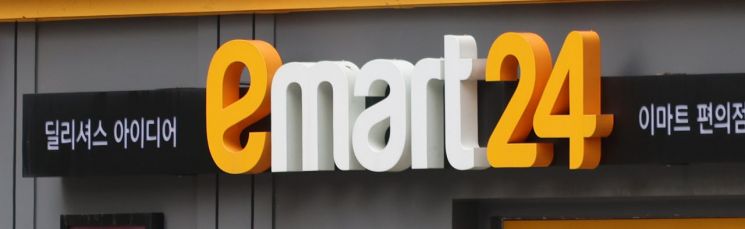
So far, 377 stores have applied for the royalty conversion, with 65 stores having completed the process, and 12 more stores scheduled to switch soon. For low-profit stores that had a heavy burden from the fixed monthly fee, shifting to a royalty system linked to sales has reduced their perceived financial burden, as they no longer have to pay a fixed amount every month.
The royalty-type conversion changes the store's profit structure to a sales-linked model, distributing risk between the parties. Under this system, 71% of the gross profit is allocated to the franchisee, while 29% goes to headquarters. As the store owner's profit increases, the headquarters must accept reduced revenue compared to the previous fixed monthly fee. Emart24 considers this not as a short-term performance policy, but as a strategy to enhance operational stability for low-profit stores and to strengthen the brand's competitiveness over the long term by supporting their recovery.
Through institutional support such as the royalty-type conversion, Emart24 is focusing on improving franchisee profit structures, while also working to enhance product competitiveness and drive tangible sales growth across all stores. Last year, the company leveraged synergies with Shinsegae Food, Josun Hotels, and other Shinsegae Group affiliates to launch new items such as the "Attention-Grabbing Burger" and the "Seoul Daebbang" series. This year, Emart24 introduced 12 types in the "Dujjonku (Dubai Chewy Cookie)" series, continuing its monthly rollout of new products that reflect current trends.
An Emart24 representative stated, "We see it as significant that the profits of stores that have switched to the royalty model are improving and that positive changes are being observed in the field. We plan to drive mutual growth between headquarters and franchisees by strengthening both coexistence programs and product competitiveness."
© The Asia Business Daily(www.asiae.co.kr). All rights reserved.