China’s 4th Generation Mobile Radar System YLC-8B
Deployed in Iran but Failed to Stop U.S.-Israel Airstrikes
Proved Ineffective in Venezuela as Well... "Effectiveness in Doubt"
Questions are being raised about the performance of Chinese-made air defense systems in Iran after they failed to prevent airstrikes by the United States and Israel.
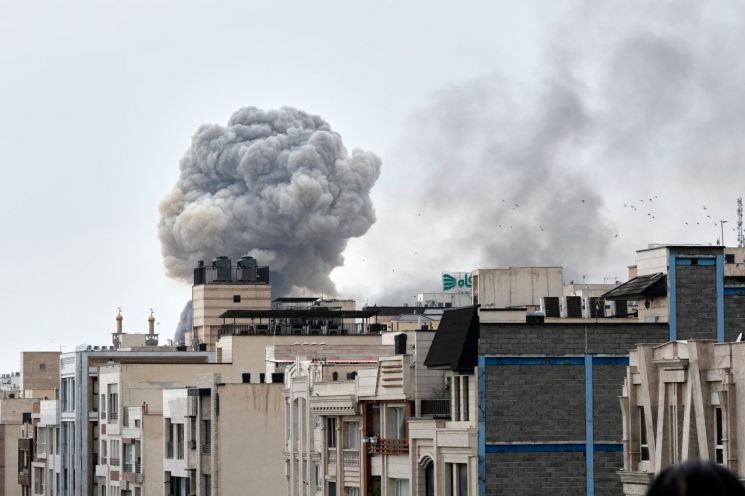 Smoke is rising near Tehran, the capital of Iran, on the 2nd (local time). Photo by AP Yonhap News Agency
According to foreign media outlets such as Taiwan's Newtalk and Hong Kong's South China Morning Post (SCMP) on March 3, Iran has deployed China's 4th Generation Mobile Radar System YLC-8B in the capital Tehran and other areas, in addition to its existing Russian-made air defense systems. China first unveiled the YLC-8B at the Zhuhai Airshow in 2016, claiming it could detect U.S. F-22 and F-35 stealth fighters from a distance of 250 kilometers. Since then, China has promoted its domestically developed air defense network as being capable of detecting and intercepting stealth aircraft.
Iran has also introduced and is operating China's domestically developed new long-range surface-to-air missile HQ-9B. The HQ-9B, with a range of 250 kilometers, is equipped with active radar guidance and an infrared seeker, allowing it to intercept stealth aircraft while evading electronic warfare attacks. China has also provided Iran with the BeiDou satellite navigation system, allowing Iran to replace the U.S. GPS system.
However, Iran was unable to shoot down a single aircraft during massive airstrikes, in which Israel deployed over 200 fighter jets and the U.S. mobilized B2 stealth bombers and Tomahawk cruise missiles to strike more than 1,000 targets. Taiwan's FTV, citing experts, reported, "Iran invested a massive amount in purchasing Chinese-made radar, but it proved useless during last year's attack on nuclear facilities and this year's large-scale airstrikes."
The Times of India pointed out, "Combat analysts are investigating whether the Chinese air defense system failed to operate properly due to technical defects or was simply overwhelmed by the large-scale offensive by the U.S.-Israel coalition," adding, "If it cannot protect key facilities from enemy airstrikes, the effectiveness of the Chinese air defense system will be called into question."
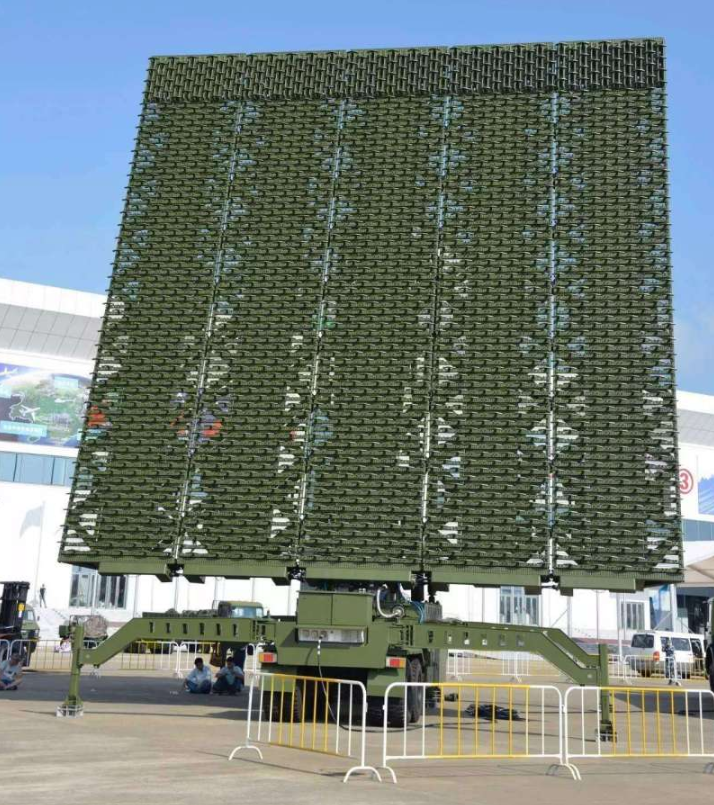
Chinese-made radar also drew skepticism in Venezuela in January. Venezuela had installed the Chinese JY-27A radar. China has promoted this radar as having powerful stealth target detection and anti-jamming capabilities, but it failed to detect U.S. military aircraft sent to capture former President Nicolas Maduro.
Dennis Wilder, a professor at Georgetown University, told SCMP, "The U.S. and Israel demonstrated overwhelming superiority in electronic and cyber warfare, intelligence gathering, and the integration of land, sea, air, and space assets," adding, "China is about 10 years behind the U.S. in utilizing advanced technology."
Meanwhile, there are growing concerns about uncertainty surrounding the U.S.-China summit as the U.S. has launched consecutive attacks on Venezuela and Iran, which are classified as China's strategic allies.
David Arase, Professor of International Politics at the Johns Hopkins-Nanjing Center for Chinese and American Studies, told SCMP that it "could be awkward" for Chinese President Xi Jinping to welcome U.S. President Donald Trump. However, he added, "Even so, China needs to limit many downside risks in its relationship with the U.S.," and, "Even if there is no new progress, it will help keep relations with the unpredictable U.S. president stable and predictable."
© The Asia Business Daily(www.asiae.co.kr). All rights reserved.