New York Fed President: "Tariff Burdens Shifted to U.S."
Tariff Impact Expected to Be Temporary
Minneapolis Fed President Highlights Rising Oil Prices
International Oil Prices Soar After Iran Airstrikes
Energy Price Increases Drive Inf
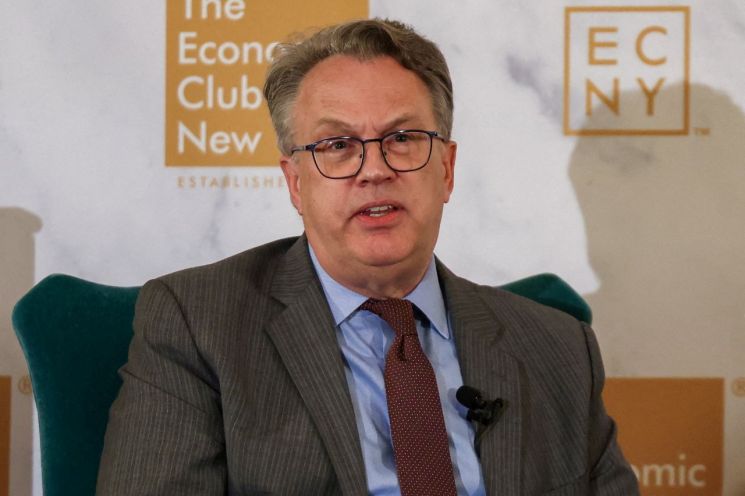 John Williams, President of the Federal Reserve Bank of New York. Photo by Reuters and Yonhap News Agency
The presidents of the Federal Reserve Banks of New York and Minneapolis signaled a possible rate freeze on March 3 (local time), expressing concerns about rising inflation. They explained that inflationary pressure is mounting due to the tariff policies of the Donald Trump administration and the war with Iran. With expectations high that the Federal Open Market Committee (FOMC) will hold the benchmark interest rate steady at its upcoming meeting scheduled for March 18, this stance is likely to persist longer than initially anticipated.
Tariffs Drive Inflation Up by as Much as 0.7% Point... But Effects Expected to Be Temporary
John Williams, President of the Federal Reserve Bank of New York, stated at a conference held in Washington, D.C. on this day that "according to an analysis by the New York Fed, most of the burden has fallen on U.S. businesses and consumers."
President Williams added, "Moreover, prices of imported goods in the U.S. have already risen significantly due to tariffs, and it is highly likely that the full effects have yet to be realized."
On February 12, the New York Fed released a report indicating that about 90% of the tariff burden has been passed on to U.S. importers and consumers. This finding stands in contrast to President Trump's assertion that foreign companies would bear the tariff costs.
Additionally, President Williams pointed out that the Trump administration's tariff policy is affecting not only the domestic economy but also overseas markets, and is becoming an obstacle for the Federal Reserve in achieving its 2% inflation target.
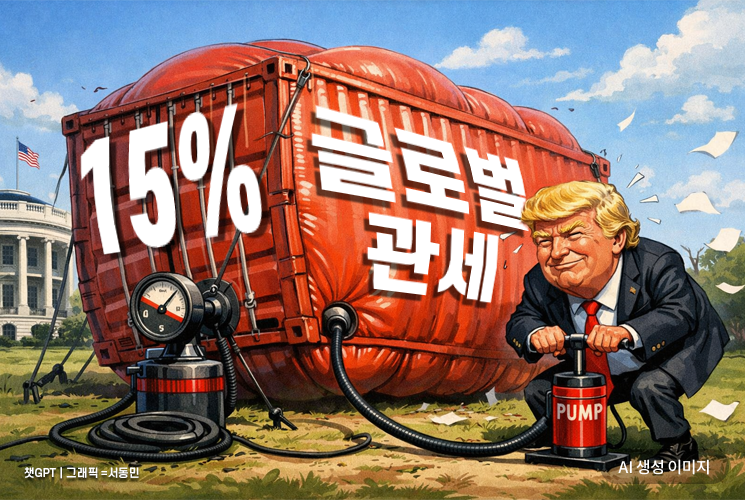
He noted, "So far, we estimate that the tariff increases have contributed about 0.5 to 0.75 percentage points to the current inflation rate, which is around 3%."
He further emphasized, "The FOMC defines long-term price stability as 2% inflation, but achieving this target has been temporarily stalled due to the effects of tariffs."
The Fed considers inflation and employment indicators as the most critical variables when determining the benchmark interest rate. In the minutes of the January FOMC meeting released last month, the impact of tariff policy on inflation was discussed. Committee members assessed that tariffs are driving up core goods prices, but also projected this impact would diminish from the middle of this year.
President Williams also stated that the inflationary effects of the Trump administration's tariff policy will be "temporary," and that the Fed will achieve its inflation target by 2027.
He assessed that the U.S. economy "appears to be on solid footing," and said the country is in a "very advantageous position" to achieve both price stability and full employment.
President Williams added that if inflation falls after the tariff effects subside, "eventually, an additional cut in the benchmark rate would be justified to prevent monetary policy from inadvertently becoming more restrictive."
Iran War a Major Factor... Rising Oil Prices Intensify Inflation Concerns
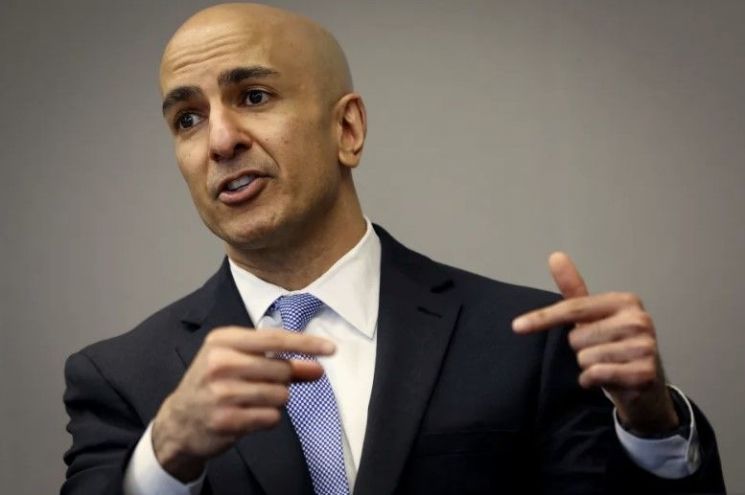
Neel Kashkari, President of the Federal Reserve Bank of Minneapolis, pointed out that "energy prices" are the most critical factor for inflation, referencing the U.S. and Israeli airstrikes on Iran.
President Kashkari, speaking the same day at the Bloomberg Invest Conference held in New York, said, "Given the current geopolitical situation, we need to gather much more data," highlighting the inflationary pressures resulting from the surge in global oil prices following the Iran airstrikes.
After the airstrikes, Major General Ebrahim Javari of the Islamic Revolutionary Guard Corps (IRGC) stated, "The Strait of Hormuz is now closed," warning, "We will sink any vessel attempting to pass through the strait and prevent even a single drop of oil from being exported, causing international oil prices to soar to as much as $200 per barrel."
As President Trump hinted at deploying ground troops to the Iran war, raising concerns that the conflict could become a prolonged one, international oil prices have continued to rise.
According to Korea National Oil Corporation, West Texas Intermediate (WTI) crude oil, which was $67.02 per barrel just before the U.S. and Israeli airstrikes on Iran (February 27), soared to $71.23 per barrel by March 2, just three days later. Brent crude and Dubai crude also rose from $72.48 and $71.24 per barrel to $77.74 and $80.79 per barrel, respectively.
Vandana Hari, CEO of energy research firm Vanda Insights, said, "At this point, a full-scale military conflict between the U.S. and Iran is anticipated, which is unprecedented. If Iran's retaliatory actions continue for several days, it could cause severe disruptions to oil supply in the Middle East and the worst-case scenario could unfold."
However, President Kashkari said, "At this stage, it is too early to judge how this will affect inflation or how long the impact will last."
Meanwhile, the FOMC will meet on March 18 to decide the benchmark interest rate. The market expects the rate to remain unchanged at the March meeting. It is known that both President Williams and President Kashkari supported holding the rate steady at the January FOMC meeting.
© The Asia Business Daily(www.asiae.co.kr). All rights reserved.