Tariffs Raised Inflation by 0.5 to 0.7 Percentage Points
"U.S. Economy Remains Solid"
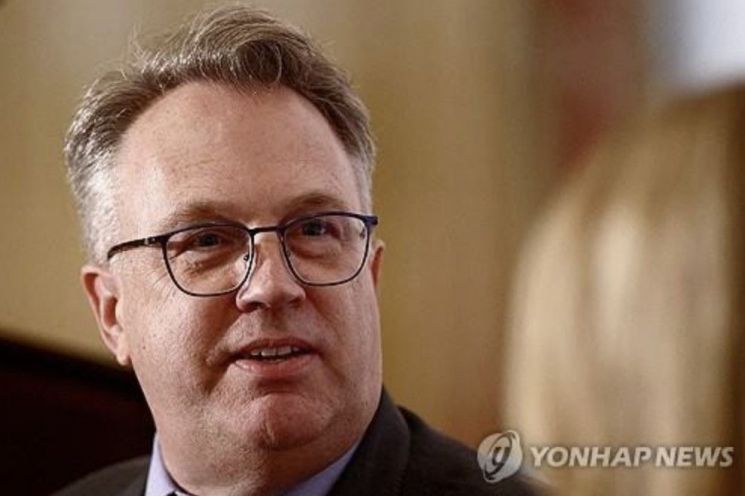
John Williams, President of the Federal Reserve Bank of New York, stated that the burden of President Donald Trump's tariff policy has been passed on to Americans and American businesses. This contradicts the Trump administration's claim that exporting countries bear the tariffs.
President Williams said at a conference held in Washington, D.C. on the 2nd (local time), "The tariff burden has been overwhelmingly shifted domestically," making this point clear.
He further explained, "According to the analysis by the Federal Reserve Bank of New York, most of the burden has fallen on American companies and consumers. In addition, due to the tariffs, import prices in the United States have already increased significantly, and it is highly likely that the full impact has not yet materialized."
According to the report from the New York Fed, up to 90% of the additional costs caused by tariffs were passed on to domestic producers and consumers. President Trump and White House officials have argued that exporters would absorb the costs rather than raise prices.
Previously, Kevin Hassett, White House National Economic Council (NEC) Director, appeared on CNBC and criticized the New York Fed's report, calling it "the worst paper in the history of the Federal Reserve."
President Williams pointed out that the Trump administration's tariff policy is affecting not only the domestic market but also overseas, and is posing an obstacle to the Fed's achievement of its inflation target (2%).
He pointed out, "So far, we estimate that the tariff increases have contributed about 0.5 to 0.75 percentage points to the current inflation rate, which stands at around 3%."
He added, "The Federal Open Market Committee (FOMC) defines price stability as a long-term inflation rate of 2%, but the impact of tariffs has temporarily stalled the achievement of that target."
However, President Williams noted that the impact of the Trump administration’s tariff policy on inflation would be temporary and stated that the Fed would achieve its inflation target by 2027.
He evaluated that the U.S. economy appears to be "on a solid footing." He also said that the U.S. is "in a very favorable position" to achieve both price stability and full employment.
President Williams added that if inflation declines after the effects of tariffs disappear, "it would ultimately justify additional cuts to the policy rate to prevent monetary policy from unintentionally becoming more restrictive."
© The Asia Business Daily(www.asiae.co.kr). All rights reserved.