Vote scheduled after ending the filibuster on the afternoon of the 25th
On the 24th, the National Assembly placed the third amendment to the Commercial Act, which mandates the cancellation of treasury shares held by listed companies, on the agenda of its plenary session. The People Power Party launched a filibuster (unlimited debate) in protest against the handling of contentious bills led by the Democratic Party of Korea, the ruling party.
The Commercial Act amendment bill, introduced as the first item on the agenda at the plenary session that day, passed the previous day’s full session of the Legislation and Judiciary Committee with only the Democratic Party of Korea voting in favor. The amendment stipulates, in principle, that when a company acquires its own shares, it must cancel them within one year, and imposes an administrative fine of up to 50 million won for violations. Treasury shares acquired before the law is amended must be cancelled within one and a half years.
However, exceptions may be granted, subject to approval by the general meeting of shareholders, when treasury shares are used for purposes such as compensation for executives and employees or employee stock ownership plans.
The amendment also includes an exception clause for companies with restrictions on foreign investment holdings, allowing them up to three years from the enforcement date to dispose of their treasury shares.
Previously, the Democratic Party of Korea passed the first amendment to the Commercial Act, which expands the duty of loyalty of corporate directors from the company to shareholders, and the second amendment, which centers on making cumulative voting mandatory and further expanding the separate election of audit committee members.
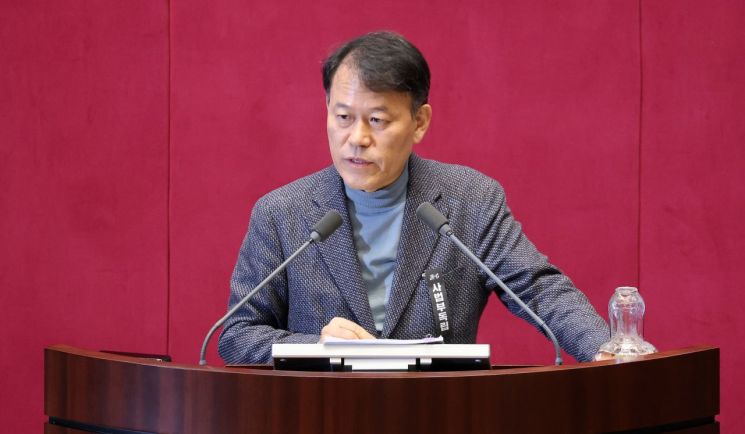
As soon as the bill was introduced, the People Power Party requested a filibuster, with People Power Party lawmaker Yoon Han-hong taking the floor as the first speaker.
The Democratic Party of Korea plans to terminate the filibuster and put the bill to a vote on the afternoon of the 25th, in accordance with the National Assembly Act, which allows a filibuster to be ended with the approval of three-fifths of all incumbent lawmakers 24 hours after it begins.
The Democratic Party of Korea intends to handle one bill per day until March 3, when the February extraordinary session of the National Assembly ends. Following the third amendment to the Commercial Act, it plans to introduce the three judicial reform bills, including the law on the crime of distorting the law, the constitutional complaint system against court rulings, and the bill to increase the number of Supreme Court justices. After that, it will sequentially introduce the amendment to the National Referendum Act, the special act on the integration of South Jeolla Province and Gwangju, the amendment to the Local Autonomy Act, and the amendment to the Child Allowance Act.
© The Asia Business Daily(www.asiae.co.kr). All rights reserved.
![Clutching a Stolen Dior Bag, Saying "I Hate Being Poor but Real"... The Grotesque Con of a "Human Knockoff" [Slate]](https://cwcontent.asiae.co.kr/asiaresize/183/2026021902243444107_1771435474.jpg)















