Applying "subversion" charges to the 2020 opposition primary
Amnesty: "Reflects a grave human rights situation"
In the appeal trial for the so-called "Hong Kong 47" case, which has seen the largest number of prosecutions since the enforcement of the Hong Kong National Security Law, the court completely rejected the appeals of 12 opposition figures. International criticism of the ruling is also mounting.
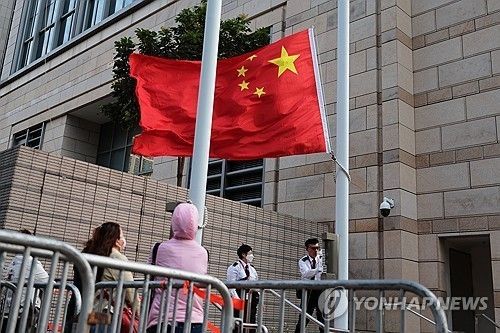
According to Chinese-language media such as Ming Pao and Sing Tao Daily on the 23rd (local time), the Court of Appeal of the High Court of Hong Kong dismissed the appeals filed by 12 individuals involved in the pro-democracy camp's unofficial primary and upheld the original verdicts. They include former Legislative Council members Leung Kwok-hung, Lam Cheuk-ting, Raymond Chan, and Helena Wong, who had previously been sentenced to prison terms ranging from 4 years and 5 months to 7 years and 9 months. Separately, an appeal lodged by the Department of Justice against the acquittal of a former district councillor in the original trial was also dismissed.
This appeal stemmed from the so-called "Hong Kong 47" case, in which, in early 2021, a large number of key pro-democracy activists and politicians were arrested en masse on charges of subversion of state power.
Following the large-scale anti-government protests in 2019, the Hong Kong opposition camp held an unofficial primary two months before the Legislative Council election that had been scheduled for September 2020, in order to select opposition candidates. Through this, they planned to secure a majority of seats in the Legislative Council. Around 600,000 people took part in the vote.
However, Hong Kong prosecutors declared the primary election illegal. They argued that it was part of a subversion plan organized with the aim of paralysing the Hong Kong government by securing a majority in the Legislative Council and forcing the resignation of the chief executive. In early 2021, prosecutors arrested 55 pro-democracy figures and indicted 47 of them on subversion charges under the Hong Kong National Security Law. This was the largest single case of prosecution since the law came into effect. Of these, 45 were found guilty and sentenced to prison terms ranging from 4 years and 2 months to 10 years.
After the primary, the Hong Kong government postponed the Legislative Council election, citing COVID-19 as the reason. China then revised Hong Kong's electoral system so that only "patriots" could stand as candidates. The Legislative Council election, eventually held in December 2021, 15 months later than originally scheduled, recorded the lowest voter turnout in history, with the pro-democracy camp boycotting the race.
Some Western countries and civic groups criticized the case as a stark example showing that China is suppressing dissenting forces.
Penny Wong, Australia's Minister for Foreign Affairs, expressed "deep concern" over the failure of Australian citizen Gordon Ng's appeal, stating that the authorities in Canberra have "consistently expressed strong opposition to the continued and broad application of the National Security Law by the authorities in China and Hong Kong."
Amnesty International Hong Kong said, "By failing to overturn wrongful convictions and sentences, the court has missed a critical opportunity to rectify a massive injustice," and argued, "Peaceful opposition to the government is not a crime, and all of the 'Hong Kong 47' who remain imprisoned must be released immediately and unconditionally."
© The Asia Business Daily(www.asiae.co.kr). All rights reserved.
![Clutching a Stolen Dior Bag, Saying "I Hate Being Poor but Real"... The Grotesque Con of a "Human Knockoff" [Slate]](https://cwcontent.asiae.co.kr/asiaresize/183/2026021902243444107_1771435474.jpg)
















