Post-Regrowth Management Determines Yield and Quality
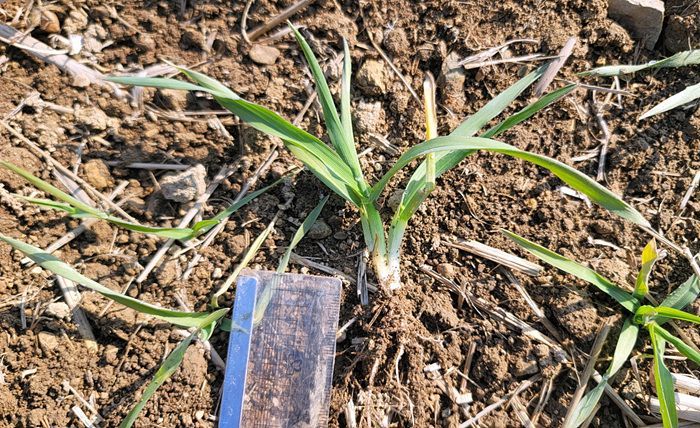
The Jindo-gun Agricultural Technology Center has requested that farmers apply topdressing fertilizer around the time of vegetative regrowth in autumn-sown cereals and thoroughly manage field drainage to ensure stable production.
The vegetative regrowth stage in cereals refers to the period when growth, which had stopped due to low winter temperatures, resumes as temperatures rise. This year, the vegetative regrowth stage for cereals in Jindo-gun was found to be February 12, the same date as last year, and topdressing is most effective when applied within 10 days after this stage begins.
For topdressing, the appropriate application rate is 10 to 12 kilograms of urea fertilizer per 1,000 square meters (10 ares), or the same total amount divided into two applications at 10-day intervals. For malting barley, it is advisable to apply 7 kilograms at once.
Because cereals are vulnerable to waterlogging damage, drainage management is also important. The drainage channels in the field should be maintained at a depth of around 30 centimeters, and care must be taken to prevent water from pooling. If yellowing symptoms caused by waterlogging appear, a 2% urea solution (400 grams of urea in 20 liters of water) should be sprayed on the foliage at a rate of about 100 liters per 1,000 square meters, 2 to 3 times, to promote recovery of growth, and early weed control should be carried out in parallel.
Farmers who missed the autumn sowing period and are planning spring sowing must complete sowing by the end of this month at the latest to ensure stable growth.
Oh Youngae, head of the Research and Development Division, said, "For cereals that have overwintered, field management and nutrient management after the vegetative regrowth stage determine both yield and quality," adding, "Timely implementation by farmers is more important than anything else, and we will do our best to strengthen on-site technical support to produce high-quality cereals."
Meanwhile, the county's cereal sowing area for this year is 854 hectares (535 hectares of barley, 241 hectares of wheat, and 78 hectares of oats), an increase of about 79.8% compared to last year's 475 hectares (240 hectares of barley, 145 hectares of wheat, and 90 hectares of oats).
© The Asia Business Daily(www.asiae.co.kr). All rights reserved.
![Clutching a Stolen Dior Bag, Saying "I Hate Being Poor but Real"... The Grotesque Con of a "Human Knockoff" [Slate]](https://cwcontent.asiae.co.kr/asiaresize/183/2026021902243444107_1771435474.jpg)















