Gangwon Province to Invest 31.9 Billion Won by 2026
Accelerating Infrastructure Beyond the Era of 3,500 Hydrogen Vehicles
Sokcho Nohak-dong Hydrogen Charging Station to Begin Operation in Early April
Gangwon Special Self-Governing Province announced on the 23rd that, following the full-scale operation of the Taebaek hydrogen charging station starting February 2 to improve the convenience of using hydrogen vehicles in the province and to strengthen the foundation of the hydrogen economy, it plans to complete construction of the Sokcho Nohak-dong hydrogen charging station in March and begin operating it in early April.
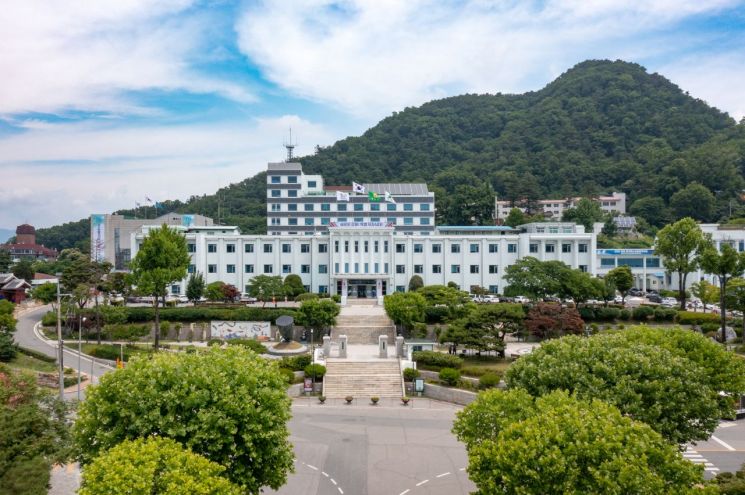
This expansion of hydrogen charging stations is a preemptive measure to respond to the recent increase in the distribution of hydrogen vehicles. It has been promoted to eliminate regional charging gaps within the province and to resolve overloading issues at existing stations caused by increased hydrogen vehicle charging volumes. A total of 10 billion won has been invested in building the two hydrogen charging stations.
First, the Taebaek hydrogen charging station, which began operation in early February, is the only hydrogen charging station in the nearby area (Taebaek, Yeongwol, Jeongseon). It is improving access to hydrogen charging in the southern Yeongdong region and is expected to help ease increased charging demand due to reduced fuel efficiency in winter, as well as alleviate the need for residents of nearby cities and counties to travel long distances for charging.
In addition, the Sokcho Nohak-dong hydrogen charging station has been promoted to relieve the concentration of demand at the existing Sokcho Jangsa-dong charging station used by residents of Sokcho, Goseong, and Yangyang, and to reduce charging inconvenience caused by the increase in vehicles during the peak tourist season. With the completion of this additional charging station, the stability of hydrogen supply in the northern East Coast region is expected to improve significantly.
Meanwhile, this year’s target for the distribution of hydrogen vehicles in the province is a total of 440 units, with total support of 31.9 billion won, including both national and local government funding.
As of the end of 2025, a total of 3,534 hydrogen vehicles had been distributed in the province, which is the highest level in the country on a per-capita basis, excluding Ulsan.
This year, the province plans to distribute 440 vehicles in total, including 390 hydrogen passenger cars, for which demand has surged following the launch of new models last year, and 50 hydrogen buses, often referred to as "driving air purifiers."
Going forward, Gangwon Special Self-Governing Province plans to respond to the increase in hydrogen vehicles by sequentially promoting measures such as expanding capacity in the Wonju area, further expanding dedicated charging facilities for commercial vehicles such as hydrogen buses, and stabilizing the supply chain by improving the hydrogen supply system.
Son Changhwan, Head of the Global Headquarters at the Second Government Office of Gangwon Special Self-Governing Province, said, "With the operation of the Taebaek and Sokcho Nohak-dong hydrogen charging stations as a starting point, we will strengthen regional balance in the province’s charging infrastructure and establish a stable hydrogen supply system," adding, "To realize a Gangwon-style hydrogen economy, we will continue to expand full-cycle infrastructure covering production, storage, transportation, and charging."
© The Asia Business Daily(www.asiae.co.kr). All rights reserved.
![Clutching a Stolen Dior Bag, Saying "I Hate Being Poor but Real"... The Grotesque Con of a "Human Knockoff" [Slate]](https://cwcontent.asiae.co.kr/asiaresize/183/2026021902243444107_1771435474.jpg)















