Seoul Transportation Corporation: "Review Needed from a Public Transport Welfare Perspective"
If the government's planned reform of the industrial electricity tariff is implemented, Seoul Transportation Corporation, which operates Seoul Subway Lines 1 to 8, is expected to shoulder an additional 50 billion won in electricity costs per year. Citing this, the corporation has called for the introduction of an "electricity tariff for electric railways" as part of public transport welfare.
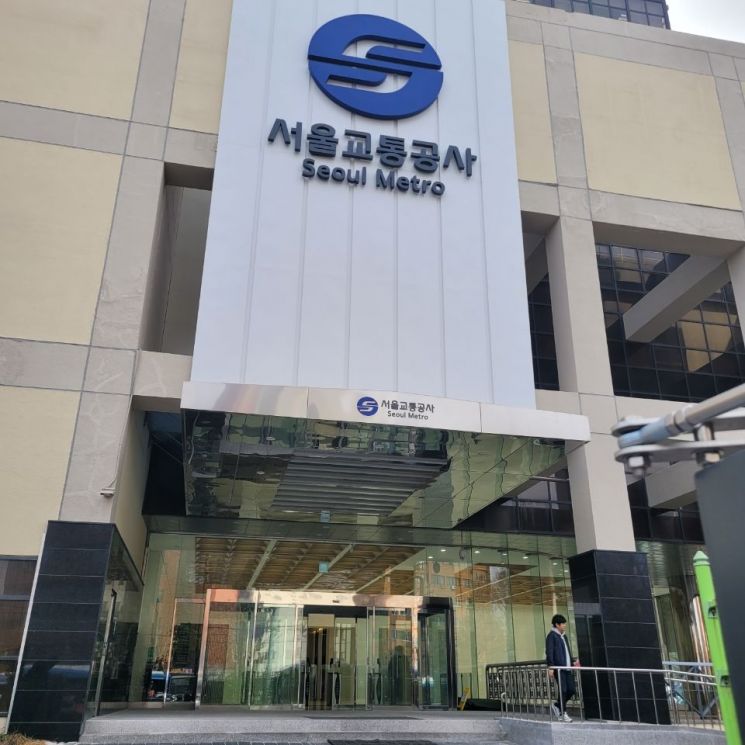 Seoul Transportation Corporation urged the introduction of an 'electricity tariff for electric railways' as a public transportation welfare measure. Provided by Seoul Transportation Corporation.
Based on the government's reform direction, Seoul Transportation Corporation simulated its actual power usage patterns and analyzed that the seasonal and time-of-use tariff reform would result in an additional burden of approximately 25.7 billion won per year.
The government is reviewing a plan to lower daytime rates and raise nighttime rates to maximize the use of solar power. However, the corporation explained that, because subway power demand is concentrated during commuting hours (7:00 to 9:00 a.m. and 6:00 to 8:00 p.m.), the tariff burden is bound to increase instead.
The regionally differentiated tariff system that the government is considering introducing within the year would also work against the corporation. Seoul's power self-sufficiency rate is 9%, ranking near the bottom among the country's 17 metropolitan governments, meaning that once differentiated rates are applied, the city will be subject to relatively higher tariffs. The corporation estimated that if electricity rates in the Seoul area rise by 20 won per kWh, it would incur an additional annual cost of about 25.8 billion won.
The corporation's electricity cost burden has already been rising steeply. Due to seven rate hikes since 2022, the electricity bill it paid last year reached 274.3 billion won, up 58.1% from 173.5 billion won in 2021. During the same period, the corporation worked to reduce power consumption by 1.9% (25 GWh), but this was not enough to offset the scale of the rate increases.
On top of this, there is criticism that the effectiveness of its conservation efforts has been further undermined by the Ministry of Climate and Environment reducing greenhouse gas emissions allowances for the fourth planning period (2026 to 2030) by 15% compared with the previous period.
The corporation pointed out that, while it is currently subject to the same industrial electricity tariff (245.9 won per kWh) as large for-profit industrial companies, separate educational tariffs (182.6 won) are applied to educational and cultural facilities such as schools, libraries, and art museums, and therefore called for institutional improvements for the public transport sector.
Han Younghee, Head of Planning at Seoul Transportation Corporation and Acting President, said, "While we agree with the overall direction of the government's energy policy, we hope that institutional improvements, such as the introduction of a reasonable electricity tariff for electric railways that reflects the specific characteristics and public nature of railway operators, will be discussed together."
© The Asia Business Daily(www.asiae.co.kr). All rights reserved.
![Clutching a Stolen Dior Bag, Saying "I Hate Being Poor but Real"... The Grotesque Con of a "Human Knockoff" [Slate]](https://cwcontent.asiae.co.kr/asiaresize/183/2026021902243444107_1771435474.jpg)















