Government Holds Market Situation Monitoring Meeting
Trade Volatility Grows After Nullification of Reciprocal Tariffs
Concerns Mount Over Possible Blockade of the Strait of Hormuz
Government Conducts Spot Inspections of Oil and Gas Facilities
The government announced that it will respond with particular vigilance to the potential shock to the Korean economy from the double blow of trade uncertainty caused by the nullification of reciprocal tariffs and the rise in international oil prices. While the government currently assesses that the short-term impact on the markets will be limited, it plans to operate a 24-hour monitoring system.
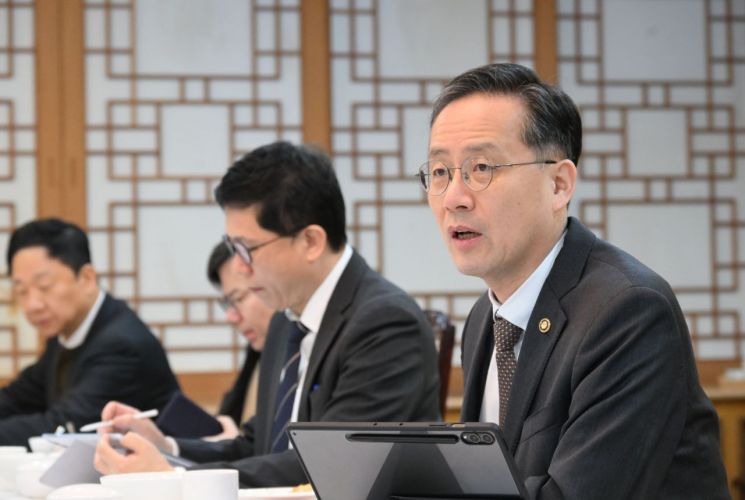 Lee Hyungil, First Vice Minister of the Ministry of Finance and Economy, is presiding over a Market Situation Review Meeting at Government Complex Seoul in Jongno-gu, Seoul, on the 23rd. Ministry of Finance and Economy
On the morning of the 23rd, the Ministry of Finance and Economy held a Market Situation Monitoring Meeting at the Government Complex Seoul, presided over by First Vice Minister Lee Hyungil, to review market trends related to the U.S. Supreme Court ruling nullifying reciprocal tariffs and to discuss response measures. The Bank of Korea, the Financial Services Commission, the Financial Supervisory Service, and the Ministry of Trade, Industry and Energy, among others, attended the meeting.
Immediately after the U.S. Federal Supreme Court ruled that reciprocal tariffs based on the International Emergency Economic Powers Act (IEEPA) were illegal, U.S. President Donald Trump imposed a 10% global tariff. Just one day later, on the 21st (local time), he announced, citing Section 122 of the Trade Act, that he would "raise the tariff rate to 15%." In a situation where the Trump administration is expected to review and implement a variety of follow-up measures even after imposing global tariffs under Section 122, including Section 232 of the Trade Expansion Act and Section 301 of the Trade Act, uncertainty is growing across numerous pending issues, such as how Korea will implement its investment treaty with the United States and other trade agreements that have already been concluded.
The government is closely watching the impact that these retaliatory high tariffs, imposed in response to the ruling that the tariffs were illegal, may have on domestic and international financial and foreign exchange markets. It assessed that the immediate impact on global markets was limited, noting that on the day of the U.S. Supreme Court decision nullifying reciprocal tariffs, U.S. and European stock markets rose and the dollar index remained stable.
However, it added, "Regardless of this latest U.S. Supreme Court ruling, product-specific tariffs on items such as automobiles and steel (based on Section 232 of the Trade Expansion Act) remain in place, and the U.S. has already announced the launch of investigations under Section 301 of the Trade Act. We will therefore closely monitor developments in the United States and moves by other countries, and will make active efforts to ensure that neither the balance of benefits secured through the Korea-U.S. tariff agreement nor the conditions for our exports to the United States are undermined."
On top of this, the rise in international oil prices amid heightened geopolitical risks stemming from Iran is further increasing uncertainty for the Korean economy. International oil prices surged on February 19 (local time) to a six-month high, up 2%, as the risk of a blockade of the Strait of Hormuz, driven by concerns over a possible U.S. airstrike on Iran, was priced in. While engaged in nuclear negotiations with Iran, the United States has concentrated military assets in the Middle East, including the largest carrier strike group deployment since the 2003 invasion of Iraq, stepping up pressure on Tehran. Although Washington has mentioned a two-week deadline for negotiations with Iran, tensions in the Middle East are escalating as the situation remains on a knife edge in which an attack could be launched at any time once the order is given.
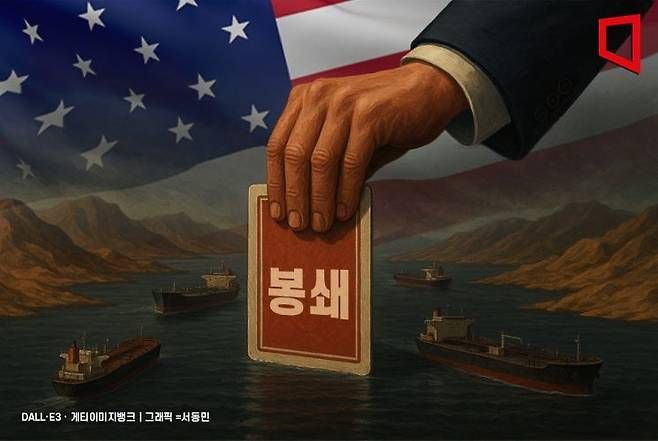
The key variable determining the direction of international oil prices is whether the Strait of Hormuz remains under control. The Strait of Hormuz is a crucial route for Middle Eastern crude oil imports into Korea, and about 20% of the world’s crude oil and roughly 40% of seaborne crude pass through this chokepoint. As instability in the international situation has grown, including the risk of a temporary blockade of the Strait of Hormuz, the government conducted unannounced inspections over the past weekend of oil and gas facilities such as Korea Gas Corporation’s LNG production bases and Korea National Oil Corporation’s stockpiling bases.
A sharp rise in international oil prices can act as an upward pressure on inflation. As international oil prices have risen, gasoline prices at domestic gas stations have turned upward for the first time in 11 weeks. Last month, consumer prices increased by 2.0% from a year earlier, marking the smallest gain in five months. The stabilization of consumer price inflation in the 1% range was largely due to the halt in the upward trend of petroleum product prices following the earlier decline in international oil prices.
The government plans to keep a close watch on the situation in case of any sudden geopolitical developments. Vice Minister Lee stated, "External risk factors such as geopolitical conflicts remain in place," adding, "We will maintain a heightened sense of vigilance, continue to operate our 24-hour market monitoring system, and closely examine market conditions."
© The Asia Business Daily(www.asiae.co.kr). All rights reserved.
![Clutching a Stolen Dior Bag, Saying "I Hate Being Poor but Real"... The Grotesque Con of a "Human Knockoff" [Slate]](https://cwcontent.asiae.co.kr/asiaresize/183/2026021902243444107_1771435474.jpg)
















