Nomura Holdings and Itochu Corporation to Establish Fund Within This Month
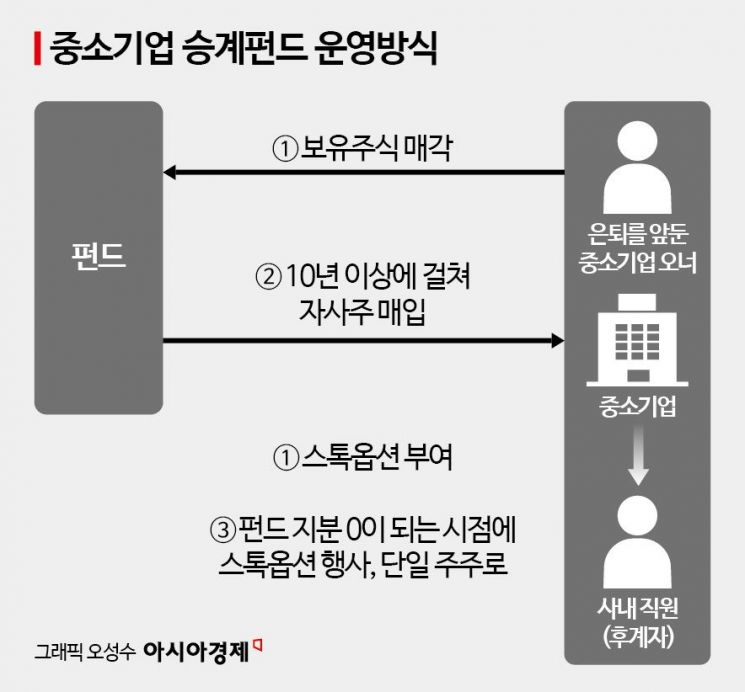
Japan's Nomura Holdings and Itochu Corporation are establishing a "SME Succession Fund." The structure is designed to support the transfer of shareholdings owned by retiring founders to in-house employees. Attention is focusing on whether this could change Japan's small and medium-sized enterprise ecosystem, which has relied on mergers and acquisitions (M&A) due to difficulties in finding successors.
The Nihon Keizai Shimbun (Nikkei) reported on the 23rd that this SME succession fund is scheduled to be launched within this month. Nomura Holdings plans to operate a subsidiary that will manage the fund, while Itochu Corporation and Sumitomo Mitsui Trust Bank will jointly contribute capital. Nomura Holdings has previously run a business succession program that connects external professional managers with small and medium-sized enterprises. It also plans to actively seek out clients by leveraging Nomura Securities' sales network. Itochu Corporation will support companies by developing new business partners and expanding collaboration partners in line with their needs.
The fund is expected to receive capital contributions from five companies, including accounting software company Freee and Nihon M&A Center, Japan's largest M&A platform. The fund size is expected to be 4.7 billion yen (approximately 43.9 billion won). Regional banks are also aiming to raise close to 10 billion yen (approximately 93.5 billion won) this year.
The succession fund begins by purchasing the founder's shareholdings. The company then grants stock options to successor-candidate employees, giving them the right to acquire new shares at a predetermined price. Next, the company buys back the shares held by the fund as treasury stock and cancels them. Through this process, the fund gradually reduces its stake. After roughly 10 years, when the fund's stake falls to zero, the candidate employees exercise their stock options. By acquiring new shares, they secure management control as sole shareholders. The fund takes the profit generated from the sale of shares and the dividend income.
In Japan, the aging of the baby-boom generation has led to a rapid increase in the number of SME managers nearing retirement, turning the succession issue into a major policy concern. Until now, business succession has often been handled through M&A with investment firms or large corporations. Recently, however, there has been a growing preference for succession by internal employees, due to concerns that the company could be sold off in the future.
However, even when founders wish to hand over management to internal staff, many succession plans have fallen through because employees lack the funds to acquire shares. After a founder's death, shareholdings have often been dispersed among relatives, undermining management stability. Nikkei evaluated the new fund as "a new model designed to enable successors to secure shareholdings and management control without any financial burden."
The trend toward greater internal succession is also visible in statistics. According to market research firm Teikoku Databank, among 270,000 companies in Japan, 50.1% had no successor last year. Of the companies that changed their representative, 36.1% appointed an internal candidate as the new head. This is an increase of about 5 percentage points compared with 2021. In contrast, family succession fell by about 6 percentage points to 32.3%.
© The Asia Business Daily(www.asiae.co.kr). All rights reserved.
![Clutching a Stolen Dior Bag, Saying "I Hate Being Poor but Real"... The Grotesque Con of a "Human Knockoff" [Slate]](https://cwcontent.asiae.co.kr/asiaresize/183/2026021902243444107_1771435474.jpg)















