The European Union (EU) has requested a clear explanation from the United States regarding its future actions following the U.S. Supreme Court's ruling that President Donald Trump's reciprocal tariffs were unlawful. At the same time, it called on Washington to honor the trade agreement concluded last year.
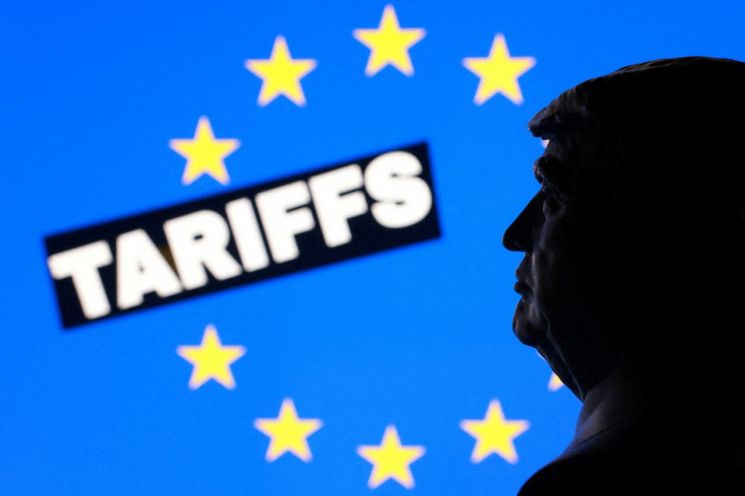
The European Commission, the EU's executive arm, said in a statement on the 22nd (local time) that "following the recent ruling by the U.S. Supreme Court on the International Emergency Economic Powers Act (IEEPA), we request a comprehensive explanation of the measures the United States intends to take."
It also pointed out that the current situation does not help to create a transatlantic trade and investment environment that is "fair, balanced, and mutually beneficial," as set out in the EU-U.S. joint statement agreed by both sides and dated August 2025.
In July last year, the EU agreed that, in exchange for lowering the reciprocal tariff rate applied to goods exported from EU member states to the United States from 30% to 15%, it would invest 600 billion dollars (868.2 trillion won) in the United States.
Stressing that "an agreement is an agreement," the Commission said, "As the United States' largest trading partner, the EU expects the commitments made by the United States in the joint statement to be implemented," adding, "The EU is also honoring its commitments."
It continued, "In particular, EU products must continue to be guaranteed the most competitive treatment, without any tariff increases beyond the ceilings that were previously agreed in a clear and comprehensive manner."
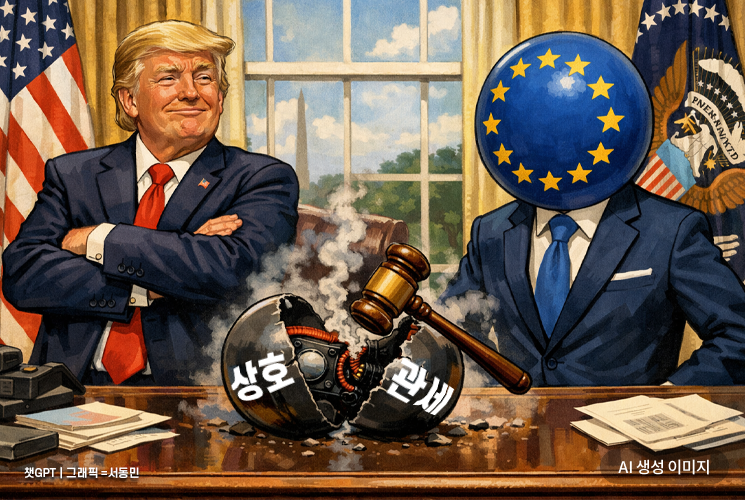
It also warned that "tariffs are, in effect, a tax and, as recent studies clearly show, they drive up costs for both consumers and businesses," adding, "When tariffs are applied in an unpredictable manner, this is inherently disruptive to markets, undermines confidence and stability across global markets, and introduces additional uncertainty into international supply chains."
On the 20th, the U.S. Supreme Court ruled that President Trump's reciprocal tariffs were unlawful. In response, the Trump administration signed an executive order imposing a "10% global tariff" on the entire world based on Section 122 of the Trade Act. It subsequently announced that it would raise the global tariff rate to 15%.
Section 122 of the Trade Act grants the president the authority to impose tariffs of up to 15% for a maximum of 150 days in order to address balance-of-payments problems. To maintain this measure beyond 150 days, Congress must approve an extension.
© The Asia Business Daily(www.asiae.co.kr). All rights reserved.
![Clutching a Stolen Dior Bag, Saying "I Hate Being Poor but Real"... The Grotesque Con of a "Human Knockoff" [Slate]](https://cwcontent.asiae.co.kr/asiaresize/183/2026021902243444107_1771435474.jpg)
















