Survey of Over 13,000 Sites in 14 Countries
Foreign IP Access Restricted for Central and Local Government Websites
A study has found that official Chinese government websites are being extensively restricted from access abroad. While the existing "Great Firewall" has been responsible for domestic internet censorship, analysts say a new "reverse Great Firewall" phenomenon has recently emerged, in which data access is controlled even from outside China.
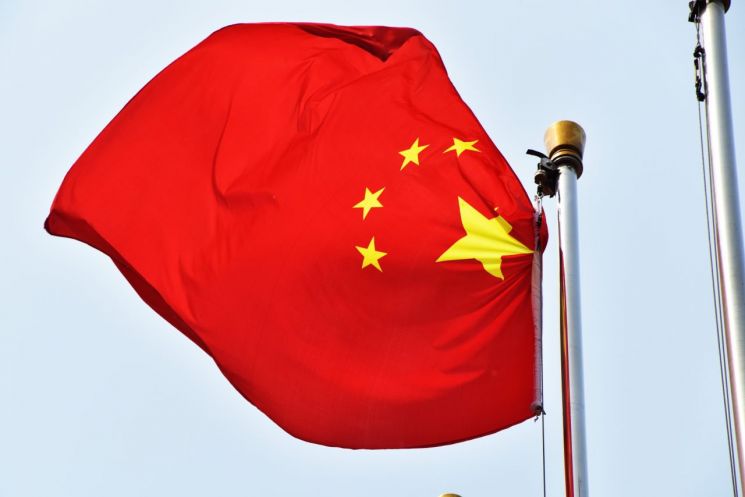
On February 21, the South China Morning Post (SCMP) in Hong Kong reported, citing research by a Dutch team, that a survey of more than 13,000 central and local government websites in 14 countries around the world showed that more than half could not be accessed normally from overseas. The findings were published in the UK-based journal Cybersecurity.
According to the researchers, the website access rate in Shanghai, China, exceeded 91%, but it fell below 50% in overseas locations such as Hong Kong and Taiwan. Some sites are difficult to access due to technical issues, but for about 10% of them, it was confirmed that foreign IPs are being deliberately blocked through server configurations and DNS blocking.
Since October 2022, Anhui Province has blocked foreign IP access to 51 domains under the provincial government, and Henan Province and Hainan Province are implementing similar measures. The Supreme People's Court of China has also restricted access to its Chinese-language website from outside mainland China since September 2023.
The research team analyzed that these measures are related to a shift in how the Chinese authorities perceive cybersecurity. They have expanded the scope of their response by treating not only hacking and espionage, but also open-source intelligence (OSINT) collection and online information analysis as security threats.
Vincent Brussee, a PhD candidate at Leiden University who led the study, said, "China is extending its overseas access restrictions in a way similar to the existing Great Firewall." He also pointed out that the increased use of Chinese government data following the Office of the UN High Commissioner for Human Rights' 2022 report on Xinjiang Uyghurs has contributed to this heightened sense of caution.
The researchers noted that there are differences among local governments and assessed the situation as a mixture of central government control and local-level responses. In fact, in 2022-2023, the private corporate information platform Qichacha and China's largest academic database, CNKI (China National Knowledge Infrastructure), also experienced restrictions on overseas access.
Brussee warned that this "reverse Great Firewall" policy will accelerate the fragmentation of the international online information environment, hinder people-to-people exchanges, and complicate relations between foreign companies and China.
© The Asia Business Daily(www.asiae.co.kr). All rights reserved.
![Clutching a Stolen Dior Bag, Saying "I Hate Being Poor but Real"... The Grotesque Con of a "Human Knockoff" [Slate]](https://cwcontent.asiae.co.kr/asiaresize/183/2026021902243444107_1771435474.jpg)















