Dual safety net with senior bonds and Industrial Infrastructure Credit Guarantee Fund guarantees
Minimized risk with the potential to outperform market interest rates
Can the popularity of the so-called "Subway Line 9 Fund" - once legendary among seasoned retail investors for delivering stable returns that exceeded prevailing market interest rates - be revived? Following the government's recently announced "Private Investment Promotion Plan," the launch of a "Public Offering Infrastructure Fund with Citizen Participation," which will allow ordinary citizens to directly invest in national key infrastructure and share in the returns, is imminent. With the era of high interest rates coming to an end and excess liquidity struggling to find suitable investment destinations, attention is focusing on whether money will once again flow into public infrastructure.
"100 billion won sold out in two days"... The "Line 9 Citizen Fund" that became part of retail investment history
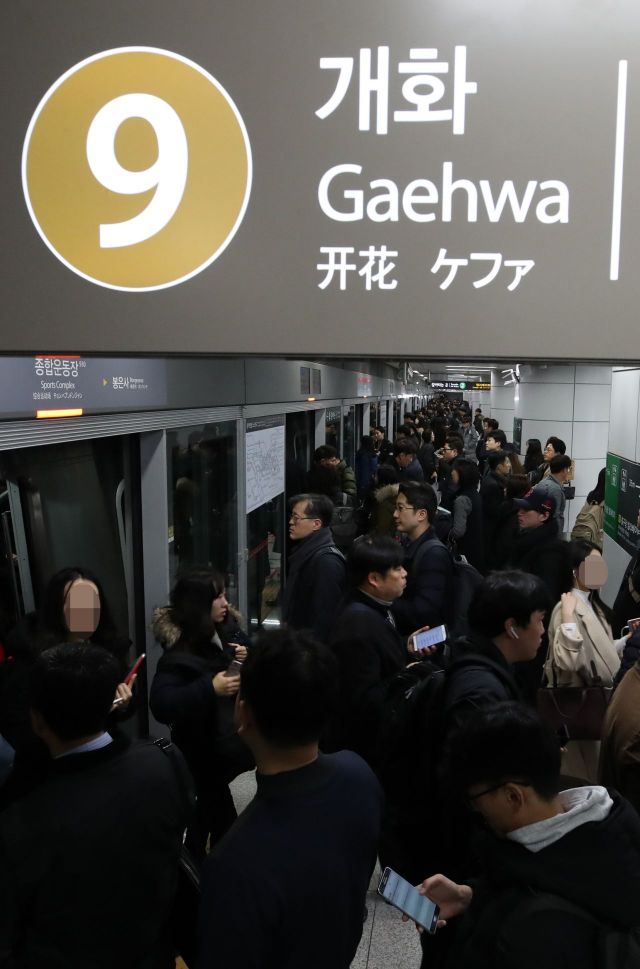
The "Seoul Subway Line 9 Citizen Fund," launched in 2013, was a landmark event that changed the paradigm of infrastructure investment. At the time, the Seoul Metropolitan Government chose to raise funds directly from citizens in order to lower the high financing costs embedded in its existing implementation agreement with the private operator. The outcome was a success. When deposit rates at commercial banks were stuck in the 2% range, news that the fund would guarantee an annual return of 4.29% led to the entire 100 billion won public offering being sold out in just two days.
Even though the Seoul Subway Line 9 Citizen Fund imposed an investment cap of 20 million won per person, it quickly became known as a "fund people line up to buy," thanks to the combination of stability backed by a return guarantee from the local government and a yield roughly twice that of bank deposits. It was the first time the concept took root in the market that citizens could go beyond being mere users of national infrastructure and instead participate as "shareholders" sharing in its profits. The fund ultimately achieved its target rate of return and was successfully liquidated in 2021.
"Citizens take the gains without the risk"... An upgraded version of the Line 9 model
The "Citizen Participation Infrastructure Fund," expected to be launched soon, is a model that scales up the success formula of the Line 9 Fund to the national level. Its defining feature is "minimizing risk exposure." To allow ordinary citizens to share in private investment returns without bearing risk, the fund will be structured around "senior loan claims" on individual private investment projects, thereby securing stability. On top of this, an additional guarantee from the Industrial Infrastructure Credit Guarantee Fund will provide a double safety net.
Kim Myungjung, Director General for Fiscal Investment Review at the Ministry of Planning and Budget, said, "We designed it so that ordinary citizens can share in private investment returns without bearing risk," adding, "As with the Line 9 Fund, local residents who benefit when infrastructure is built will directly participate and share in the profits." He also noted, "Although it will depend on prevailing market interest rates, given that current senior loan rates are in the 5-6% range, it will be possible to design an attractive rate of return."
Beyond roads and rail... Expansion into everyday life-oriented SOC
The investment universe will be far broader than in the days of the Line 9 Fund. In addition to traditional railways and roads, a wide range of future-oriented infrastructure such as artificial intelligence (AI) data centers and power grids (the so-called energy expressways) will be included. In particular, by newly adding senior care facilities (senior houses), childcare and other everyday life-oriented social overhead capital (SOC) closely tied to citizens' daily lives as eligible private investment assets, the scheme aims to create a "virtuous cycle" in which local community infrastructure is built with the returns from funds people invest in, and those same investors then benefit from the improved services.
To support strong demand, the government has decided to extend the special tax regime for separate taxation of dividend income from public offering infrastructure funds through 2028, and to grant additional points (20 points out of a possible 1,000) in the selection process for private investment projects to operators that utilize capital from such funds. Legal and regulatory changes to secure liquidity have already been completed, including abolishing the mandatory maturity requirement for infrastructure funds and raising the borrowing limit from 30% of equity capital to 100%. With the era of high interest rates fading and idle funds in the market struggling to find suitable investments, attention is focusing on whether they will respond to this new "national promise."
© The Asia Business Daily(www.asiae.co.kr). All rights reserved.
![Clutching a Stolen Dior Bag, Saying "I Hate Being Poor but Real"... The Grotesque Con of a "Human Knockoff" [Slate]](https://cwcontent.asiae.co.kr/asiaresize/183/2026021902243444107_1771435474.jpg)
















