Compromise through "gradual increases" and a "regional physician system"
"All that’s left after fighting is flunking out"...growing skepticism
Since the government finalized a plan to increase medical school admissions by an annual average of 668 students over the next five years, the medical community has been denouncing it as a "decision devoid of rational reasoning," yet remains cautious about staging large-scale collective action. Compared with the previous administration’s plan to increase admissions by 2,000 students, which prompted nationwide mass resignations and joint leaves of absence by residents and medical students, they have been largely refraining from raising a strong public voice this time.
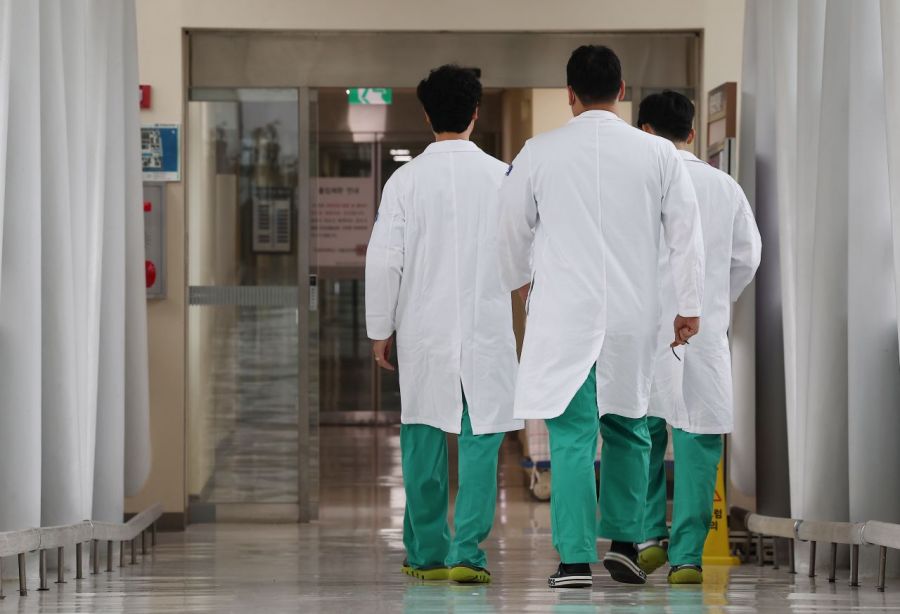
According to the medical community on the 15th, the main reason they are cautious about large-scale collective action is that the size of the increase has been brought closer to reality. During the 2024-2025 conflict between the government and the medical profession, the key justification for the medical community’s fierce opposition was that “an annual increase of 2,000 students would completely destroy the quality of medical education.”
The increase decided this time is about one-third of that earlier proposal. In particular, the approach of starting by adding 490 students in the first year and then gradually expanding the quota is being credited with relatively easing concerns about excessive overload on the education system.
The fact that the number was derived through multiple meetings of the Health and Medical Policy Deliberation Committee, based on discussions at the Physician Workforce Supply and Demand Projection Committee that included the government, the medical community, and experts, is another factor that makes it difficult for the medical community to criticize it as the government’s “unilateral decision.”
The decision not to include the additional quota in the admission caps of medical schools in Seoul and the greater capital area, or in general medical school quotas, and instead to recruit all of them through a “regional physician track” has also fundamentally blocked earlier concerns that the additional doctors would flock to Seoul and trigger cutthroat competition. A professor at a medical school in the capital region, who requested anonymity, said, “Because a condition has been attached that they must serve for 10 years at regional public medical institutions and similar organizations, the sense of direct threat felt by physicians in private clinics or large hospitals will likely be reduced.”
The economic and academic damage that residents and medical students suffered in the past is also having an impact. After going through nearly two years of large-scale leaves of absence and resignations, the momentum for struggle itself has been exhausted, and the solidarity among students has been greatly weakened.
Student A, who is enrolled at a medical school in the capital region, said, “I stopped my studies for over a year right after entering school to confront the government, but all I got in return was the regret of having wasted my precious time in my twenties and competition with juniors who entered the following year,” adding, “I now feel that the friends who quietly reapplied to other schools or hurriedly enlisted in the military were actually the smart ones.” Resident B at a tertiary general hospital in Seoul said, “After a year and a half of unrelenting conflict, I am completely exhausted both financially and mentally,” and added, “Public opinion is too cold for us to simply oppose everything, and even among ourselves, there is now a dominant mood that we should reach an agreement at a reasonable point and then each find our own way to survive.”
Within the Korean Medical Association, calls for the current leadership to step down are continuing, and among residents there is a growing sense that they will no longer follow the association’s directives for struggle. A source in the medical community said, “The reason physicians and residents are passive about this latest increase is not because they agree with the government’s policy, but because it shows that fatigue from past struggles and distrust toward the older generation have reached an extreme,” adding, “The government’s compromise proposal of ‘gradual increases’ has precisely exploited these internal rifts within the medical community.”
© The Asia Business Daily(www.asiae.co.kr). All rights reserved.
![Clutching a Stolen Dior Bag, Saying "I Hate Being Poor but Real"... The Grotesque Con of a "Human Knockoff" [Slate]](https://cwcontent.asiae.co.kr/asiaresize/183/2026021902243444107_1771435474.jpg)















