Older Adults Account for 56.8% of Patients Aged 65 and Over
Harder to Notice Drop in Body Temperature After Drinking Alcohol
Although mild weather is expected during the Lunar New Year holiday, people should not let down their guard when it comes to winter health management, as outdoor activities such as visiting ancestral graves, traveling to hometowns, and returning home will increase. In particular, older adults and people with cognitive impairment, such as dementia, need to be especially careful because it is difficult for them to recognize a drop in their body temperature on their own.
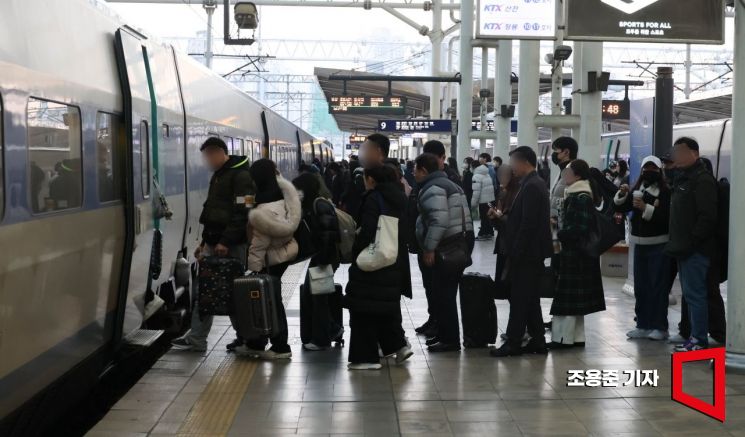 At Seoul Station in Yongsan-gu, Seoul, holiday travelers are moving to board trains bound for their hometowns. Reporter Jo Yongjun
On February 15, the Korea Disease Control and Prevention Agency (KDCA) analyzed this winter's cold-related illness surveillance data and found that such illnesses occurred predominantly among those aged 65 and older. From December last year through the 11th of this month, there were a total of 329 cases of cold-related illnesses, and 56.8% of them were in people aged 65 or older. Among all patients with cold-related illnesses, 17% had dementia, and among those who died, 35.7% were dementia patients.
Cold-related illnesses include conditions such as hypothermia, frostbite, and chilblains, in which cold temperatures directly cause harm to the human body. The KDCA explained that the risk can be higher for older adults and dementia patients because their perception of cold may be delayed. It also warned that when a person has been drinking alcohol, it is harder to notice a drop in body temperature, which can increase the risk of cold-related illness.
Mild weather has been forecast for the Lunar New Year holiday period. During this time, the nationwide morning low is expected to range from minus 6 degrees Celsius to plus 7 degrees, and the daytime high from 3 to 18 degrees. However, as outdoor activities such as traveling to and from hometowns, visiting ancestral graves, and hiking increase during the holiday, the likelihood of cold-related illnesses may rise across all age groups, including younger adults as well as older adults. While people who drink alcohol and older adults are usually the main high-risk groups, the increase in activity during the holiday can expand the risk to people of all ages.
The KDCA stated, "In preparation for winter, sufficient warmth and care are needed for older adults, especially those with cognitive impairment such as dementia," and added, "If you plan to spend a long time outdoors, such as when visiting ancestral graves or hiking, you must strictly follow basic cold-related illness prevention rules, such as maintaining body temperature and getting enough rest, regardless of age."
© The Asia Business Daily(www.asiae.co.kr). All rights reserved.
![Clutching a Stolen Dior Bag, Saying "I Hate Being Poor but Real"... The Grotesque Con of a "Human Knockoff" [Slate]](https://cwcontent.asiae.co.kr/asiaresize/183/2026021902243444107_1771435474.jpg)















