"If the Parties Separately Stipulated Grounds and Procedures for Termination, the Civil Act Does Not Apply"
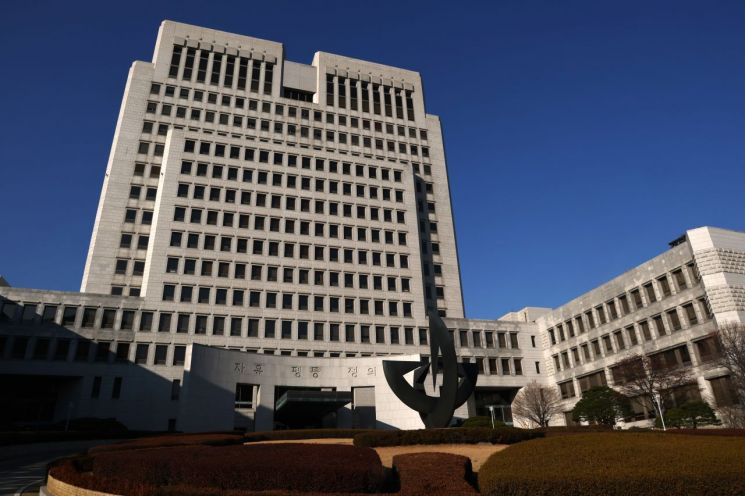
If, when entering into a mandate agreement, the parties separately stipulate the grounds for termination and liability for damages, those contractual terms must be applied in preference to the general provisions of the Civil Act, according to a ruling by the Supreme Court.
According to the legal community on the 17th, the Second Division of the Supreme Court (Presiding Justice Noh Taeak) recently remanded a case to a lower court, overturning the appellate court ruling that had partially upheld a damages claim filed by individual business owner A, who operates a wholesale and retail business in fabrics, against Samsung C&T.
A entered into a business mandate agreement with Samsung C&T in 2011 for the sale of women's clothing fabrics. The contract had been automatically renewed every year, but in March 2022 Samsung C&T decided to withdraw from its textile business and notified A of the termination of the business. In response, A filed a lawsuit, claiming, "Even though the contract period remained in effect until October that year, the company unilaterally terminated the contract and I lost commission income," and sought approximately 120 million won in damages and delay interest.
The key issue was whether Article 689 of the Civil Act applied. Article 689 of the Civil Act provides that "a mandate may be terminated at any time by either party, and if it is terminated at an inopportune time, the terminating party shall compensate for any damages." However, the parties' business mandate agreement contained a separate clause stating that "the contract may be terminated by giving three months' prior written notice to the other party."
The court of first instance ruled against the plaintiff, but the appellate court found that the timing of Samsung C&T's termination was disadvantageous to A and recognized liability for damages in the amount of 50 million won.
However, the Supreme Court held that where the parties have separately stipulated in the contract the grounds and procedures for termination and the scope of liability for damages, this should be understood as intended to exclude the application of Article 689 of the Civil Act.
The Supreme Court stated, "The fact that Articles 11 and 13 of the contract at issue separately provide for the grounds for termination and liability for damages indicates an intent to govern a legal relationship distinct from the provisions of the Civil Act." It went on to say, "In such a case, if the termination procedures specified in the contract were followed, the terminating party is only responsible for the liability set out therein, and is not required to compensate for expectation interest (the profit that would have been obtained had the contract been properly performed) on the basis of the Civil Act," and ordered the lower court to rehear the case.
© The Asia Business Daily(www.asiae.co.kr). All rights reserved.
![Clutching a Stolen Dior Bag, Saying "I Hate Being Poor but Real"... The Grotesque Con of a "Human Knockoff" [Slate]](https://cwcontent.asiae.co.kr/asiaresize/183/2026021902243444107_1771435474.jpg)















