Justice Brown Jackson's CBS interview
Classified as a liberal Justice
Expressed skepticism about reciprocal tariffs in last year's oral arguments
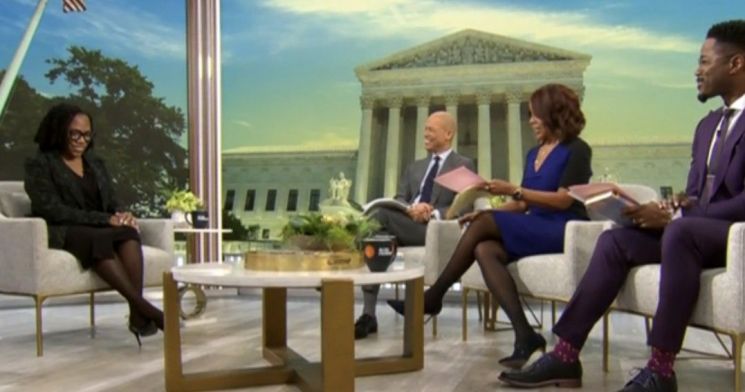
U.S. Supreme Court Justice Ketanji Brown Jackson stated that the reason for the delayed ruling on the legality of the country-specific tariffs (reciprocal tariffs) imposed by President Donald Trump is that the Court needs time for deliberation.
In an interview with CBS on the 10th (local time), when asked why the ruling is taking so long, Justice Jackson replied, "There are many subtle legal issues that the Supreme Court must consider thoroughly."
She went on to explain, "We actually take time to deliberate, and in that process each Justice organizes his or her thoughts on the issues and the rights at stake, and it takes time to draft the (opinion)."
Justice Jackson said, "The Supreme Court is going through a deliberative process," adding, "The American people expect us to make our decisions carefully and with certainty, and sometimes that takes time."
The U.S. Supreme Court is composed of nine Justices. Jackson is one of the three liberal Justices.
Although Justice Jackson did not reveal her own views on the tariff lawsuit during the broadcast, she expressed skepticism about President Trump’s tariff authority during oral arguments held in November last year.
The tariff case was initially expected to be decided as early as late last year or in January this year, after the Supreme Court announced that it would expedite the case at the request of the Trump administration. However, no ruling has been issued yet.
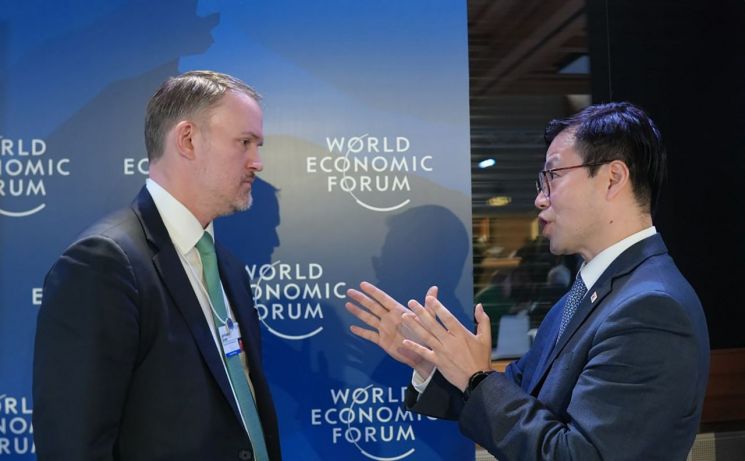
In relation to this, Jamieson Greer, Chief Representative of the Office of the United States Trade Representative (USTR), said in an interview with Fox News on the same day that even if the Supreme Court rules against the administration, it will adhere to its tariff policy by using other legal tools.
Greer said, "If the Supreme Court rules in the wrong direction, we will find a way, and we will use other tools to address some of the unfair trade policies pursued by these countries that generate enormous trade surpluses with the United States."
He added, "It may take a little more time, but we are focused on maintaining continuity regarding the types and levels of tariffs."
Meanwhile, the case under review by the Supreme Court concerns the reciprocal tariffs and related measures imposed by President Trump based on the International Emergency Economic Powers Act (IEEPA). If the Trump administration is no longer able to use IEEPA, it is expected to expand the tariffs already being applied under Section 232 of the Trade Expansion Act and, in addition, to use Section 301 and Section 122 of the Trade Act and Section 338 of the Tariff Act as legal bases for imposing tariffs.
© The Asia Business Daily(www.asiae.co.kr). All rights reserved.
![Clutching a Stolen Dior Bag, Saying "I Hate Being Poor but Real"... The Grotesque Con of a "Human Knockoff" [Slate]](https://cwcontent.asiae.co.kr/asiaresize/183/2026021902243444107_1771435474.jpg)
















