Controversy over Second Independent Counsel Nominee and Turmoil in Push to Merge with Cho Kuk Innovation Party
Burden Mounts over Delayed Legislation of the Special Act on Investment in the United States amid Korea-U.S. Trade and Security Issues
Con
There is growing criticism that the political burden on the presidential office is mounting, as the Democratic Party of Korea has become embroiled in controversy over the vetting of its nominee for the second independent counsel, delays in legislating the Special Act on U.S.-bound Strategic Investment, and procedural disputes surrounding its push for a merger with the Cho Kuk Innovation Party. The presidential office is striving to draw a clear line by avoiding any direct public comment, but even within the ruling camp, criticism is erupting that the party is inviting unnecessary risks.
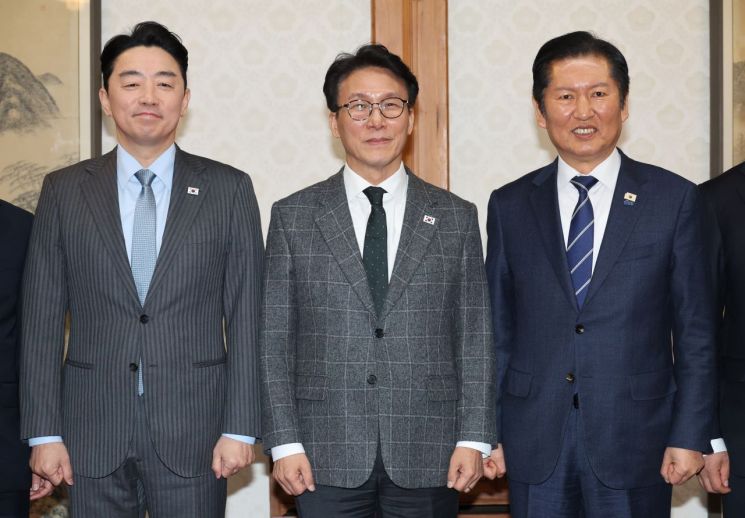
According to ruling-camp sources on the 9th, concerns are mounting that relations between the Democratic Party and the presidential office have hit a critical juncture, after it emerged that attorney Jeon Jooncheol, whom the party recommended as a candidate for the second independent counsel, had previously defended former Ssangbangwool Chairman Kim Sungtae in a 2023 trial related to the so-called illegal remittance of funds to North Korea. Within the presidential office, there is also criticism that trust has been significantly damaged. On the 2nd, the Democratic Party recommended attorney Jeon, while the Cho Kuk Innovation Party recommended attorney Kwon Changyoung, a former judge, as their respective independent counsel candidates. After agonizing over the choice until the final day, President Lee Jaemyung ultimately appointed attorney Kwon on the 5th as the special prosecutor for the second omnibus independent counsel investigation.
The background to President Lee's prolonged deliberation became clear only after the appointment. Attorney Jeon's past record as defense counsel became a point of contention during the internal vetting process at the presidential office. During this process, President Lee is said to have expressed strong displeasure to the extent of asking, in effect, "How could you recommend someone like this?" In the end, Democratic Party leader Jeong Cheongrae and other members of the party leadership moved to contain the fallout by apologizing, saying they had "caused trouble for the President," but within the party, questions of responsibility over the recommendation and vetting procedures continued.
The delay in passing the Special Act on U.S.-bound Strategic Investment, which is intended to manage strategic investment between South Korea and the United States and represents the most important issue in bilateral trade and security, is another matter the presidential office is treating as highly sensitive. After President Lee indirectly voiced his frustration at a Cabinet meeting over the National Assembly's delays on various pieces of legislation, Kim Yongbeom, the presidential office's policy chief, explained on the 28th of last month, with regard to the background of U.S. President Donald Trump's message on tariffs, that "U.S. dissatisfaction stems 100% from the delay in legislating the Special Act on U.S.-bound Strategic Investment in the National Assembly."
The People Power Party has withdrawn its previous position that the memorandum of understanding (MOU) between the two leaders requires ratification by the National Assembly, and the Democratic Party has pledged to push the bill through as early as late February to early March, signaling a rapid timetable. However, since the legislative process is only now moving forward after U.S. dissatisfaction has been confirmed, it remains uncertain whether this will prove to be the decisive turning point in resolving the deadlock over South Korea-U.S. trade and security issues.
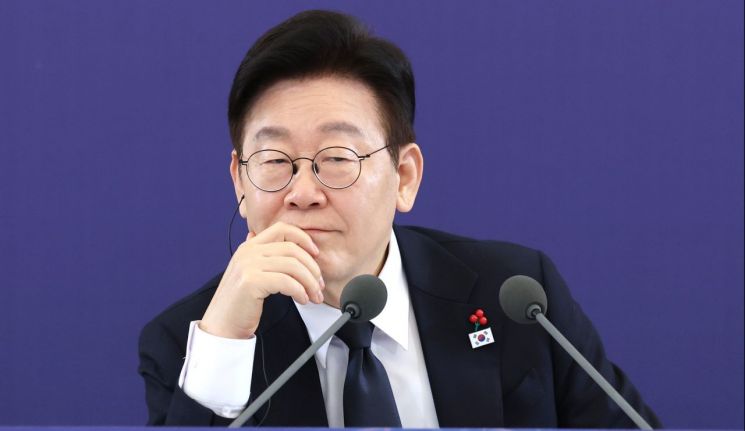
The "procedures" surrounding merger talks between the Democratic Party and the Cho Kuk Innovation Party are also one of the key issues where the party and the presidential office appear out of sync. After leader Jeong made a surprise proposal for a merger on the 22nd of last month and controversy erupted over the impropriety of the procedure, the so-called "pro-presidential office (pro-Jeong Cheongrae)" faction moved to defend him, claiming that there had been prior coordination with the presidential office. However, the internal dispute spread into further resentment that "the presidential office was dragged in to cloak the move with legitimacy," and criticism mounted that the leadership and senior figures had not been sufficiently briefed in advance, with some saying that "the process was rushed too much under the pretext of the local elections."
On top of this, the leak of a document containing the procedures and timetable for the merger drive led to allegations within the Democratic Party of a "secret deal" and a blame game over who was responsible, and the merger discussions themselves began to morph into a source of internal conflict. In this atmosphere, the presidential office has consistently characterized the merger talks as a matter of party affairs and has repeatedly made remarks aimed at distancing itself from any involvement, but the burden appears to be growing heavier.
A ruling-camp official explained, "The controversy over vetting the special counsel nominee is spreading into a 'personnel and power-management risk,' and the delay of the Special Act on U.S.-bound Strategic Investment is being linked to issues of 'external credibility and implementation,' creating an ongoing burden for the presidential office," adding, "There are also concerns that the merger talks, accompanied as they are by a debate over 'procedural legitimacy,' could force the presidential office into an unnecessary phase of explanations and clarifications."
© The Asia Business Daily(www.asiae.co.kr). All rights reserved.
![Clutching a Stolen Dior Bag, Saying "I Hate Being Poor but Real"... The Grotesque Con of a "Human Knockoff" [Slate]](https://cwcontent.asiae.co.kr/asiaresize/183/2026021902243444107_1771435474.jpg)
















