Announcement of First Call for New R&D Support Projects and New Infrastructure-Building Programs
Full-Fledged Support from Core Technologies for Autonomous, Electric, and Hydrogen Vehicles to Regional Hub Infrastructure Construction
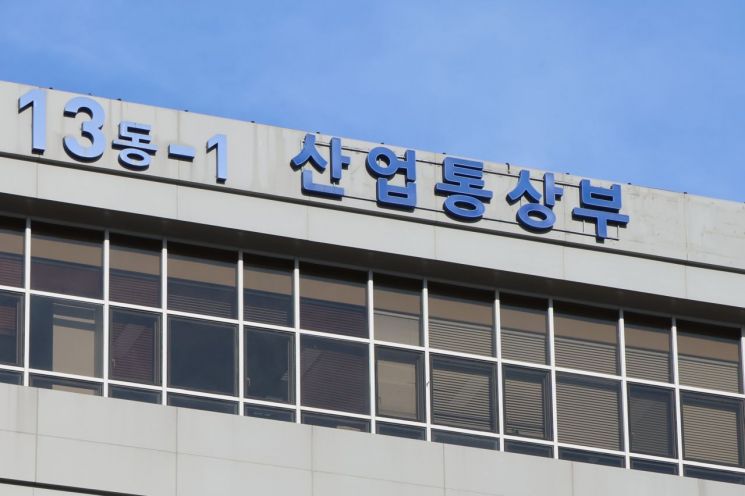
The Ministry of Trade, Industry and Energy will invest a total of 464.5 billion won this year in research and development (R&D) and infrastructure-building projects in the automotive sector.
According to the ministry on the 5th, despite intense global competition last year, Korea's automobile industry achieved record-high exports of 72 billion dollars and surpassed 70 billion dollars for the third consecutive year. However, as uncertainty in the trade environment increases and advances in artificial intelligence (AI) and autonomous driving technologies coincide with stronger eco-friendly regulations, securing technological and price competitiveness has emerged as a core task.
Accordingly, on the 6th the ministry will announce the "First Call for New R&D Support Projects in the Automotive Sector for 2026" and the "Integrated Notice for New Infrastructure-Building Projects in the Automotive Sector for 2026."
Through these programs, it will inject 382.7 billion won this year into R&D for core technologies related to autonomous driving and electric and hydrogen vehicles, of which 104.4 billion won will be allocated to 44 new projects.
In the autonomous driving field, 49.5 billion won will be invested to promote 14 new projects. This is intended to respond to the technological paradigm shift from conventional rule-based methods to E2E (End-to-End) AI autonomous driving. Centered on the "AI Future Vehicle M.AX Alliance," a public-private cooperation framework involving about 70 companies including finished vehicle manufacturers, parts makers, software firms, and AI companies, the goal is early commercialization.
Key support areas include multimodal E2E-AI technologies capable of situational awareness even in unstructured driving environments, development and demonstration of SDV systems based on national standards, an open-source-based AI-SDV platform and integrated drive chassis modules tailored to global automakers, and localization of automotive semiconductors.
In the electric and hydrogen vehicle field, 30 new projects with a total budget of 54.8 billion won will be supported. These include the development of next-generation core technologies such as a gallium-nitride-based high-integration power conversion system, a body-integrated battery system, and an extended-range electric vehicle drive system with a driving range of more than 1,500 kilometers. In addition, to strengthen the competitiveness of commercial vehicles, the ministry will simultaneously support the development of large hydrogen trucks equipped with liquid hydrogen storage systems, commercial vehicles based on hydrogen engines, and the localization of load-distribution drive units for commercial vehicles.
This year, 7 billion won will be separately allocated to two projects to support demonstration and commercialization of demand-linked technology development tasks. These will be selected through an open-call format jointly planned by local governments and regional companies, and the research outcomes will be demonstrated using the public vehicle demand of local governments and then linked to procurement.
In addition, 81.8 billion won will be invested in infrastructure-building projects. Based on regional specialization strategies under the "K-Mobility Global Leadership Strategy," 11.6 billion won will be provided for seven new infrastructure-building projects to offer close support to parts manufacturers in each regional hub.
Details and application forms for the newly announced R&D projects can be found on the Industrial Technology R&D Researcher Support System, and those for the infrastructure-building projects can be checked on the website of the Korea Institute for Advancement of Technology.
© The Asia Business Daily(www.asiae.co.kr). All rights reserved.