Concerns Over Reduced Lending Capacity as Saemaul Geumgo and KB Face Potential Sanctions
Financial Services Commission to Tighten Total Loan Volume Controls, Considering Separate Management for Mortgages
Will Genuine Borrowers Face Greater Financial Burdens?
Financial authorities have announced plans to impose penalties this year by reducing the lending limits of financial institutions that exceeded their household loan targets last year, putting banks such as KB Kookmin Bank and Saemaul Geumgo on high alert regarding their lending capacities. As the authorities are expected to maintain a stricter stance on household loan management this year, there are concerns that the financial burden of securing funds may increase, especially for genuine homebuyers without property and self-employed individuals.
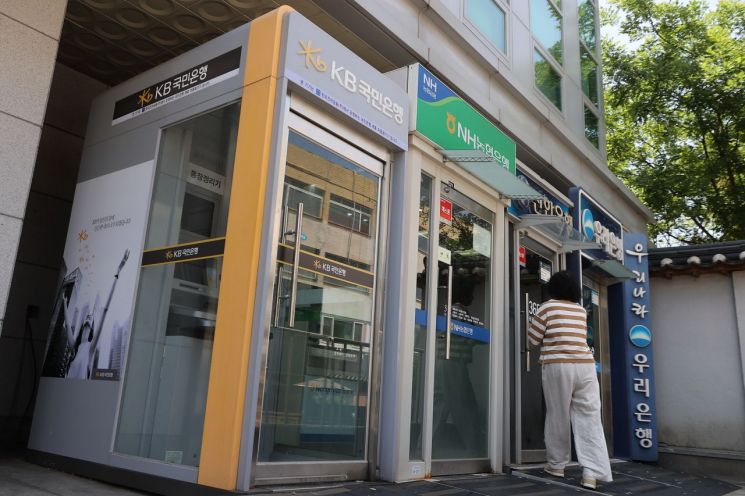
According to data submitted by the Financial Supervisory Service to the office of Lee Inyoung, a member of the National Assembly's Political Affairs Committee, as of February 2, among the five major commercial banks, KB Kookmin Bank was the only institution that exceeded its loan growth target last year. KB Kookmin Bank increased its household loans by 2.127 trillion won compared to the previous year, which is 120.9 billion won more than the originally planned 2.0061 trillion won. This represents an achievement rate of 106.0%.
In contrast, other banks such as Hana Bank (86.0%), Nonghyup Bank (66.5%), Shinhan Bank (53.0%), and Woori Bank (40.3%) managed their total lending within the planned range by adjusting their lending activities at the end of the year. Since the financial authorities are adhering to the principle of deducting the excess amount from this year's lending limit for any institution that broke its promise, KB Kookmin Bank's total lending capacity for this year is likely to be reduced by that amount.
In the case of Saemaul Geumgo, household loans increased by 5.31 trillion won last year, exceeding the target by more than four times. If the authorities deduct the excess amount from this year's lending limit as per the rules, it may become virtually impossible for Saemaul Geumgo to issue new loans this year. While the authorities are coordinating with the Ministry of the Interior and Safety to adjust the severity of the penalties, they maintain that strict measures are unavoidable due to the failure of autonomous management.
The lending market is expected to become even more restrictive this year. Lee Eogwon, Vice Chairman of the Financial Services Commission, recently stated at a press briefing that the target growth rate for household loans this year will be set even lower than last year’s 1.8%. As a result, the '2026 Household Debt Management Plan,' which is scheduled to be announced this month, is expected to include even stricter regulations. In particular, as separate management of mortgage loans is being considered, those preparing to purchase homes are likely to feel the impact of even tighter regulations.
With such a strong focus on total loan volume management, there are growing concerns that the financial burden of securing funds may increase, especially for genuine homebuyers without property and self-employed individuals.
Assemblyman Lee Inyoung stated, "Uniform application of penalties could harm essential borrowers, such as low-income homebuyers and self-employed individuals. It is urgent to move away from simple numerical management and shift toward qualitative management that carefully distinguishes the nature of each loan."
© The Asia Business Daily(www.asiae.co.kr). All rights reserved.

![User Who Sold Erroneously Deposited Bitcoins to Repay Debt and Fund Entertainment... What Did the Supreme Court Decide in 2021? [Legal Issue Check]](https://cwcontent.asiae.co.kr/asiaresize/183/2026020910431234020_1770601391.png)