The Sad Red Horse Doll Becomes a Sensation
NYT: "A New Symbol of Burnout Among Young People"
A horse doll with an upside-down-stitched mouth due to a manufacturing error, giving it a sad expression, has struck a chord with Chinese office workers and has become the most popular item for the Lunar New Year (Spring Festival).
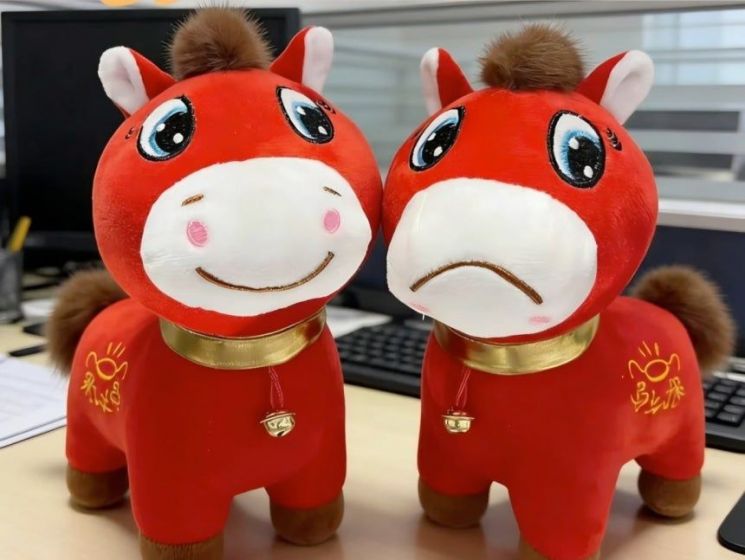 A red horse doll with a sad face caused by a manufacturing defect is gaining popularity among young people in China. Screenshot from the Chinese social networking service Rednote
According to The New York Times on January 30 (local time), this doll was created to mark the Year of the Red Horse, Byeong-O Year, 2026. It first appeared last year at a store in eastern China. While other dolls with bright expressions wished for good fortune, this horse doll looked as if it was about to burst into tears.
The red horse doll was originally designed to have a cheerful smile, a golden bell around its neck, and a blessing embroidered on its side reading, "May you become wealthy soon" (Masangbaljae). However, due to a mistake during production, the corners of its mouth were sewn in the opposite direction, resulting in an expression that looks like it is on the verge of crying.
However, young people in China strongly identified with the red horse's gloomy face. They said its expression resembled their own, worn out by overwork at the office. The doll even earned the nickname "Kukuma" (meaning "crying horse" in Chinese), and has become a viral sensation. On Chinese social networking services, hashtags related to Kukuma have surpassed 1.9 billion views. Among office workers, there is a running joke: "Buy both the crying horse and the smiling horse-keep the crying horse at the office and the smiling one at home."
As Kukuma emerged as the most popular item for the New Year, production sites have been thrown into overdrive. The seller who first introduced the doll at Yiwu, the world's largest wholesale market, has added more than 10 new production lines to meet soaring demand, but still struggles to keep up with daily sales of around 15,000 units.
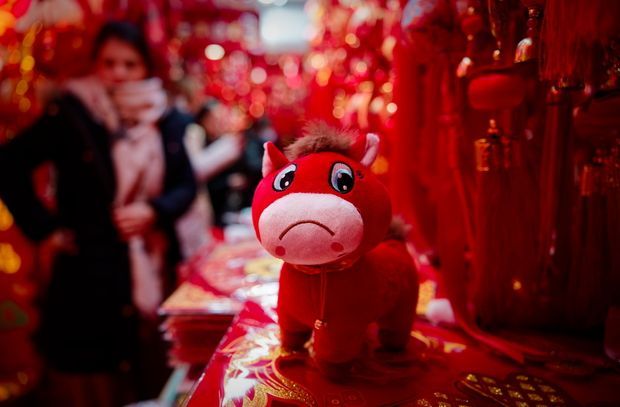
Experts say the irony of this craze is heightened by the fact that 2026 marks the return of the "Red Horse Year" for the first time in 60 years. The red horse traditionally symbolizes ambition, growth, and blazing intensity, but instead, China's young workers have adopted the exhausted, dejected-looking horse as their symbol. This reflects the bleak reality of modern China, where decades of rapid growth that lifted 800 million people out of poverty have come to a halt, wages have stagnated, and the ladder of social mobility has broken down. Foreign media explained, "For many young people, the once-idealized 'life of hard work' is now associated with grueling labor, exhaustion, and disappointment."
Recently, the sports term "garbage time," which refers to the final minutes of a game when the outcome is already decided, has spread as a new slang term among young people, expressing their sense of helplessness. Foreign media also noted that the sad horse doll has now joined the list of symbols representing burnout-extreme fatigue and loss of motivation-among China's younger generation. They added that young people increasingly seek emotional comfort or instant joy in their purchases, rather than flaunting wealth or material success.
© The Asia Business Daily(www.asiae.co.kr). All rights reserved.













![The Special Connection Between the Statue of Martyr Lee Jun in Jangchungdan Park and Mayor Oh Sehoon ③ [Current Affairs Show]](https://cwcontent.asiae.co.kr/asiaresize/319/2026012110001599450_1768957215.jpg)

