Chinese Embassy in Japan Issues WeChat Notice
Chinese National Victimized by Three-Person Robbery in Tokyo
Chinese authorities have once again urged their citizens to refrain from traveling to Japan, citing incidents in which Chinese nationals have been subjected to pepper spray attacks and robberies in Japan.
The Chinese Embassy in Japan announced on its official WeChat account on January 30 that "on the night of the 29th, a Chinese national was attacked with pepper spray and had their travel bag stolen near Ueno in Tokyo." The embassy added, "We ask you to carefully reconsider your plans to visit Japan." The embassy continued, "The suspect is still at large, and we have urged the Japanese police to protect the lives and property of Chinese residents in Japan." It also advised Chinese nationals already residing in Japan to closely monitor the local security situation, raise their awareness of safety, and strengthen self-protection measures.
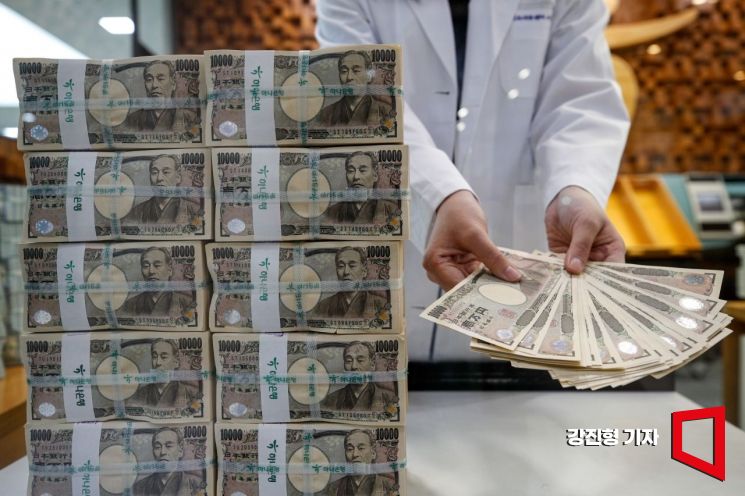 The photo is not related to the specific content of the article. An employee is organizing Japanese yen at the Hana Bank Counterfeit Response Center in Jung-gu, Seoul.
According to Japanese media outlets such as the Asahi Shimbun, the incident occurred around 9:30 p.m. on January 29 near Ueno Street by JR Okachimachi Station in Taito Ward, Tokyo. A group of three robbers targeted three Japanese and two Chinese individuals as they were loading a travel bag containing cash into a vehicle. The robbers attacked a Chinese man in his 40s with pepper spray and stole a bag containing 423 million yen (approximately 4 billion yen). It was reported that at the time, the victim and others were loading three bags of cash into the car. The man stated, "I was tasked with transporting the cash bag to Haneda Airport."
Immediately after the incident, a hit-and-run accident involving a vehicle and a pedestrian occurred nearby, and a blue compact car was later found abandoned. Police are investigating the possibility that the incident was an organized crime. A few hours later, at around 12:10 a.m. on January 30, a man in his 50s carrying a bag containing 190 million yen (approximately 1.8 billion yen) was also attacked with pepper spray in the parking lot of Terminal 3 at Haneda Airport. However, this attempt was unsuccessful.
Three suspects, estimated to be in their 20s to 30s, reportedly approached the man in a white car and sprayed him, but did not get out of the car or steal the bag, fleeing the scene immediately. The victim stated, "I am a money changer and was transporting cash to Hong Kong." Police are pursuing the suspects, believing that the methods used and the victims' involvement in currency exchange suggest a connection to the Ueno incident and that the same group may be responsible.
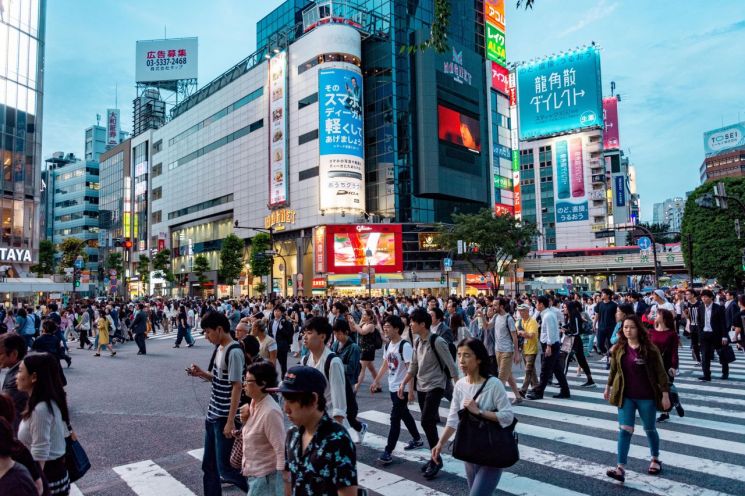
Previously, on January 26, the Chinese Ministry of Foreign Affairs also advised its citizens to avoid traveling to Japan during the Lunar New Year holiday. The ministry stated, "Public safety remains unstable throughout Japanese society, and crimes targeting Chinese nationals are occurring frequently," as the reason for its recommendation. While these statements are officially justified as measures for citizen safety, they are widely interpreted as retaliatory actions following Japanese Prime Minister Sanae Takaichi's remarks in November last year suggesting possible intervention in the event of a Taiwan contingency, which sharply cooled China-Japan relations.
Since those remarks, China has taken a range of measures, such as postponing the release of Japanese animated films, canceling concerts by Japanese singers, and revoking the resumption of Japanese seafood imports. Additionally, local airlines have recently announced that the deadline for free refunds and itinerary changes for tickets on Japan routes, which was initially offered in response to the travel advisory, will be extended until the end of October.
© The Asia Business Daily(www.asiae.co.kr). All rights reserved.












![The Special Connection Between the Statue of Martyr Lee Jun in Jangchungdan Park and Mayor Oh Sehoon ③ [Current Affairs Show]](https://cwcontent.asiae.co.kr/asiaresize/319/2026012110001599450_1768957215.jpg)

