Solar Panels to Be Installed at Over 1,500 Parking Lots
Accelerating Construction of Interregional Transmission Lines Including West Coast HVDC
The Ministry of Climate, Energy and Environment has designated this year as the "first year of energy transition achievements" and is simultaneously pursuing preparations for the era of 100GW (gigawatts) of renewable energy, expansion of the power grid to accommodate it, and reforms of the electricity rate and power market systems. The ministry will overhaul the electricity tariff structure, including reducing rates during daytime hours, and will begin a comprehensive restructuring of the entire power system, which includes the phased abolition of coal-fired power plants, a just transition, and a redesign of the power generation mix centered on renewable energy.
On February 1, the ministry released the "2026 Main Work Plan of the Energy Transition Policy Office," which outlines these initiatives. The Energy Transition Policy Office is responsible for the national agenda of establishing an "energy superhighway" and driving an "energy transition centered on renewable energy." It oversees all aspects of the power industry, including policies, markets and tariffs, and the construction and operation of the power grid. Through these efforts, the government aims to support the implementation of the 2035 Nationally Determined Contribution (NDC) for greenhouse gas reduction and the realization of carbon neutrality.
Last year, the ministry maintained a stable power supply throughout the year and supplied a provisional total of 3.8GW of renewable energy, marking the largest annual increase since 2022. The budget for renewable energy supply and financing was expanded from 1.1 trillion won to 1.5 trillion won. The government also laid the foundation for grid expansion by enacting the Special Act on the Expansion of the National Backbone Power Grid, launching the Power Grid Committee, and designating seven distributed energy special zones. In addition, the enactment of the High-Level Radioactive Waste Management Act and the launch of the management committee established a management system for radioactive waste.
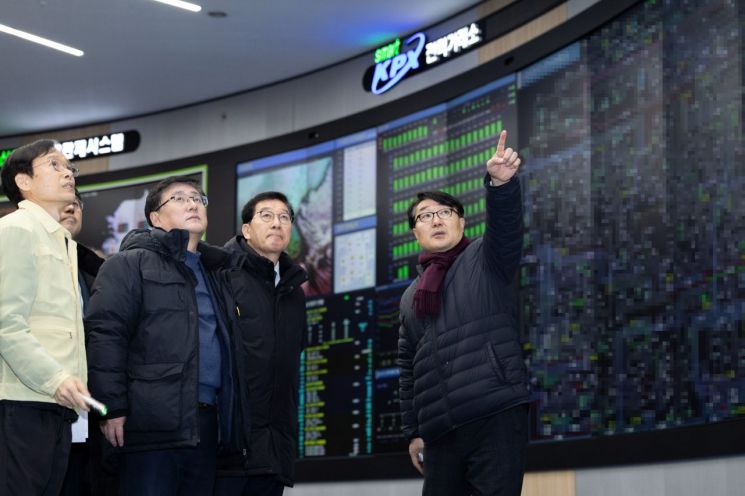 Minister Kim Sung-hwan Visits Korea Power Exchange to Inspect Winter Power Supply Situation
(Seoul=Yonhap News) On January 22, Kim Sung-hwan, Minister of the Ministry of Climate, Energy and Environment, visited the Korea Power Exchange in Naju, Jeollanam-do, to inspect the winter power supply situation. 2026.1.22 [Provided by the Ministry of Climate, Energy and Environment. Resale and database prohibited]
Photo by Yonhap News (end)
This year, the ministry will focus on four key initiatives: accelerating the supply of renewable energy and reducing costs; innovating power grid operations and establishing the energy superhighway; building a power system that embraces the energy transition; and enhancing the acceptability and sustainability of nuclear power policy.
To expand the supply of renewable energy, solar panels will be installed at more than 50 traditional markets and over 1,500 parking lots. School solar projects will start at 500 schools this year, with a goal of increasing to more than 6,400 schools by 2030. The ministry will also support rooftop solar for factories and agrivoltaic projects. For onshore wind, a bidding roadmap will be established to achieve the 6GW target by 2030. For offshore wind, the ministry will strengthen the foundation through the implementation of long-term bidding plans, support for the construction of installation vessels for 15MW-class turbines, and the provision of policy-linked financing.
To reduce costs, the Renewable Portfolio Standard (RPS) will be converted to a capacity-based target system, and legislation will be pursued to unify new facilities under long-term fixed-price contracts. Cost reduction measures tailored to solar, onshore wind, and offshore wind will also be implemented. The "Solar Income Village" initiative will be expanded to 500 villages this year and to 2,500 by 2030, and a pilot project for "Wind Income Villages" will be launched.
The power grid will be upgraded to next-generation standards to accommodate 100GW of renewable energy. The 12th Basic Plan for Long-term Electricity Supply and Demand will include measures to expand flexible grid connections and improve the efficiency of existing grids. Local distributed power grids will also be expanded through the deployment of energy storage systems (ESS) in distribution networks, the establishment of microgrids in industrial complexes and campuses, and the monitoring of the implementation of the seven distributed energy special zones.
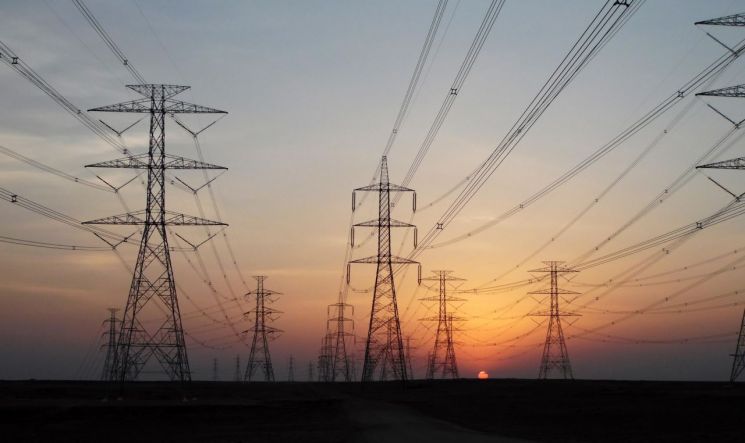 Hyundai Engineering & Construction's 380kV Transmission Line Construction Project in Riyadh, Saudi Arabia
The ministry will also increase the utilization of the existing power grid. The management system for grid connection applicants will be improved, and transmission capacity will be increased by replacing high-capacity transmission lines. The ministry will promote the use of connection lines from decommissioned coal-fired power plants and develop shared connection infrastructure for offshore wind power. The construction of interregional transmission lines, such as the West Coast high-voltage direct current (HVDC) line, will be accelerated, and AI-based forecasting of renewable energy generation will be further advanced.
From the perspective of the power system, the ministry will establish the 12th Basic Plan for Long-term Electricity Supply and Demand for 2026-2040, comprehensively reflecting a power generation mix centered on renewables and nuclear power, the expansion of flexible power sources such as pumped storage, the phased abolition of coal-fired power, the conversion of aging liquefied natural gas (LNG) power plants, and grid expansion. In the first half of the year, a plan for a just transition from coal power will be developed, and a related special law will be proposed.
For electricity tariffs, the ministry will pursue seasonal and time-of-use rate reforms, raising rates for industrial users in the evening and at night, while lowering rates during the daytime when solar generation is abundant. Time-of-use tariff options will be offered for residential heat pumps, and the introduction of regional electricity tariffs will also be considered. The ministry will also implement power market reforms, including the introduction of a quasi-centralized renewable energy resource system, expanding competitive bidding for renewables on land, and establishing real-time and reserve markets.
Nuclear power will continue to be utilized on the premise of safety. Continued operation of nuclear plants reaching the end of their design life will proceed after safety reviews, and ongoing construction of nuclear plants will be supported without delays. The ministry will also pursue the development of flexible operation technologies for nuclear power and commercialization technologies for innovative small modular reactors (SMRs). Back-end management will be strengthened through the establishment of basic plans for decommissioning, management of intermediate, low-level, and high-level radioactive waste, and the initiation of site selection procedures.
Lee Wonjoo, Director of the Energy Transition Policy Office, stated, "This year marks the first year of achievements in the energy transition. We will rapidly drive innovation across the entire power system, including the expansion of renewable energy, the enhancement of the power grid, and the reform of the power market and tariff systems."
© The Asia Business Daily(www.asiae.co.kr). All rights reserved.










![The Special Connection Between the Statue of Martyr Lee Jun in Jangchungdan Park and Mayor Oh Sehoon ③ [Current Affairs Show]](https://cwcontent.asiae.co.kr/asiaresize/319/2026012110001599450_1768957215.jpg)

