Cautious Use of Punitive Authority for Livelihood-Driven Crimes... Active Consideration of Suspension of Indictment
Guidelines Established for Minimal Damages and Protection of the Socially Disadvantaged
The prosecution is expected to adopt a more flexible approach to handling "minor property crimes"-cases with small damages and livelihood-related motives, such as the "Choco Pie theft" incident. This move prioritizes appropriate law enforcement that aligns with public expectations over the indiscriminate exercise of punitive authority.
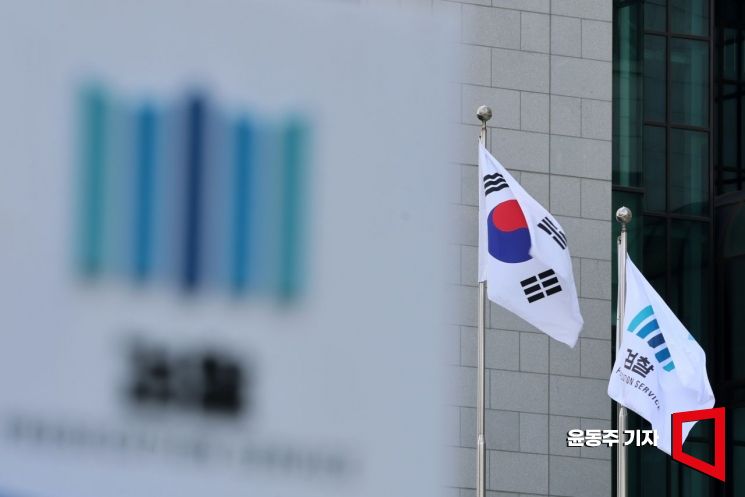 A flag is fluttering in the wind in front of the Supreme Prosecutors' Office in Seocho-gu, Seoul. 2025.07.01 Photo by Dongju Yoon
On January 30, the Supreme Prosecutors' Office announced the enactment and implementation of the "Guidelines for Handling Minor Property Crimes," which establish standards for the investigation and processing of such offenses.
These guidelines were introduced to improve the longstanding practice of imposing uniform criminal penalties on cases with low punitive value. According to the guidelines, "minor property crimes" are defined as certain property offenses, such as theft or embezzlement, where the stolen goods are consumable items like food, and the amount of damage is extremely small. The prosecution plans to fully consider the opinions of both the suspect and the victim when determining the amount, making judgments based on objective evidence.
In particular, the prosecution will strictly assess criminal intent from the investigation stage, given the frequent acquittals in court due to unclear intent in minor cases.
Additionally, if the suspect is a member of a socially disadvantaged group-such as a person with disabilities, a recipient of basic livelihood benefits, or otherwise vulnerable-this will be actively considered as a favorable factor in sentencing. When there is a low risk of repeat offenses and extenuating circumstances for the motive, the possibility of a suspension of indictment will be considered regardless of the victim's wishes, to ensure decisions reflect public expectations.
However, to prevent excessive leniency from undermining victims' rights, supplementary measures have also been established. As a rule, victims' statements will be heard before a suspension of indictment is granted, and procedures such as criminal mediation or the Prosecution Citizens' Committee-which allow for public input-will be actively utilized to enhance objectivity in decision-making.
Previously, the prosecution faced criticism for overzealous indictment in the Choco Pie theft case. In this case, an employee of a security partner company at a manufacturing firm in Wanju-gun, North Jeolla Province, was prosecuted for eating a Choco Pie worth 450 won and a custard worth 600 won from the company office refrigerator. The employee initially received a summary order of a 50,000 won fine in the first trial, but was later acquitted on appeal, and the prosecution did not contest the ruling, resulting in a final acquittal.
A representative from the Supreme Prosecutors' Office stated, "With the implementation of these guidelines, we expect to see an increase in flexible case handling that takes into account the unique circumstances of each case," adding, "Going forward, we will also seek appropriate solutions for various types of minor cases beyond property crimes, striving to become an institution trusted by the public."
© The Asia Business Daily(www.asiae.co.kr). All rights reserved.
![Clutching a Stolen Dior Bag, Saying "I Hate Being Poor but Real"... The Grotesque Con of a "Human Knockoff" [Slate]](https://cwcontent.asiae.co.kr/asiaresize/183/2026021902243444107_1771435474.jpg)















