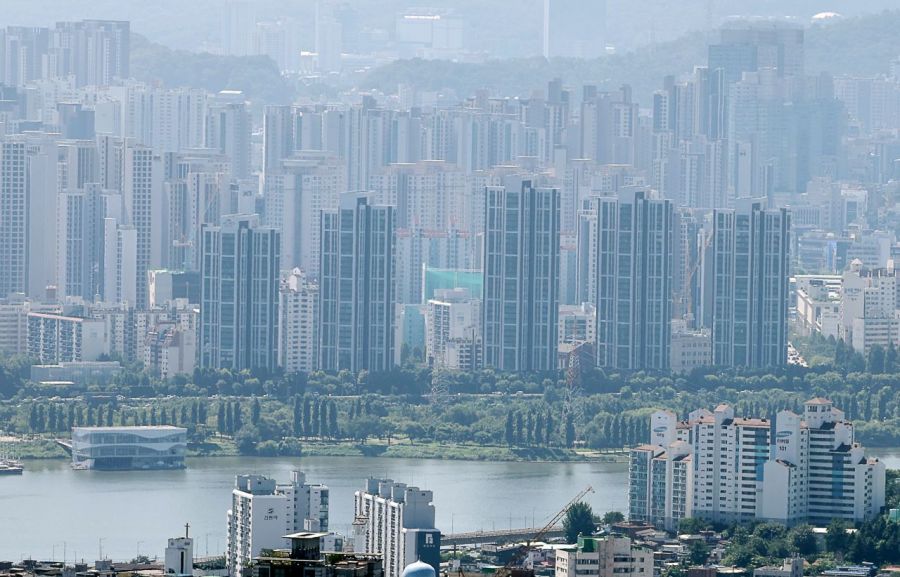
The shortage of apartment jeonse listings in Seoul continues. With jeonse prices also on the rise, tenants are expected to face even greater difficulties.
According to real estate big data firm Asil on January 31, the number of apartment jeonse listings in Seoul stood at 21,890 as of January 30. This represents a 6.0% decrease compared to the previous month (23,263 units) and a sharp drop of over 24% compared to the same period last year (28,904 units).
By district, Seongbuk-gu saw the steepest decline, with listings plummeting 86.3% from a year earlier. This was followed by Gwanak-gu (-72.0%), Gangdong-gu (-66.3%), Dongdaemun-gu (-66.3%), Eunpyeong-gu (-64.3%), Gwangjin-gu (-63.5%), Jungnang-gu (-59.1%), Seodaemun-gu (-58.0%), and Nowon-gu (-55.8%).
According to the Korea Real Estate Board, the jeonse supply-demand index for Seoul apartments was 104.8 as of January 26, up 0.1 points from the previous week (104.7). An index above 100 indicates that demand exceeds supply.
As the jeonse shortage persists, prices are also climbing. Nationwide, weekly apartment jeonse prices rose by 0.09% compared to the previous week, while Seoul saw an increase of 0.14%. In particular, Seongdong-gu (0.42%), Seocho-gu (0.30%), and Nowon-gu (0.27%) recorded the highest increases in Seoul.
An official from the Korea Real Estate Board explained, "Rental demand continues to be concentrated in areas with good transportation and popular complexes, but as the supply of listings remains insufficient, overall jeonse prices in Seoul have risen."
© The Asia Business Daily(www.asiae.co.kr). All rights reserved.












![The Special Connection Between the Statue of Martyr Lee Jun in Jangchungdan Park and Mayor Oh Sehoon ③ [Current Affairs Show]](https://cwcontent.asiae.co.kr/asiaresize/319/2026012110001599450_1768957215.jpg)
