Democratic Party Aims to Finalize Special Act on US Investment by March
"US Likely Prefers Swift Implementation Over Investment Method"
Hong Kiwon, a former diplomat and a member of the National Assembly's Foreign Affairs and Unification Committee from the Democratic Party of Korea, stated in an interview with The Asia Business Daily at the National Assembly on January 29, "The Korea-US investment cooperation is, by any measure, absolutely advantageous to the United States and absolutely disadvantageous to us," adding, "It is foolish for us to criticize and attack ourselves just because the counterpart is the United States."
He emphasized that what the United States wants is not parliamentary ratification, but rather "swift implementation of the agreement," and said that the National Assembly would complete the enactment of the "Special Act on Strategic Investment Management between Korea and the US (Special Act on US Investment)" within the first quarter. In particular, Assemblyman Hong stressed, "What the United States wants is the enactment of a special law," and added, "The United States is less concerned about the form of investment and more about Korea quickly proceeding with the terms of the agreement."
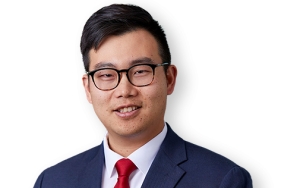
![[Interview] Rep. Hong Kiwon: "What the US Wants Is a Special Law... We Cannot Make Unilateral Concessions"](https://cphoto.asiae.co.kr/listimglink/1/2026012916225421495_1769671374.jpg) Hong Kiwon, a member of the Democratic Party of Korea, is being interviewed by The Asia Business Daily in his National Assembly office. January 29, 2026. Photo by Hyunmin Kim
Hong Kiwon, a member of the Democratic Party of Korea, is being interviewed by The Asia Business Daily in his National Assembly office. January 29, 2026. Photo by Hyunmin Kim
Regarding the claim by the People Power Party that parliamentary ratification is necessary, he pointed out, "The United States also imposes reciprocal tariffs through executive orders," and said, "It is sufficient to enact and pass a special law domestically."
On January 26 (local time), President Trump posted on social media, "The Korean National Assembly is not honoring the agreement between Korea and the United States. As a result, I am raising all reciprocal tariffs (country-specific tariffs) on automobiles, lumber, pharmaceuticals, and all other goods from 15% to 25%," pressuring the Korean government. Just one day after this surprise announcement, he stated, "We will work with Korea to find a solution." However, on January 28 (local time), US Treasury Secretary Scott Bessent reiterated, "There is no trade agreement with Korea until the Korean National Assembly passes the trade agreement," continuing the pressure.
The following is a Q&A.
-Due to President Trump's tariff hike pressure, the National Assembly has suddenly come under fire.
▲I believe what the United States wants is the enactment of a special law. Looking at the process discussed by the working-level ministries so far, it is said that the United States frequently asked about the special law review procedures. It seems more accurate to say that the United States wants Korea to quickly implement the agreement rather than focusing on the form of investment. Unlike Japan or the European Union, Korea has to go through a legislative process, which takes time, but this is not to delay the agreement, but rather to proceed according to the National Assembly's schedule.
![[Interview] Rep. Hong Kiwon: "What the US Wants Is a Special Law... We Cannot Make Unilateral Concessions"](https://cphoto.asiae.co.kr/listimglink/1/2026012916225021494_1769671370.jpg) Hong Kiwon, a member of the Democratic Party of Korea, is being interviewed by The Asia Business Daily in his National Assembly office. January 29, 2026. Photo by Kim Hyunmin
Hong Kiwon, a member of the Democratic Party of Korea, is being interviewed by The Asia Business Daily in his National Assembly office. January 29, 2026. Photo by Kim Hyunmin
-Nevertheless, the People Power Party insists that parliamentary ratification is necessary.
▲An MOU is not a treaty. While form alone does not determine whether something is a treaty, the wording of the current fact sheet clearly states that it does not impose legal obligations on the other country. Furthermore, the United States also imposes reciprocal tariffs through executive orders. The content of the MOU is already unfavorable to us, so I cannot agree with turning it into a treaty by seeking ratification. It is sufficient to enact and pass a special law domestically.
-When do you expect the Special Act on US Investment to be enacted?
▲Discussions between the party and the government have indicated that the law will be passed by around March, after which an investment finance corporation will be established and full-scale consultations with the United States will proceed.
-US Treasury Secretary Scott Bessent also said in a CNBC interview on the 28th (local time) that the Korean National Assembly has not ratified the agreement.
▲From the US perspective, whether it is an MOU or a special law is not important. The United States does not consider it a treaty anyway, and asking Korea for parliamentary ratification is not the point. Ultimately, what the United States wants is for Korea to implement the terms of the agreement quickly. It is unnecessary for us to get caught up in debates over English terminology.
-The day after Prime Minister Kim Minseok met with US Vice President JD Vance, President Trump suddenly posted his message.
▲This is something that can happen because it is President Trump. Normally, before a president makes such an announcement, working-level officials such as ministers would first make requests or press the counterpart country. Foreign Minister Cho Hyun also made it clear during a National Assembly Foreign Affairs Committee session that the US State Department was unaware of the situation. The most credible speculation now is that investment issues fall under the US Department of Commerce, and Secretary Howard Lutnick may have spoken directly to President Trump, prompting his post.
-It seems there is a lack of communication within the US government.
▲The Trump administration's second term lacks inter-agency cooperation. In this case, even the US Secretary of State, the National Security Council (NSC), and the USTR were unaware. The most convincing assumption is that the Secretary of Commerce may have known.
-Could the current US situation, including anti-immigration policies, be related to this pressure?
▲Only President Trump knows for sure, but there could be multiple intentions. However, fundamentally, it seems clear that the main purpose is to pressure Korea over the delayed enactment of the Special Act on US Investment.
-The US Supreme Court could issue a ruling on tariffs as early as next month.
▲There is a high possibility that the court will rule it unconstitutional, and such a decision could put significant pressure on President Trump. However, even if an unconstitutional ruling is issued, we will have to see how President Trump responds. Our government should faithfully implement the agreement between Korea and the US, and it is especially important that this is clearly conveyed to the United States.
![[Interview] Rep. Hong Kiwon: "What the US Wants Is a Special Law... We Cannot Make Unilateral Concessions"](https://cphoto.asiae.co.kr/listimglink/1/2026012916231221500_1769671392.jpg) Hong Kiwon, a member of the Democratic Party of Korea, is being interviewed by The Asia Business Daily in his National Assembly office. January 29, 2026. Photo by Hyunmin Kim
Hong Kiwon, a member of the Democratic Party of Korea, is being interviewed by The Asia Business Daily in his National Assembly office. January 29, 2026. Photo by Hyunmin Kim
-The Special Act on US Investment bills introduced so far seem to focus on strengthening parliamentary involvement.
▲There are a total of six bills currently introduced. Among them, the bill sponsored by former floor leader Kim Byungki was essentially drafted by the government. It is problematic to entrust the executive branch alone with an investment amounting to about 40% of Korea's annual budget. The bill I sponsored includes provisions to account for changes in the implementation of the law due to domestic circumstances in the United States or changes in the external environment.
-What should be the role of the National Assembly in future Korea-US relations?
▲Although President Trump is pushing hard, the role of the US Congress is extremely significant. It is meaningful for our National Assembly to establish close cooperative relationships with members of the US Congress.
-How should the government and ruling party respond in this highly uncertain Trump era?
▲Whenever the United States or the US president raises an issue with us, there is a tendency in Korea to respond with, "We did something wrong," but this is a serious mistake. President Trump, in particular, has often issued messages without context, and those messages have sometimes been reversed in a short period of time. Although there is a power imbalance, that does not mean we should unilaterally concede everything to the United States.
© The Asia Business Daily(www.asiae.co.kr). All rights reserved.








![The Special Connection Between the Statue of Martyr Lee Jun in Jangchungdan Park and Mayor Oh Sehoon ③ [Current Affairs Show]](https://cwcontent.asiae.co.kr/asiaresize/319/2026012110001599450_1768957215.jpg)


