Fine Droplets Spread When Flushing
Higher Risk of Contamination If Toilet Paper Faces the Wall
A recent study has found that the direction in which a toilet paper roll is hung can affect hygiene. The analysis suggests that if the loose end of the toilet paper faces the wall, there is a relatively higher chance of exposure to fine droplets generated when flushing the toilet.
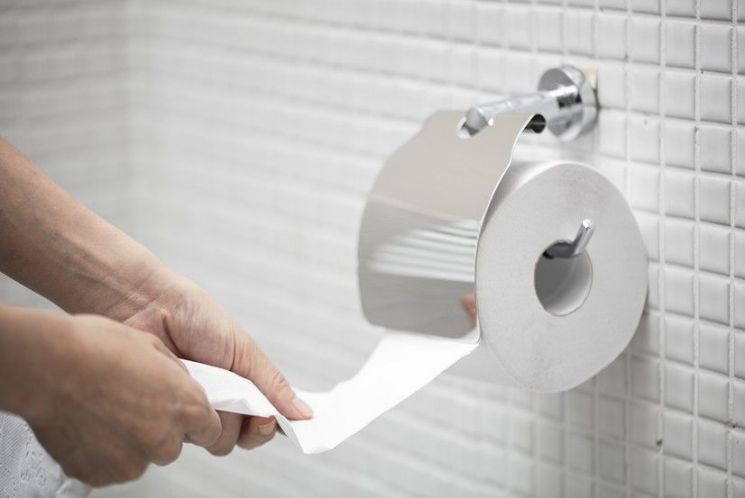 As shown in the photo, the correct way to hang a roll of toilet paper is with the loose end facing outward. Photo by Clipart Korea
Researchers at the University of Colorado Boulder recently conducted a laser visualization experiment to observe the movement and spread of aerosols produced during flushing. They installed a green laser beam above a commercial toilet without a lid and used two cameras positioned at a set distance to track the movement of particles splashing during the flushing process.
Fine Droplets Dispersed When Flushing
The observations showed that relatively large droplets quickly settled to the floor, but fine particles less than 5 microns in diameter remained airborne for over a minute, spreading upward and toward the wall behind the toilet. Some particles reached up to about 1.5 meters above the toilet, hit the ceiling, and then spread along the walls throughout the restroom.
The researchers explained, "The droplets generated when flushing may contain not only water but also urine and fecal particles, as well as pathogenic microorganisms such as Escherichia coli, Pseudomonas aeruginosa, norovirus, and Legionella." They added, "Even after flushing, pathogens may remain inside the toilet and become airborne, with contamination tending to concentrate especially on the side walls closest to the toilet."
Toilet Paper Facing Outward Is More Hygienic Than Facing the Wall
In such an environment, hanging the toilet paper roll so that it unrolls toward the wall may be less hygienic. This is because the process of pulling the toilet paper increases the likelihood of contact with potentially contaminated wall surfaces. Conversely, if the loose end faces outward, it maintains a physical distance from the wall, and the relatively clean inner side is exposed first, reducing the risk of bacterial contact.
However, the researchers noted that this experiment was conducted using only tap water in a new toilet. They added that the movement of droplets may differ in real restroom environments where feces or toilet paper are present, and that the experiment took place in a ventilated laboratory without partitions, which may differ from public restrooms.
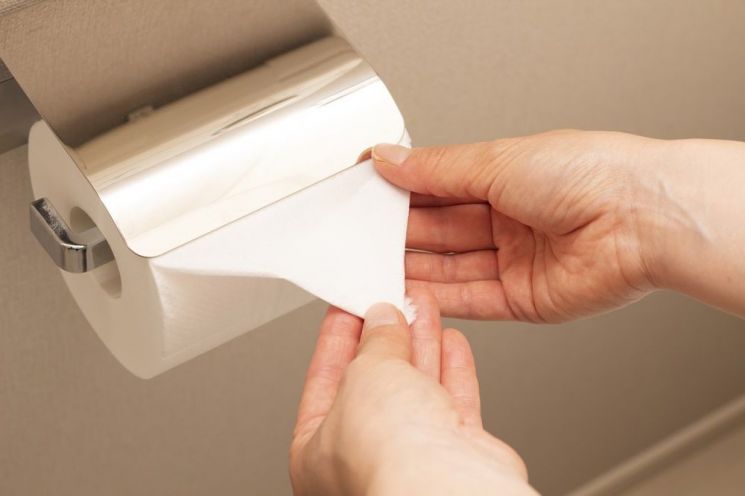
In 1891, when American inventor Seth Wheeler patented the toilet paper roll, the design also featured the loose end facing outward. Both domestic and international hotel industries use this as a standard for guest room hygiene management, making it a principle to hang toilet paper rolls with the loose end facing outward. Folding the first sheet of toilet paper into a triangle after cleaning is both a sign of cleanliness and a measure to enhance guest convenience.
© The Asia Business Daily(www.asiae.co.kr). All rights reserved.
![Clutching a Stolen Dior Bag, Saying "I Hate Being Poor but Real"... The Grotesque Con of a "Human Knockoff" [Slate]](https://cwcontent.asiae.co.kr/asiaresize/183/2026021902243444107_1771435474.jpg)

















