Privacy and Censorship Concerns:
"Blocked for Criticizing ICE"
TikTok Cites "Data Center Outage"...
White House Says "Not Censorship"
After the U.S. division of TikTok, the video platform operated by Chinese company ByteDance, was split off and sold, the number of users deleting the TikTok application (app) in the United States has surged. While the sale was forced on the grounds of national security threats, some analysts say that, in reality, Americans are increasingly concerned about the possibility of censorship by the Donald Trump administration.
On January 26 (local time), U.S. broadcaster CNBC cited data from market research firm Sensor Tower, reporting that the number of daily TikTok app deletions in the U.S. over the past five days increased by approximately 150% compared to the previous three months.
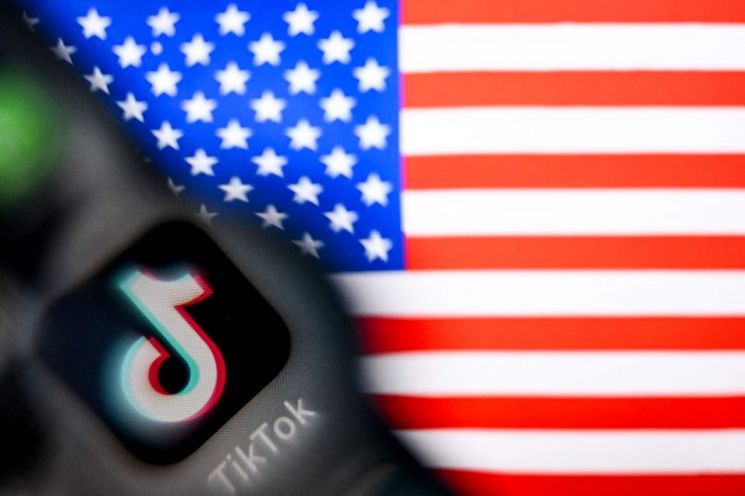
On January 22, TikTok established a limited liability company called "TikTok U.S. Data Security (USDS) Joint Venture" after separating its U.S. operations. Adam Presser, a former executive in charge of trust and safety at TikTok, was appointed as CEO, and the board is composed mostly of Americans. This company is responsible for protecting U.S. user data, securing algorithms, providing software guarantees, and managing safety policies.
However, negative reactions have emerged among users after TikTok sent a request on January 22 to agree to its updated privacy policy. Users have pushed back against language stating that TikTok may collect data such as race, sexual orientation, citizenship or immigration status, and financial information. Growing consumer concerns have negatively impacted public opinion toward the app following the joint venture announcement, leading to a rise in app deletions. Nevertheless, CNBC pointed out that the same provisions were included in the privacy policy drafted in August 2024.
Sensor Tower also reported that despite the increase in app deletions, overall usage in the U.S. has not declined significantly, and the number of active users has remained largely unchanged compared to the previous week.
Concerns about censorship have also been raised. TikTok users claim that videos related to the fatal shooting of U.S. citizen Alex Prete by an Immigration and Customs Enforcement (ICE) agent in Minneapolis have been blocked or delayed by TikTok. Singer Billie Eilish also stated that her brother, Finneas O'Connell, posted a TikTok video about Prete's death, but it received very few views. In fact, as of this date, the Washington Post reported that the video had only one-tenth the views of other videos posted by O'Connell.
Steve Vladeck, a Georgetown University law professor, said on rival social network Bluesky on January 25 that a video he posted on TikTok criticizing the Department of Homeland Security had been "under review" for nine hours and could not be shared.
Another TikTok user with more than 35,700 followers also posted a video critical of ICE, but said the video received zero views, accusing TikTok of "blatant censorship."
There have also been complaints about service disruptions. Nadia Okamoto, a creator with 4 million TikTok followers, told CNBC that the app had experienced issues in recent days and she was unable to upload videos for about 24 hours. She added, "There is a lot of discussion online about whether all of this is a coincidence, censorship, or what it really means."
In response, TikTok stated on social media platform X (formerly Twitter) that some of its apps, including TikTok, were affected by a power outage at a U.S. data center and that the company is working to restore service.
The White House said in a statement, "The White House has not been involved in TikTok's content censorship and has not made any such requests."
Other U.S. tech companies have faced similar complaints. In 2023, thousands of pro-Palestinian supporters protested that their posts were censored by Meta. The company explained that the issue was due to an internal bug.
Glenn Gerstell, senior adviser at the Center for Strategic and International Studies (CSIS) and former general counsel at the U.S. National Security Agency (NSA), said it is unclear whether there has actually been a change in TikTok's content policy. However, he added, "If true, it is concerning that worries about foreign content manipulation have now been replaced by concerns about domestic censorship."
© The Asia Business Daily(www.asiae.co.kr). All rights reserved.
![Clutching a Stolen Dior Bag, Saying "I Hate Being Poor but Real"... The Grotesque Con of a "Human Knockoff" [Slate]](https://cwcontent.asiae.co.kr/asiaresize/183/2026021902243444107_1771435474.jpg)















