OpenAI Reveals Ambitions for Profitable AI
Launching B2B Services Following Advertising
What Drives the Emphasis on Profitability?
OpenAI, widely regarded as the dominant force in the artificial intelligence (AI) industry, is rolling out a series of new services and features with profitability in mind. As the company’s losses have ballooned due to heavy investments in AI infrastructure and research and development (R&D) without a clear revenue model, OpenAI appears to be shifting its focus toward securing profitability.
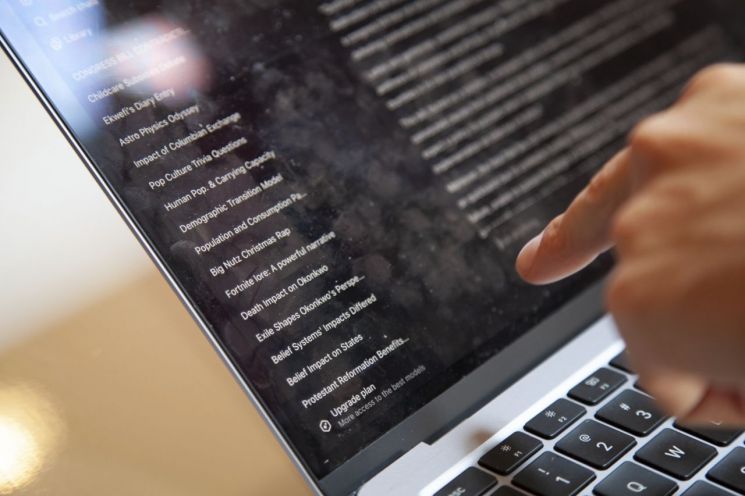
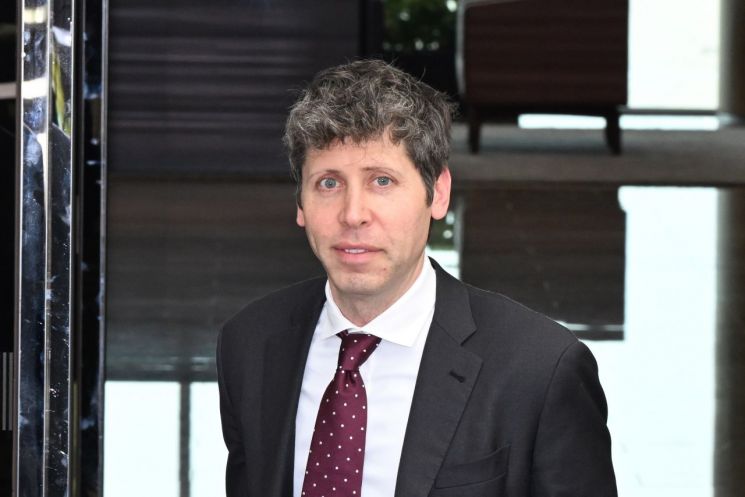
On January 25 (local time), reports circulated among U.S. IT media outlets that OpenAI CEO Sam Altman has been holding private meetings with corporate clients in a bid to formally enter the business-to-business (B2B) sector. In these closed-door sessions, Altman reportedly pledged to provide all the tools necessary for enterprise operations, including the ChatGPT chatbot, the coding tool Codex, and workflow automation models.
OpenAI’s move into B2B services is seen as an effort to convert corporate clients into a stable revenue stream. Until now, OpenAI has relied primarily on service fees from paid ChatGPT subscribers as its main source of income, but there have been concerns that this revenue model has reached its limits. As of July last year, the number of paid ChatGPT subscribers-including corporate accounts-stood at approximately 35 million, accounting for only about 4-5% of total users, which is insufficient to generate substantial profits.
In contrast, Anthropic, the company behind Claude, has targeted the enterprise market by focusing on developer tools such as application programming interface (API) services and coding tools. Clients have launched services incorporating the Claude chatbot via APIs, and have actively utilized the AI-based integrated development environment (IDE) known as Claude Code.
Introduction of Advertising to ChatGPT
OpenAI is also making notable changes to its services for general users to enhance profitability. The company is currently testing the introduction of advertisements on ChatGPT in the U.S. market. Additionally, it has expanded the availability of its low-cost subscription plan, ChatGPT Go-which was previously limited to certain countries-to users worldwide. ChatGPT Go offers higher usage limits than the free version and is available domestically for 15,000 KRW per month, which is 14,000 KRW less expensive than the existing Plus plan (29,000 KRW per month).
Advertisements will be shown only to free ChatGPT users and ChatGPT Go subscribers, with ads and chatbot responses provided separately. OpenAI reportedly expects to generate about $2 in annual revenue per free user through the introduction of advertising.
OpenAI’s push to strengthen profitability is seen as an attempt to address its lack of a clear revenue model, despite its outstanding AI performance. The company pays enormous operating costs for AI infrastructure, such as graphics processing units (GPUs), to develop AI models and run its services. OpenAI’s annual spending on infrastructure and R&D is estimated to exceed $17 billion (approximately 24.6 trillion KRW).
The outlook for future profitability is also not optimistic. The ongoing AI boom has caused the prices of GPUs and memory semiconductors to surge each year, and competitor Google is now seen as having caught up with OpenAI by significantly improving the performance of its AI model Gemini 3. Google uses its own AI semiconductor, the tensor processing unit (TPU), for AI model development and service operations, and TPUs are considered more cost-effective than conventional AI chips.
Concerns about OpenAI’s financial health continue to mount. Sebastian Mallaby, a fellow at the Council on Foreign Relations, warned in a New York Times op-ed that OpenAI is burning through cash at a much faster rate than it is generating revenue, and could run out of funds before achieving large-scale profitability. He predicted that OpenAI could face a cash crunch within 18 months. As a nonprofit, OpenAI does not disclose its exact revenue or profits, but industry estimates suggest that the company incurred an operating loss of about $7.8 billion (approximately 11.3 trillion KRW) in the first half of last year alone.
© The Asia Business Daily(www.asiae.co.kr). All rights reserved.
![Clutching a Stolen Dior Bag, Saying "I Hate Being Poor but Real"... The Grotesque Con of a "Human Knockoff" [Slate]](https://cwcontent.asiae.co.kr/asiaresize/183/2026021902243444107_1771435474.jpg)

















