Kickoff of Research Project on “Establishing Strategies to Promote Local Transactions”
Building a Local Circular Economy: From Production to Consumption to Reinvestment
Gwangmyeong City in Gyeonggi Province is set to develop strategies to expand the participation of local businesses in the public sector, including procurement. The goal is to establish a virtuous cycle in which the production of local companies leads to local consumption and reinvestment.
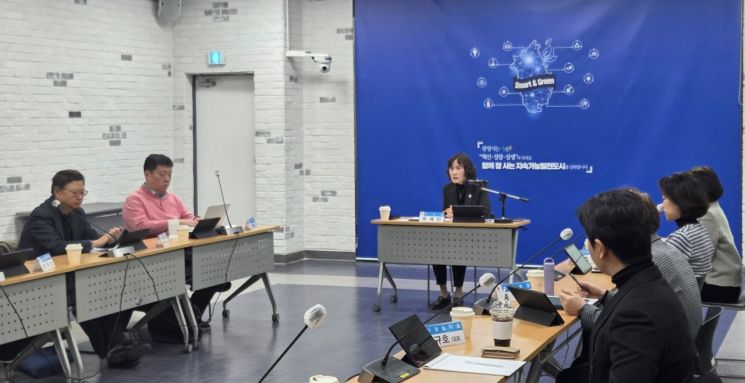 Gwangmyeong City is discussing the plan for the research project implementation at the 'Establishment of a Circular Economy Strategy' kickoff meeting held on the 23rd in the city hall's medium conference room. Provided by Gwangmyeong City
On January 23, Gwangmyeong City held a kickoff meeting for a research project titled ‘Establishment of Strategies to Promote Local Transactions for Community Assetization’ in the city hall’s medium conference room.
This research project aims to analyze the issue of local wealth outflow that occurs during the execution of public finances, such as procurement, and to design a virtuous cycle for the local economy in which public sector spending naturally leads to local production, consumption, and reinvestment.
The city will particularly focus on using big data analysis of public finance data to develop policy strategies that can substantially expand the participation of local companies in public procurement.
To start, the city will conduct a comprehensive analysis of various public finance data, including the municipal budget and contract status, procurement data, and the e-Hojo system. This will involve examining the locations of contract-winning companies, types of contracts (private or competitive), and business categories from multiple perspectives to diagnose the structure of public finance outflow.
Subsequently, the city will seek ways to lower entry barriers for local businesses, such as improving bidding requirements and enhancing accessibility to small-scale contracts, in order to identify potential areas for matching supply and demand and to uncover key opportunities.
During this process, the city will also consider institutional measures, such as introducing a ‘local contribution’ evaluation item in contract reviews and making it mandatory to include a ‘local coexistence plan.’
After consulting with experts and coordinating with relevant departments, the city plans to finalize the strategy by April. The key outcomes and tasks identified will then be disseminated and shared across all departments to promote policies that build a practical local circular economy ecosystem.
Park Seungwon, Mayor of Gwangmyeong City, stated, “Public finances can serve as a crucial catalyst for transforming the flow of the local economy. We will realize a sustainable local economy where local wealth drives the growth of local businesses, and those achievements are reinvested into jobs and the value of the local community.”
© The Asia Business Daily(www.asiae.co.kr). All rights reserved.
![Clutching a Stolen Dior Bag, Saying "I Hate Being Poor but Real"... The Grotesque Con of a "Human Knockoff" [Slate]](https://cwcontent.asiae.co.kr/asiaresize/183/2026021902243444107_1771435474.jpg)















