Cabinet and Senior Aides Meetings, Luncheons and Dinners with the National Assembly: Accelerating Reform
"If Clinging to Justification Only Breeds Confusion, It Is Not Reform"... Setting the Direction
Repeated Calls for Legislation in the National A
President Lee Jaemyung, who has outlined the “Five Major Transformations” including region-led growth and inclusive growth for all, continues to urge swift establishment of reform measures and acceleration of legislative processes through cabinet meetings, senior aide meetings, and successive luncheons and dinners with key figures from both the ruling and opposition parties. As the momentum of state affairs inevitably wanes over time, he is determined to deliver tangible results that the public can feel by providing a clear direction, encouraging legislative tasks, and ensuring prompt execution.
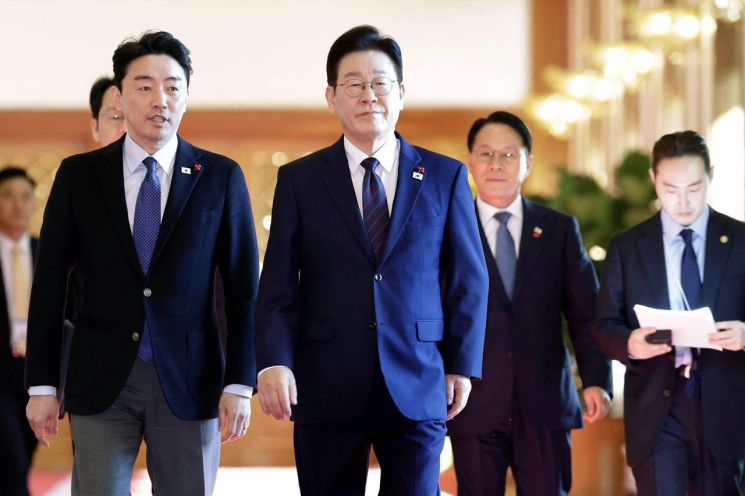
On January 22, during a senior aide meeting held at the Blue House, President Lee stated, “The time we have to get things done is limited, and as time goes by, not only does our momentum decrease, but we must also implement reform measures as quickly as possible so that the public can experience real change.” He added, “I often feel that time is truly precious.” He further requested, “Please cooperate so that the National Assembly can speed up the legislative process, and I ask that government ministries and agencies also move faster to produce visible results as soon as possible.”
He particularly emphasized that excessive fixation on justification and principle should not slow the pace of reform. Addressing the controversy over the prosecution reform bill, which centers on separating the prosecution into the Investigation Office and the Prosecution Office, President Lee said, “If clinging to justification and principle only increases pain and confusion, it cannot be called reform.” He asked that the reform be thoroughly examined from a practical and effective perspective, focusing on whether it helps protect the human rights and substantive rights of the people. This remark was aimed at the controversy within the ruling party over whether to grant supplementary investigation rights to prosecutors in the Prosecution Office, underlining that justification and principle must not become obstacles to the pace of reform. During the closed-door meeting, new or key policy ideas to be launched or prioritized this year were presented.
He also instructed that on-site inspections be strengthened and deficiencies be swiftly addressed to enhance public perception. In the cabinet meeting on January 20, President Lee said, “Announcing a policy is not the end; thoroughly inspecting the field and quickly remedying areas for improvement is the completion of state affairs that the public can truly feel.” He added, “Whether it is state affairs or anything else, the real achievement is when the quality of life for the people is substantially improved on the ground and the public can actually feel it.” He requested, “Please closely monitor how policies are working in the field.”
At the cabinet meeting that day, agencies in addition to ministries attended at President Lee’s instruction. He believes that only when all ministries and agencies understand and empathize with the overall direction of state affairs can the direction of their work be set. President Lee also announced that in the next work report in six months, if any shortcomings are found in ministries, agencies, or subordinate public institutions, they will be reviewed and those responsible will be held accountable. At the same time, he closely checked the progress of policies with his characteristic meticulousness and strongly reprimanded some attendees.
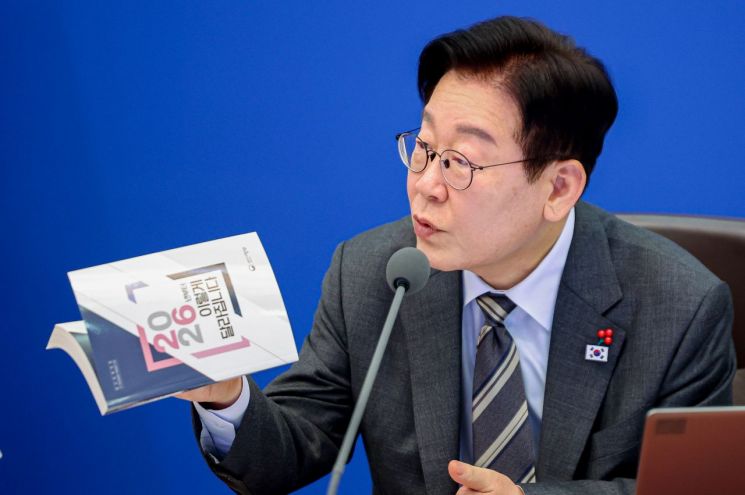
The reform agenda was clearly presented to the public. In his opening remarks at the New Year’s press conference on January 21, which lasted a record 173 minutes, President Lee reiterated the key points from his New Year’s address: region-led growth, inclusive growth that shares opportunities and rewards, sustainable growth based on safety, attractive growth led by culture, and stable growth supported by peace. He emphasized, “The transformation of the growth strategy is an ambitious attempt to completely reprioritize every aspect of state administration, fully reallocate the government’s resources and capabilities, and redraw the growth map of the Republic of Korea.”
When meeting with the National Assembly, he urged the swift processing of legislative tasks necessary for reform. After the New Year’s press conference, President Lee held a dinner at the Blue House with Han Byungdo, floor leader of the Democratic Party of Korea, and other new ruling party leaders, asking, “I hope the new floor leadership will take the lead in addressing livelihood issues and various reform tasks.” He also said, “The Republic of Korea is at a very important crossroads, and it is crucial that results and achievements change the lives of the people. Please work to produce tangible results so that our floor leadership can earn the trust of the public.”
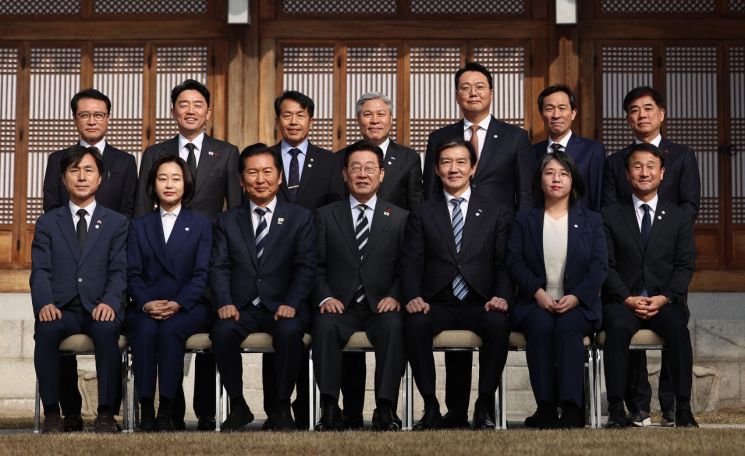
President Lee also held a closed luncheon at the Blue House with members of the Democratic Party’s “KOSPI 5000 Special Committee.” At this meeting, he discussed additional legislative matters, including the prompt passage of the third amendment to the Commercial Act, to ensure the successful establishment of the KOSPI 5000 era. President Lee brought up the controversy surrounding the “dual listing” of LS Group and requested continued efforts to improve systems for enhancing the credibility of the capital market and protecting the rights of minority shareholders.
When Assemblywoman Lee Soyoung proposed the need for a bill to prevent companies from artificially suppressing stock prices, President Lee, after hearing her explanation, instructed Policy Chief Kim Yongbeom to “proceed immediately.” President Lee also shared Assemblywoman Lee’s post on X (formerly Twitter), stating, “Lowering stock prices just to save on inheritance tax? We will amend this as quickly as possible.”
Previously, just two days after returning from his trip to Japan on January 16, President Lee invited leaders from both the ruling and opposition parties to the Blue House for a luncheon, asking for bipartisan cooperation in rationalizing economic criminal penalties. President Lee believes that Korea’s economic criminal penalties are three to four times higher than those of advanced countries. He also commented that the timely processing of bills could be delayed due to filibusters (unlimited debate).
© The Asia Business Daily(www.asiae.co.kr). All rights reserved.
![Clutching a Stolen Dior Bag, Saying "I Hate Being Poor but Real"... The Grotesque Con of a "Human Knockoff" [Slate]](https://cwcontent.asiae.co.kr/asiaresize/183/2026021902243444107_1771435474.jpg)

















