Trump Warns Europe: "Greenland Tariffs to Be Fully Enforced"
Escalating U.S.-Europe Tensions Trigger Simultaneous Declines in Stocks, Bonds, and the Dollar
Will the U.S. and EU Find a Breakthrough at Davos?
On January 20 (local time), all three major U.S. stock indexes on the New York Stock Exchange plunged following President Donald Trump's warning of imposing "Greenland tariffs" on Europe. As tensions between the United States and Europe over the Greenland issue escalated, concerns grew that this could develop into a transatlantic trade war. As a result, a so-called "Sell America" trend emerged, with not only stocks but also U.S. Treasury bonds and the dollar falling in value.
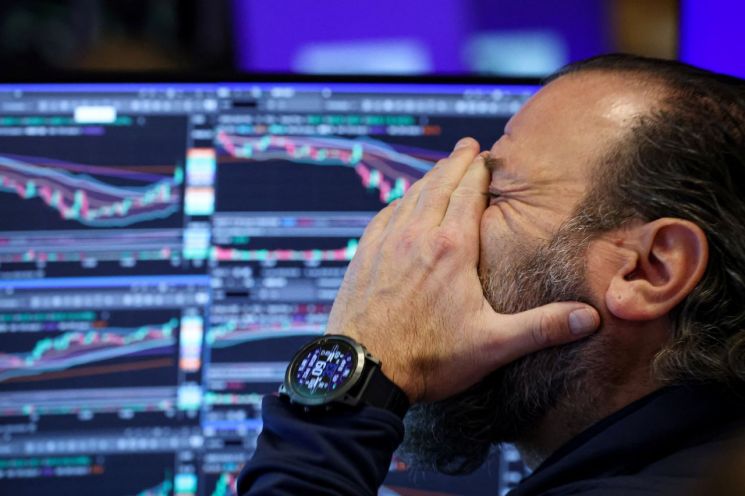
As of 9:48 a.m. on the New York Stock Exchange, the Dow Jones Industrial Average, which focuses on blue-chip stocks, was down 632.95 points (1.28%) from the previous trading day, standing at 48,726.38. The S&P 500 Index, which tracks large-cap stocks, dropped 94.2 points (1.36%) to 6,845.81, while the tech-heavy Nasdaq Index plummeted 396.366 points (1.69%) to 23,119.022.
The immediate factors shaking the market were the geopolitical conflict and rising trade tensions surrounding Greenland. On January 17, President Trump announced that he would impose tariffs on imports from eight European countries until a "complete and comprehensive" agreement to purchase Greenland is reached. The targeted countries are Denmark, Norway, Sweden, France, Germany, the United Kingdom, the Netherlands, and Finland. The plan is to impose a 10% tariff starting February 1 and increase it to 25% from June 1.
In addition, President Trump threatened to impose a 200% tariff on French wine and champagne, specifically targeting France for refusing to participate in the Gaza Strip Peace Committee. While the committee claims to aim for ending and managing the Gaza conflict, critics argue it is essentially an attempt to replace the United Nations.
The European Union (EU) is also considering countermeasures against the United States. The EU is weighing its response, discussing the possibility of invoking the Anti-Coercion Instrument (ACI), also known as the "trade bazooka," to counter third countries that pose economic threats to member states.
Amid concerns over the spread of the trade war, both the dollar and U.S. Treasury bond prices are falling across financial markets. The dollar index, which measures the value of the U.S. dollar against the currencies of six major countries, is down 0.86% from the previous trading day, standing at 98.34.
As long-term U.S. Treasury bond prices fall, yields are coming under upward pressure. The yield on the 10-year U.S. Treasury bond, a global benchmark, is up 5 basis points (1bp = 0.01 percentage point) from the previous trading day, moving at 4.28%. In contrast, the yield on the 2-year U.S. Treasury bond, which is sensitive to monetary policy, is down 1 basis point from the previous day, at 3.58%. Rising Japanese government bond yields are also contributing to global bond market instability. This is due to growing concerns about fiscal soundness as both ruling and opposition parties in Japan promise populist policies ahead of next month's general election.
However, experts are also paying attention to the possibility that the United States and the EU may seek a diplomatic solution. There is speculation that a breakthrough to ease tensions may be found through direct contact between EU leaders and President Trump at the World Economic Forum (WEF) in Davos, Switzerland, which will be held from January 19 to 23. President Trump is scheduled to attend the Davos Forum with the largest-ever U.S. delegation and deliver a speech on January 21.
Krishna Guha, Vice Chairman of Evercore ISI, said, "Investors expect some form of compromise to emerge, so the seriousness of the situation will ultimately be limited." However, he added, "If these negotiations break down, the impact will be very severe and will have lasting repercussions across multiple sectors, including the dollar."
By sector, technology stocks are showing notable weakness. Nvidia is down 2.33%. Microsoft is down 1.82%, and Apple is down 0.59%. Alphabet, Google's parent company, and Meta, Facebook's parent company, are also down 1.77% and 2.01%, respectively, continuing the sluggish trend in technology stocks.
© The Asia Business Daily(www.asiae.co.kr). All rights reserved.
![Clutching a Stolen Dior Bag, Saying "I Hate Being Poor but Real"... The Grotesque Con of a "Human Knockoff" [Slate]](https://cwcontent.asiae.co.kr/asiaresize/183/2026021902243444107_1771435474.jpg)















