Surging Prices of DRAM and Flash Memory Drive Up Costs
More Consumers Turn to Older Models
Galaxy S26 Also Expected to See Inevitable Price Hike
The prices of IT devices set to be released this year are rising sharply. This surge is driven by higher prices for memory semiconductors, such as DRAM, which are key components, due to increased demand for artificial intelligence (AI) applications. As a result, price hikes for major flagship smartphones, including the Galaxy S26 series scheduled for release in the first half of this year, are inevitable.
The pre-order prices for Samsung Electronics’ latest laptop lineup, the Galaxy Book6 series, unveiled on January 16, range from a minimum of 3.41 million won to a maximum of 4.93 million won. The highest-spec 14-inch (35.6 cm) model in the Galaxy Book6 Pro lineup is priced at 3.41 million won, while the Galaxy Book6 Ultra, equipped with an Nvidia discrete graphics card, is nearly 5 million won at 4.93 million won.
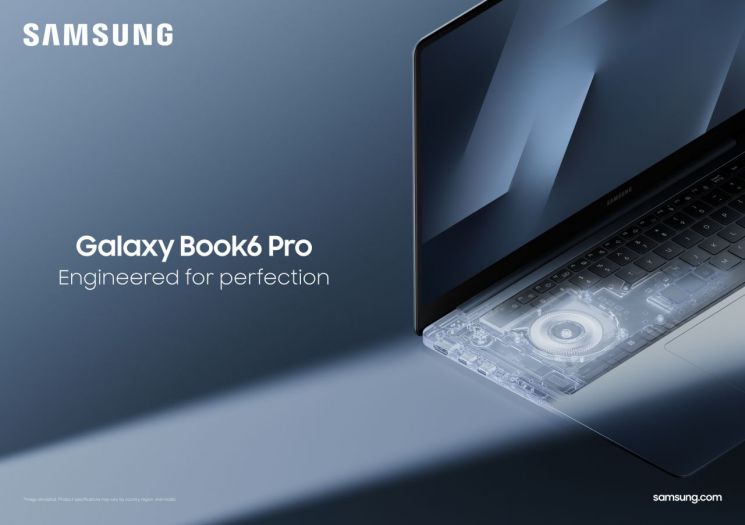
This represents a significant price increase compared to previous models with similar specifications-the Galaxy Book5 Pro was 2.56 million won, and the Galaxy Book4 Ultra was 3.73 million won. In particular, since the Galaxy Book5 series was priced lower than its predecessor, consumers are feeling the impact of this latest price hike more acutely. LG Electronics’ laptop product, the ‘Gram,’ also saw a price increase of about 400,000 to 500,000 won depending on the specifications compared to previous models.
The rise in laptop prices is due to the increased cost of memory semiconductors. The AI boom has driven a surge in demand for memory semiconductors used in AI accelerators, prompting semiconductor companies such as Samsung Electronics and SK Hynix to ramp up production of high-end HBM and server memory rather than DRAM for IT devices. As a result, the supply of DRAM has relatively decreased, leading to higher prices. In fact, the consumer price of Samsung Electronics’ 16GB DDR5 RAM for PCs was just over 60,000 won in February last year, but has now soared to nearly 420,000 won-a sevenfold increase in just one year.
In addition, prices for NAND flash memory used in storage devices such as SSDs have also surged, and the strong exchange rate has increased the cost burden of sourcing components from major CPU manufacturers such as Intel and AMD.
Accordingly, price increases for smartphones scheduled for release this year have also become unavoidable. The industry expects that the Galaxy S26 series, which is set to be unveiled next month, will see a price increase of about 100,000 to 150,000 won compared to its predecessor.
Tae Moon Roh, President and Head of the DX (Device eXperience) Division at Samsung Electronics, also stated at the world’s largest electronics and IT exhibition, CES 2026, earlier this month, “Among various business conditions this year, we are particularly concerned about the rise in material costs for key components, especially memory prices,” adding, “The increase in major component prices will inevitably have some impact on the products we sell in one form or another,” suggesting the likelihood of price hikes.
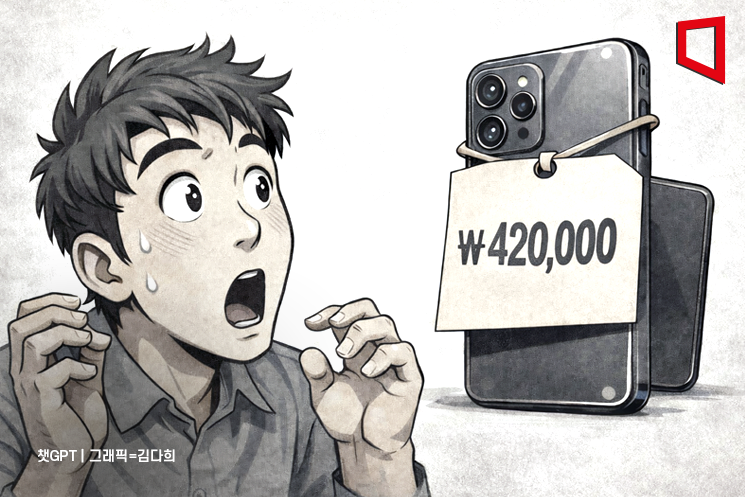
The sharp increase in memory prices has also led to more consumers seeking older models. An IT industry official commented, “Both PCs and smartphones released this year will not be able to avoid significant price increases,” adding, “There is a growing trend among consumers who do not necessarily need the latest specifications to purchase previous-generation products that were manufactured before the price hikes.”
© The Asia Business Daily(www.asiae.co.kr). All rights reserved.
![Clutching a Stolen Dior Bag, Saying "I Hate Being Poor but Real"... The Grotesque Con of a "Human Knockoff" [Slate]](https://cwcontent.asiae.co.kr/asiaresize/183/2026021902243444107_1771435474.jpg)
















