Acronym for "Trump Usually Negates Announcements"
Contrarian investing by betting against initial statements
Stock market shows heightened volatility compared to the past
Recently, as the U.S. financial markets have experienced sharp fluctuations triggered by remarks from Donald Trump, reports have emerged that a new investment strategy known as "TUNA (Trump Usually Negates Announcements) trade" is gaining traction.
TUNA stands for "Trump Usually Negates Announcements." This strategy involves betting against the market in anticipation that, after a sudden announcement from President Trump shocks the market, a subsequent statement reversing the initial one will soon follow.
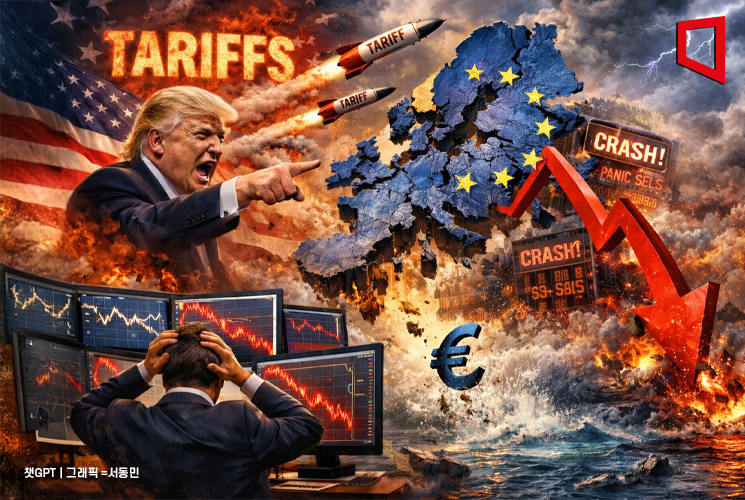
According to U.S. business media outlets such as Business Insider on January 18 (local time), an example of TUNA occurred on January 7. On that day, President Trump announced a policy that completely banned defense companies from paying shareholder dividends and conducting share buybacks, while also capping executive salaries at $5 million (approximately 7 billion won). Trump specifically mentioned major defense contractors such as Lockheed Martin, RTX, and General Dynamics, warning, "They may no longer be able to do business with the government." As a result, the stock prices of these companies plummeted. However, just a few hours later, President Trump proposed increasing the 2027 defense budget from the current $901 billion (approximately 1.327 trillion won) to $1.5 trillion (approximately 2.209 trillion won), causing the stock prices to rebound sharply.
This pattern is quite different from what was seen during Trump's first term. At that time, the prevailing investment strategy was the 'TACO (Trump Always Chickens Out) trade.' This approach was based on the expectation that if the market deteriorated, President Trump would ultimately back down, either retracting or easing his policies. Business Insider noted, "The current situation is closer to a 'TUNA' trade than a 'TACO' trade," observing that volatility has intensified compared to the past.
Meanwhile, despite such extreme volatility, the U.S. stock market continues to hover near all-time highs. In January of this year, inflows into equity exchange-traded funds (ETFs) reached five times the historical monthly average, and inflows over the past three months have totaled a record $400 billion. Bloomberg reported, "This enthusiastic market response is encouraging the Trump administration to pursue more aggressive policy measures," adding, "Viewing the market's rise as a kind of report card, President Trump is likely to push for even bolder policies, buoyed by investor support."
© The Asia Business Daily(www.asiae.co.kr). All rights reserved.
![Clutching a Stolen Dior Bag, Saying "I Hate Being Poor but Real"... The Grotesque Con of a "Human Knockoff" [Slate]](https://cwcontent.asiae.co.kr/asiaresize/183/2026021902243444107_1771435474.jpg)















