Customized Resource Circulation Education Across All Life Stages
Strengthening the Foundation for Everyday Practice
Yangpyeong County in Gyeonggi Province (Governor Jeon Jinseon) announced on January 19 that it will significantly expand its resource circulation education in 2026, accelerating policies aimed at realizing its vision of becoming an "environmental capital."
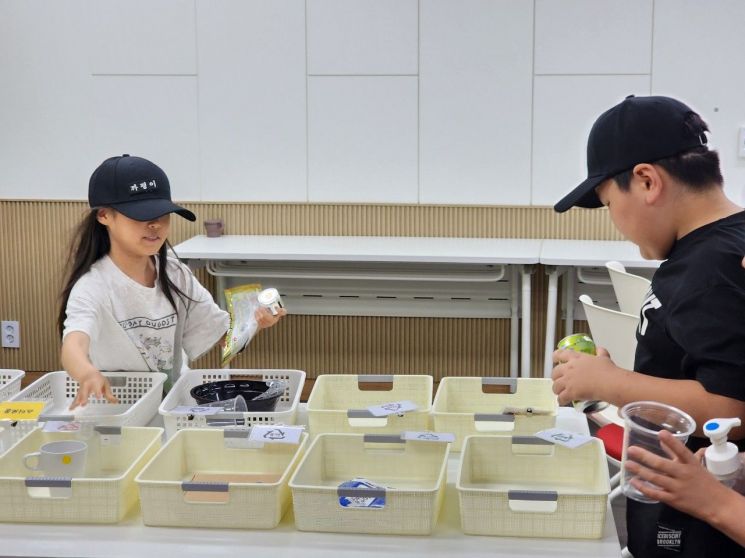
The 2026 resource circulation education program is designed to establish a culture of resource circulation in daily life. It will be subdivided into customized education programs that cover the entire life cycle, from infants and young children to adults.
In addition to the on-site experiential resource circulation education and single-use item reduction education that have been conducted over the past two years, the county plans to further diversify its educational formats. These will include separate collection education delivered directly to schools and villages, play-based separate collection education for infants and young children at daycare centers and kindergartens, and separate collection education with "Aejeong" (a character who helps clarify ambiguous items). The county will also expand customized education for apartment complexes, institutions, and organizations, aiming to make resource circulation a natural part of everyday life.
The county has newly launched "From the Table to the Garden," an advanced course on food waste for repeat participants, in addition to "New Use, Beneficial Circulation," which was designated as an excellent environmental education program by the Ministry of Environment last year. The county will also continue to offer separate collection education for infants and young children as part of its life-cycle education programs, as well as single-use item reduction education for families during the summer vacation period.
In particular, the previously village-based, small-group counseling format of the mobile separate collection education will be expanded into customized education for schools, villages, apartment complexes, institutions, and organizations. The popular "Find the Hidden Resources in 100 Pieces of Trash" program, which received positive feedback in last year’s on-site experiential education, will be incorporated into the mobile separate collection education to enhance its effectiveness.
Furthermore, based on cases of separate collection-related civil complaints received over the past three years since the establishment of the Cleaning Division, the county has introduced a new "Separate Collection Education with Aejeong" course. This program explains ambiguous cases in separate collection standards in an easy-to-understand manner, helping residents practice separate collection more easily and accurately.
Governor Jeon Jinseon of Yangpyeong County stated, "Resource circulation education is the most fundamental and important starting point for moving toward an environmental capital in Yangpyeong," adding, "In 2026, we will further enhance the quality and scope of our education to create a cleaner and more attractive Yangpyeong, with the participation of all residents."
Meanwhile, through various resource circulation policies such as resource circulation education and the expansion of reusable container use, the county achieved a reduction in annual per capita waste generation from 218 kg in 2024 to 214.3 kg in 2025, a decrease of approximately 3.7 kg. Moving forward, the county plans to continue pursuing effective resource circulation administration by linking education with policy initiatives.
© The Asia Business Daily(www.asiae.co.kr). All rights reserved.
![Clutching a Stolen Dior Bag, Saying "I Hate Being Poor but Real"... The Grotesque Con of a "Human Knockoff" [Slate]](https://cwcontent.asiae.co.kr/asiaresize/183/2026021902243444107_1771435474.jpg)















