Smartphone Use in Dark Rooms Raises Concerns Over Retinal and Optic Nerve Damage
Greater Risks for Middle-Aged and Older Women
There has been a warning that the habit of using a smartphone in a dark room before going to sleep can have a serious negative impact on eye health. Ophthalmologists point out that this habit can damage the retina and optic nerve, and in severe cases, it may even lead to blindness.
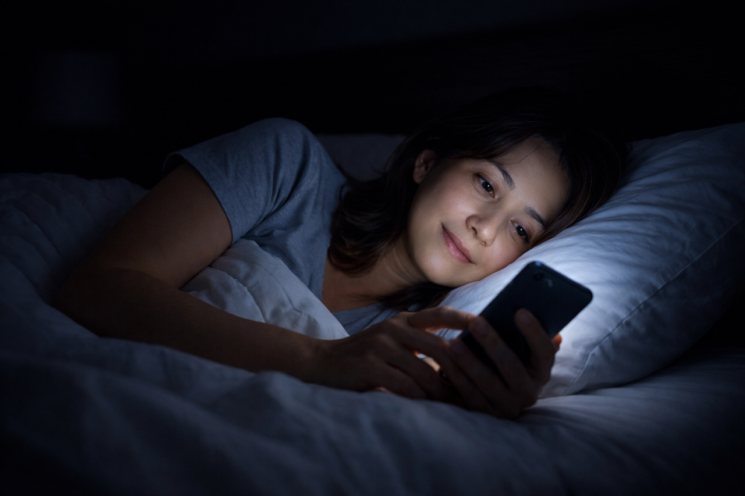
On January 12, during an appearance on the YouTube channel "Geonnamul TV," Jeong Euisang, Chief Ophthalmologist at SNU Eye Clinic, stated, "The habit of looking at your smartphone in a dark room is essentially the same as burning your retinal tissue."
He explained that in a dark environment, the pupil can dilate up to three times its usual size to take in more light, and in terms of area, this means up to nine times more light enters the eye. If blue light from a smartphone enters through the dilated pupil without being filtered, it reacts with waste products inside retinal cells to generate a large amount of reactive oxygen species. This can destroy optic nerve cells and accelerate the development of macular degeneration.
There are additional risks for middle-aged and older women. Dr. Jeong noted, "For people with a narrow anterior segment of the eye, tilting the head down to look at a smartphone in the dark can cause the lens to shift forward, blocking the drainage pathway for aqueous humor and causing intraocular pressure to rise rapidly." This condition can lead to acute glaucoma, which causes eye pain, headaches, and vomiting, and if not treated quickly, significantly increases the risk of blindness.
Using massage devices around the eyes also requires caution. Dr. Jeong said, "Even rubbing your eyes with your hands when they are itchy can increase pressure up to ten times the normal intraocular pressure," and added, "If the stimulation from a vibrating massager or massage gun is transmitted to the eye through the bones, the internal vibration can be amplified, increasing the risk of damaging the fibers that connect the lens."
Experts advise that maintaining a bright environment when using a smartphone, refraining from use before bed, and avoiding excessive close-up exposure are all essential for long-term eye health management.
Dr. Jeong also suggested daily habits to prevent deterioration of eye health. Consuming omega-3 is known to help restore the oily layer of the tear film and reduce inflammation. For smokers, beta-carotene supplements may increase the risk of lung cancer, so it is recommended to obtain antioxidants from natural foods such as carrots and perilla leaves. Wearing wraparound sunglasses or a wide-brimmed hat that fits closely to the face when going outdoors is also effective in blocking ultraviolet rays.
© The Asia Business Daily(www.asiae.co.kr). All rights reserved.
![Clutching a Stolen Dior Bag, Saying "I Hate Being Poor but Real"... The Grotesque Con of a "Human Knockoff" [Slate]](https://cwcontent.asiae.co.kr/asiaresize/183/2026021902243444107_1771435474.jpg)
















