Key Issues and Special Provisions Pile Up
The Democratic Party of Korea is accelerating efforts toward the administrative integration of Gwangju and South Jeolla Province by holding breakfast meetings and public hearings with Gwangju Mayor Kang Gijung and South Jeolla Governor Kim Youngrok, following Prime Minister Kim Minseok. The party aims to propose a special administrative integration bill within this month and have it processed by the National Assembly by February.
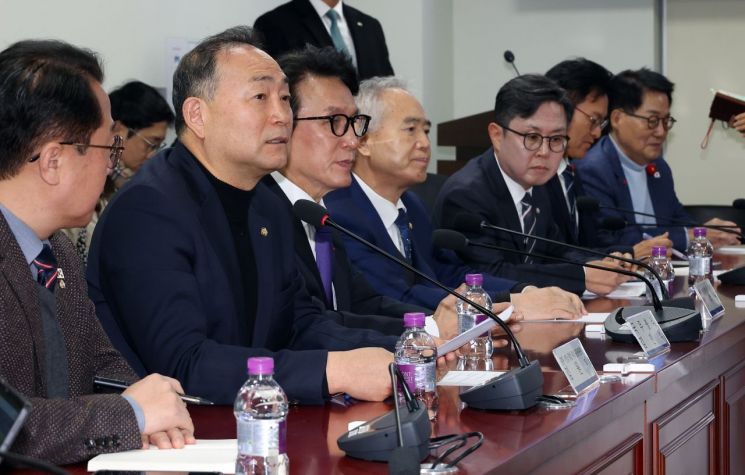
On January 15, lawmakers from Gwangju and South Jeolla, including Kim Won-i and Yang Bunam, co-chairs of the Democratic Party’s Special Committee for the Promotion of Gwangju-South Jeolla Integration, held a breakfast meeting with Mayor Kang and Governor Kim at the National Assembly Members' Office Building. They discussed the direction of administrative integration, the main contents of the special bill, and key issues.
The special bill, jointly prepared by the Gwangju and South Jeolla governments, includes not only systems and finances related to local autonomy and local taxes, but also provisions for energy and high-tech industries, special measures for agricultural, fishing, and rural areas, youth, and support for small business owners. In total, it comprises 8 sections, 23 chapters, 312 articles, and over 300 special provisions. The bill initially names the new entity “Gwangju-South Jeolla Special City,” but allows for the name to be changed later in accordance with the Local Autonomy Act and the opinion of the council.
As the central and local governments prepare for administrative integration and various special measures, the ruling party also appears to be speeding up its efforts with the goal of electing an integrated mayor in the June 3 local elections.
The need to coordinate requests from each metropolitan government and the accumulation of differing opinions on current issues are also cited as reasons for accelerating discussions, as there is a sense of crisis that administrative integration could become difficult if not managed properly.
During the meeting, participants also expressed the need to clearly decide whether the name should be “Jeonnam-Gwangju” or “Gwangju-Jeonnam,” and whether the new entity should be designated as a “Special City” or a “Special Self-Governing Province.”
The lawmakers also identified several outstanding issues that are not yet included in the special bill drafted by the local governments, such as the installation of an energy expressway, a provision for the priority designation of an RE100 national industrial complex and related government support, the inclusion of small agricultural-industrial cities with limited population and economic scale in the basic rural income scheme, and the transfer of national taxes.
At the luncheon meeting, Assemblyman Kim requested, “The legislative support team will meet intensively with lawmakers, the government, and local governments for about two weeks. Please share as many opinions as possible.”
© The Asia Business Daily(www.asiae.co.kr). All rights reserved.
![Clutching a Stolen Dior Bag, Saying "I Hate Being Poor but Real"... The Grotesque Con of a "Human Knockoff" [Slate]](https://cwcontent.asiae.co.kr/asiaresize/183/2026021902243444107_1771435474.jpg)















