Credit Card Interest Rate Cap to Take Effect on January 20
Targeting "Affordability," the Biggest Issue Ahead of the Midterm Elections
An Attempt to Lower Borrowing Costs for Individual Voters
U.S. Financial Industry Considers Strong Measures, Including Lawsuits
Responding on Multiple Fronts, Including Temporary Rate Reductions
 Wall Street Sign (The Asia Business Daily = Yonhap News)
The U.S. financial industry is strongly opposing President Donald Trump's implementation of a "credit card interest rate cap" system. In addition to considering strong measures such as lawsuits, the industry is also reviewing temporary interest rate reduction promotions. Analysts say that President Trump is taking a confrontational stance against Wall Street in order to address the "affordability" issue, which has emerged as the biggest topic ahead of the midterm elections, and to influence monetary policy.
According to foreign media outlets such as the Financial Times (FT) on the 14th (local time), major U.S. banks including JPMorgan, Citigroup, and Wells Fargo have stated that the introduction of a credit card interest rate cap "would negatively impact our business model by making it more difficult to provide credit to low-income customers if credit card lending rates are lowered," and that "this could ultimately hinder growth."
The financial industry has launched aggressive lobbying efforts targeting Congress and is prioritizing strong responses such as lawsuits. If these measures prove insufficient, the industry is also considering more conciliatory actions, such as temporary interest rate reduction promotions and the launch of credit card products with a 10% interest rate.
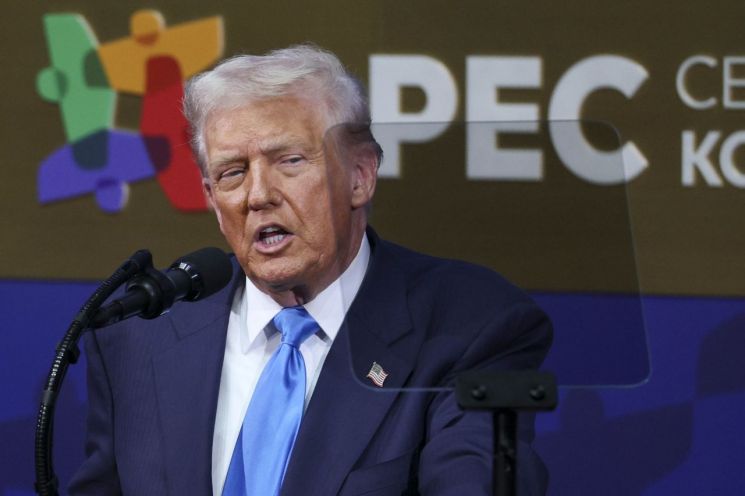
Previously, President Trump argued on social media that credit card interest rates should be capped at 10% for one year. As part of this initiative, he also introduced the "Credit Card Competition Act." The credit card interest rate cap is scheduled to take effect on the 20th.
Mark Mason, Chief Financial Officer (CFO) of Citigroup, pointed out that this policy "will restrict access to credit for those who need it most," and warned that "it could lead to unintended consequences for consumers and is likely to cause significant economic downturn."
Mike Santomassimo, Chief Financial Officer (CFO) of Wells Fargo, said, "If interest rate caps become mandatory, people across various segments will find it harder to access credit," adding, "It will also negatively impact economic growth."
According to a report from the Federal Reserve Bank of New York and financial information website Bankrate.com, 70% of all retail payments in the United States are made by credit card, and the average credit card interest rate stands at 19.6%.
Financial companies determine loan sizes and interest rates based on individual credit scores. If a person's credit score is low, the risk of delinquency increases, leading financial companies to set higher interest rates for those customers. Therefore, the implementation of a credit card interest rate cap is expected to have a direct impact on the profits of financial companies. As a result, there are concerns that the issuance of credit cards to subprime borrowers may become restricted.
The upcoming midterm elections are cited as the reason President Trump is pressuring financial companies through the credit card interest rate cap. With the U.S. midterm elections scheduled for November this year, "affordability" has emerged as the most pressing issue in American politics.
Previously, President Trump announced a $200 billion mortgage-backed securities purchase to lower mortgage rates, and also unveiled a plan to prohibit institutional investors from purchasing single-family homes. In the House of Representatives, policies related to inflation are becoming major issues, such as some Republican lawmakers supporting a bill led by Democrats to extend tax credits for the Affordable Care Act (ACA).
Additionally, some analysts say that President Trump introduced the "credit card interest rate cap" after failing to pressure the Federal Reserve (Fed) to lower the benchmark interest rate. According to the FT, this move could indirectly influence monetary policy by lowering individual loan rates.
Jai Kedia, a researcher at the Cato Institute, analyzed, "The President knows that high borrowing costs (loan interest rates) will be a major issue in the midterm elections, so he is seeking to lower rates to reduce borrowing costs."
© The Asia Business Daily(www.asiae.co.kr). All rights reserved.
![Clutching a Stolen Dior Bag, Saying "I Hate Being Poor but Real"... The Grotesque Con of a "Human Knockoff" [Slate]](https://cwcontent.asiae.co.kr/asiaresize/183/2026021902243444107_1771435474.jpg)
















